A gas fireplace feels maintenance free. Flip a switch and it lights. That convenience is exactly why problems go unnoticed, and why a pre winter service is worth doing every year.
What can go wrong with gas
- Dust and pet hair clogging the burner and pilot
- Cloudy or sooty glass from incomplete combustion
- Venting that has shifted, rusted or been blocked by nests
- Worn gaskets and thermocouples
Yearly service checklist
- Turn the gas off and let everything cool.
- Clean the glass and logs according to the manual.
- Inspect the burner ports and pilot assembly.
- Check the vent pipe and termination for blockage and rust.
- Test for leaks and confirm the flame pattern.
- Test the carbon monoxide alarm nearby.
The CPSC recommends a yearly professional check of any fuel burning appliance, and the CDC explains why a carbon monoxide alarm is essential.
| Task | DIY or pro |
|---|---|
| Dust glass and logs | DIY, per manual |
| Burner and pilot service | Pro |
| Vent inspection | Pro |
| Gas pressure test | Pro only |
Book gas fireplace service through our services page and we will do the venting too.
How a Gas Fireplace Works
A gas fireplace burns natural gas or propane through a burner under ceramic logs, with a pilot flame or electronic ignition and a safety valve that shuts off gas if the flame goes out. Exhaust leaves through a flue or direct vent pipe. Because the system has moving and electronic parts, it benefits from annual service even though it burns clean.
Pre-Winter Service Checklist
- Turn off gas and power and let the unit cool
- Clean the glass with a non-abrasive cleaner made for fireplace glass
- Vacuum dust and spider webs from the burner compartment
- Check log placement against the manual
- Inspect the pilot and thermocouple
- Examine the door gasket for cracks
- Check the vent and cap for blockage
- Test the carbon monoxide alarm
Signs of Trouble
- Yellow, sooty or lazy flames
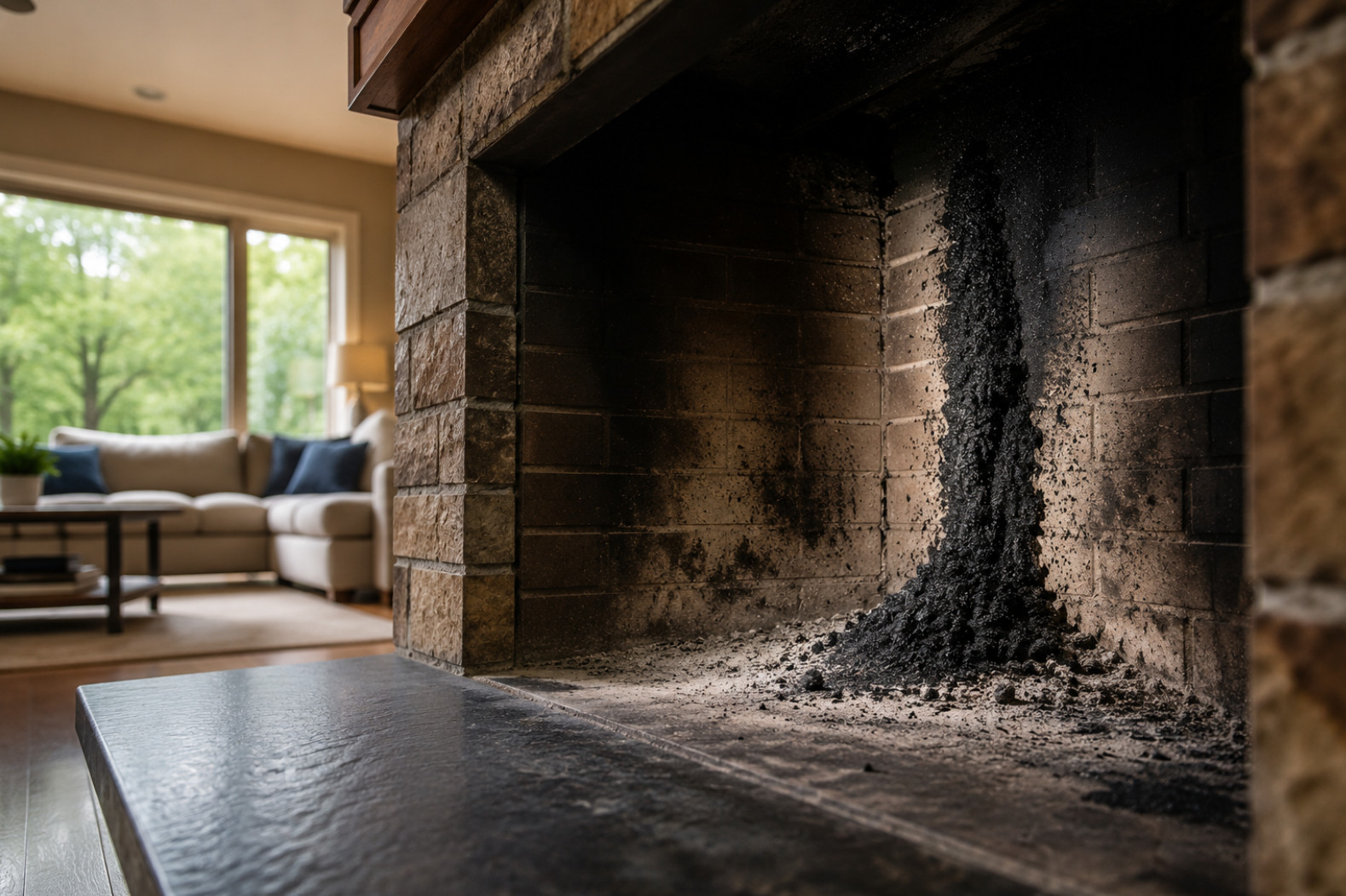
- Black soot on the logs or glass
- A pilot that will not stay lit
- A smell of gas or exhaust
- Condensation on the glass that does not clear
Connecticut Specifics
Damp coastal air and cold winters mean more condensation in vent pipes and flues. Direct vent terminations near the ground can collect snow, so keep them clear after storms.
Frequently Asked Questions
How often should a gas fireplace be serviced
Once a year, before winter.
Can I clean the logs myself
Gently, but do not rearrange the log set unless the manual allows it.
Is soot on gas logs normal
No. It can signal incomplete combustion and needs a service.
Local Help and Related Reading
Our crews handle chimney sweeps in Stamford, chimney repair in Greenwich, chimney caps in Norwalk and chimney cleaning in Danbury. Browse every town on our service areas page or our services.
More to read: What to Do After a Chimney Fire in Connecticut, Do You Need a Chimney Liner for a Wood Stove?, Colonial Era Fireplaces: Chimney Care for Historic Connecticut Homes.
For wider guidance, see the EPA Burn Wise program, the U.S. Department of Energy and CT DEEP.