Cold winters, moisture, freeze-thaw cycles, and aging masonry take a toll on Connecticut fireplaces. Cracked mortar, damaged fireboxes, worn liners, and failing dampers can lead to poor draft, smoke in the room, or carbon monoxide risk. We restore fireplace systems to safe, efficient, working condition.
Family-owned, master certified, licensed & insured — serving Connecticut homeowners for more than 25 years.
The firebox, liner, smoke chamber, and flue all work together. A crack or gap in any one of them can let heat, smoke, or gas move where it shouldn't.
A restored fireplace drafts better, heats more efficiently, and puts less strain on the rest of the venting system.
Restoration protects resale value and can preserve the historic charm of antique brick, cast iron surrounds, and older masonry fireplaces.
Cracked firebrick, damaged cement panels, loose mortar joints, broken dampers, soot buildup, rusted metal parts, and chimney cap issues are the problems we see most. Heat, moisture, poor draft, and normal wear are usually the cause.
Left alone, a weak firebox or failing liner can affect the whole ventilation system — which is why an inspection always comes before repair.
Wood, gas, electric, pellet, and ethanol fireplaces each need a different repair approach — here's how we handle each one.
Firebox replacement, soot removal, cleaning, damper repair, chimney sweep service, and liner repair address cracks, loose mortar, creosote, and smoke chamber damage.
Ignition system, gas line, ceramic log, venting, and damper diagnostics — handled by trained pros, since gas issues can carry carbon monoxide and safety risk.
Electric repairs cover heating elements, switches, and wiring. Pellet units get airflow correction and mechanical checks. Ethanol units get placement and ventilation review.
Every job starts with an inspection of the firebox, liner, smoke chamber, crown, cap, and damper — repairs are scoped from there based on age, materials, and damage level.
Caps, crowns, and dampers protect the fireplace system from weather, animals, and poor airflow. A stainless steel or copper cap keeps rain, snow, leaves, and debris out of the flue. The crown sheds water away from the masonry, and the damper controls draft. When any of these fail, moisture gets in, metal rusts, and draft problems follow.
Creosote, soot, ash, and debris can hide the cracks and damage a restoration addresses. Cleaning and inspection catch problems early — before they become bigger repairs.
Annual sweeping removes the creosote and soot that hide firebox cracks and liner damage.
Cleaning & SweepingCracked brick and failing mortar joints found during restoration, repaired to restore structure.
Masonry RepairA worn or damaged flue liner is a safety issue — stainless steel relining restores safe venting.
Relining & LinersA missing or damaged cap lets water, debris, and animals into the flue and firebox.
Chimney CapsA leaking crown or failed flashing shows up as water staining near the fireplace and chimney.
Leak SpecialistsBroken dampers and general repair needs addressed alongside the restoration scope.
Chimney Repair & MaintenanceRestoration fixes what's damaged now — regular cleaning and inspection help keep it from happening again.
Older Connecticut homes often have antique brick fireplaces, cast iron details, or vintage surfaces that need careful repair — the goal is preserving the look while restoring safer function.
Modern fireplaces may call for energy-efficient heating updates, prefabricated fireplace repairs, or prefab panel replacement. The right plan depends on age, materials, damage level, and local regulations.
Connecticut's Department of Consumer Protection notes that chimney repair goes beyond cleaning, and that repair work must be performed by a registered home improvement contractor in Connecticut.
Certified Chimney Connecticut is a licensed, insured, master certified, family-owned contractor serving Connecticut homeowners for more than 25 years.
Cracked firebrick, loose mortar joints, broken dampers, soot buildup, rusted metal parts, and chimney cap issues are the most common signs. Poor draft or smoke entering the room are also warning signs worth an inspection.
Yes. A chimney sweep cleans creosote, soot, and debris, and often reveals repair needs. Restoration and repair address the underlying damage found — firebox cracks, liner issues, or damper failure — that cleaning alone can't fix.
Gas fireplace issues can involve the ignition system, gas lines, and venting, and can create carbon monoxide risk if handled incorrectly. Repairs should always go to a trained professional.
Yes. Restoration techniques for antique brick, cast iron, and vintage surfaces are chosen to preserve the original look while restoring safe, working function.
Yes. Connecticut's Department of Consumer Protection requires chimney and fireplace repair work to be performed by a registered home improvement contractor. Certified Chimney Connecticut is licensed and insured.
Licensed, insured, and family-owned for 25+ years — serving Fairfield & New Haven County.
Prefer to text? Message us anytime at 516-523-7255 · Open 24 hours
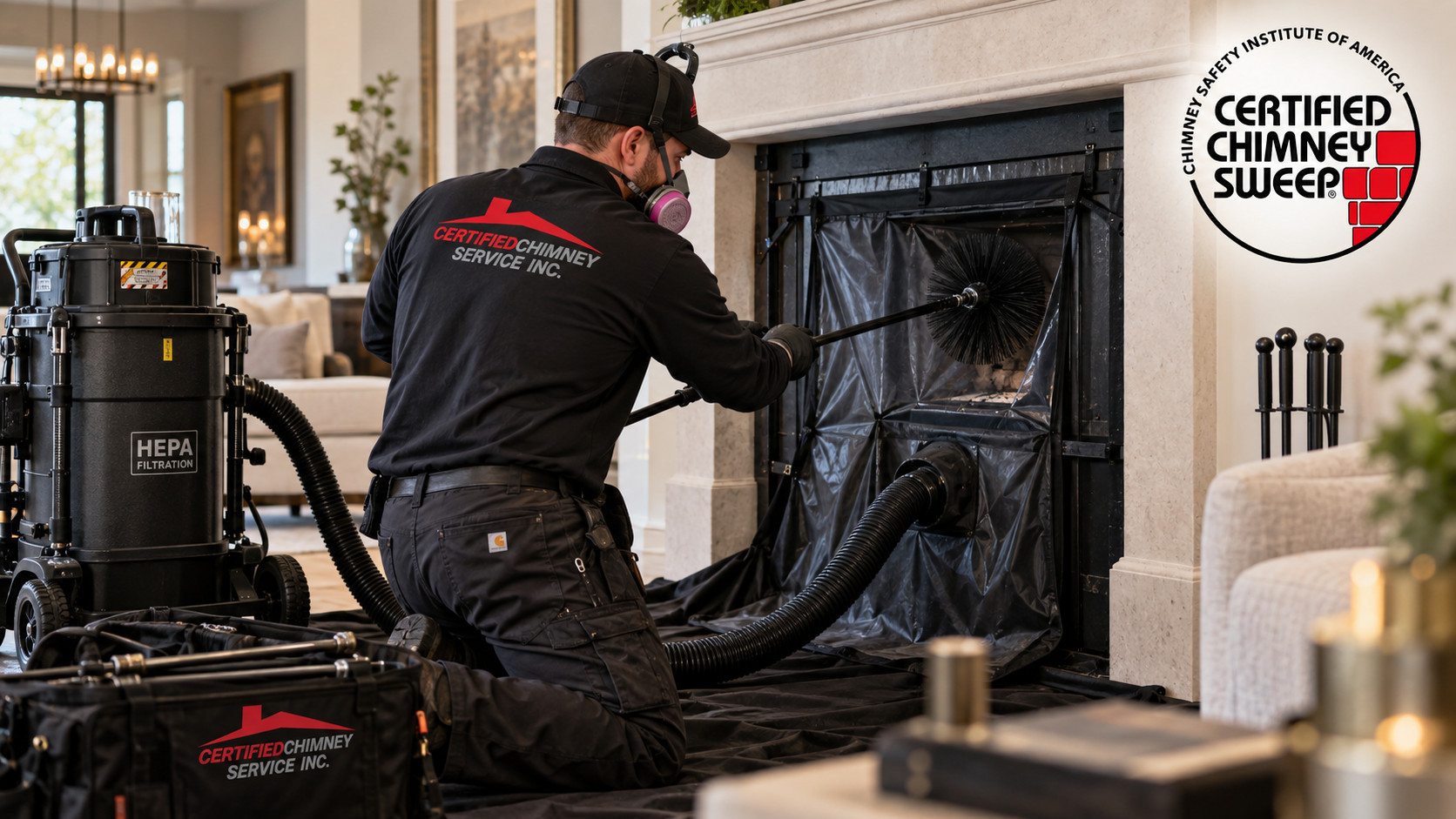
Covers fireplaces, wood stoves, pellet stoves, and heating systems including gas and oil systems. Book now before the winter rush fills our schedule.