Gaps between tiles, cracked flue tiles, spalled clay, and damaged mortar weaken a clay chimney liner over time. Left unchecked, that damage can lead to smoke backups, carbon monoxide leaks, and chimney fires. HeatShield repairs sound masonry chimneys without always requiring a full stainless steel relining.
Certified HeatShield installers — trained to diagnose flue damage and choose the right repair system.
The liner's job is to move smoke, heat, and toxic gases safely out of the home. A cracked or gapped liner lets that job fail.
When the liner fails, heat can transfer directly into the surrounding masonry chimney — a risk the liner exists to prevent.
The CSIA notes that professional inspection helps cut chimney fire and carbon monoxide risk — liner damage is a leading reason why.
Moisture damage, creosote buildup, seasonal temperature swings, and corrosive gases all weaken a clay flue liner over time. A chimney inspection and video scan — using a video camera or chim-Scan system — shows the full flue, smoke chamber, cracked tiles, spalled brick, damaged mortar, and gaps between tiles before any repair decision is made.
If the masonry is still sound, HeatShield repair may be possible. If the damage is severe, relining or a stainless steel chimney liner may be the safer path.
HeatShield repairs gaps, cracks, and spalling in otherwise sound masonry chimneys — without automatically replacing the liner.
Certified technicians choose between the HeatShield joint repair system — used when the main problem is missing mortar between clay tiles — and the HeatShield resurfacing system, used when larger sections of the liner need a new protective surface.
HeatShield uses a cerfractory flue sealant, a ceramic and refractory material mixture. The technician applies a tie coat, then presses the sealant against the liner walls using a foam applicator, foam applicator blade, foam applicator plug, or foam head system. Some resurfacing jobs also use slip casting or refractory mortar.
The goal is a smoother, safer flue path — sealing cracked tiles, small gaps, and damaged mortar without a full liner replacement.
May help with: cracked tiles, open mortar joints, and light spalling in an otherwise sound masonry chimney.
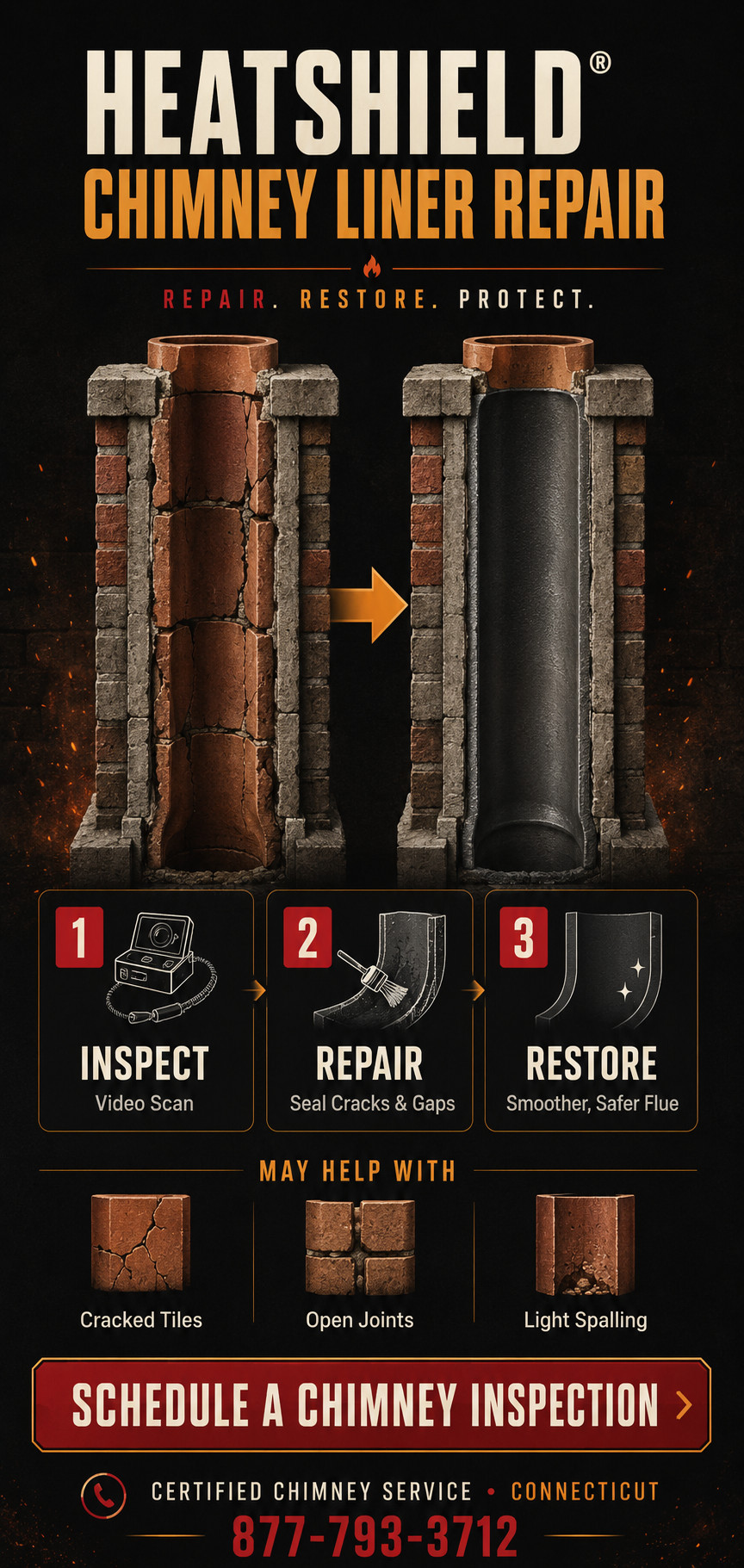
The right repair depends on the flue condition, fire codes, and appliance type — a trained technician compares all of it before recommending a system.
Best when clay tiles are mostly intact but mortar joints have opened up between them.
Used when the liner surface has more widespread damage — light spalling or several small cracks.
A CeCure sleeve relining option adds stronger structural support when the chimney needs it.
The safer path when the clay liner is too damaged for repair — full stainless steel relining.
The flue system has to vent correctly to protect the home from heat and gases. The International Residential Code and local Connecticut requirements affect liner selection and relining decisions — refractory mortar used in this work is commonly tied to ASTM C199 or similar standards.
Homeowners shouldn't rely on galvanized iron, patch cement, or other short-term fixes for liner damage. Certified HeatShield installers are trained to choose the right repair system for the flue condition in front of them.
The Chimney Safety Institute of America explains that professional inspection helps reduce chimney fire and carbon monoxide risk tied to liner damage.
ASTM International publishes the material standards used across chimney and fireplace repair work, including the refractory mortar used in liner repairs.
A liner problem rarely shows up alone — these are the services most often paired with a HeatShield repair.
Creosote removal and inspection often come first, before a liner repair decision is made.
Cleaning & SweepingCracked brick or failing mortar joints found during a video scan, repaired alongside the liner.
Masonry RepairA missing or damaged cap lets in the moisture that speeds up liner deterioration.
Chimney CapsA leaking crown or flashing is often the moisture source behind liner damage.
Leak SpecialistsFirebox and smoke chamber damage found during a liner inspection, repaired together.
Fireplace RestorationFull chimney rebuilds and general repairs for chimneys beyond HeatShield's scope.
Chimney Repair & MaintenanceHeatShield is a repair system that seals gaps, cracks, and spalling in an otherwise sound masonry chimney's clay liner, using a cerfractory sealant — without always requiring a full stainless steel relining.
A video inspection determines this. If the masonry is still sound with only cracks, gaps, or spalling, HeatShield repair is often possible. If damage is severe or the chimney has structural issues, stainless steel relining is the safer path.
Joint repair targets open mortar joints between mostly intact clay tiles. Resurfacing is used when the liner surface has more widespread damage, such as light spalling or several small cracks.
Yes. Most liner problems can't be seen from the fireplace opening. A video camera or chim-Scan system shows the flue, smoke chamber, and tile condition clearly before any repair work begins.
Yes. Freeze-thaw cycles in Fairfield County, New Haven County, and surrounding areas slowly weaken clay flue liners over time, which is why regular inspection matters here.
A video inspection tells us exactly what your liner needs — schedule yours today.
Prefer to text? Message us anytime at 516-523-7255 · Open 24 hours