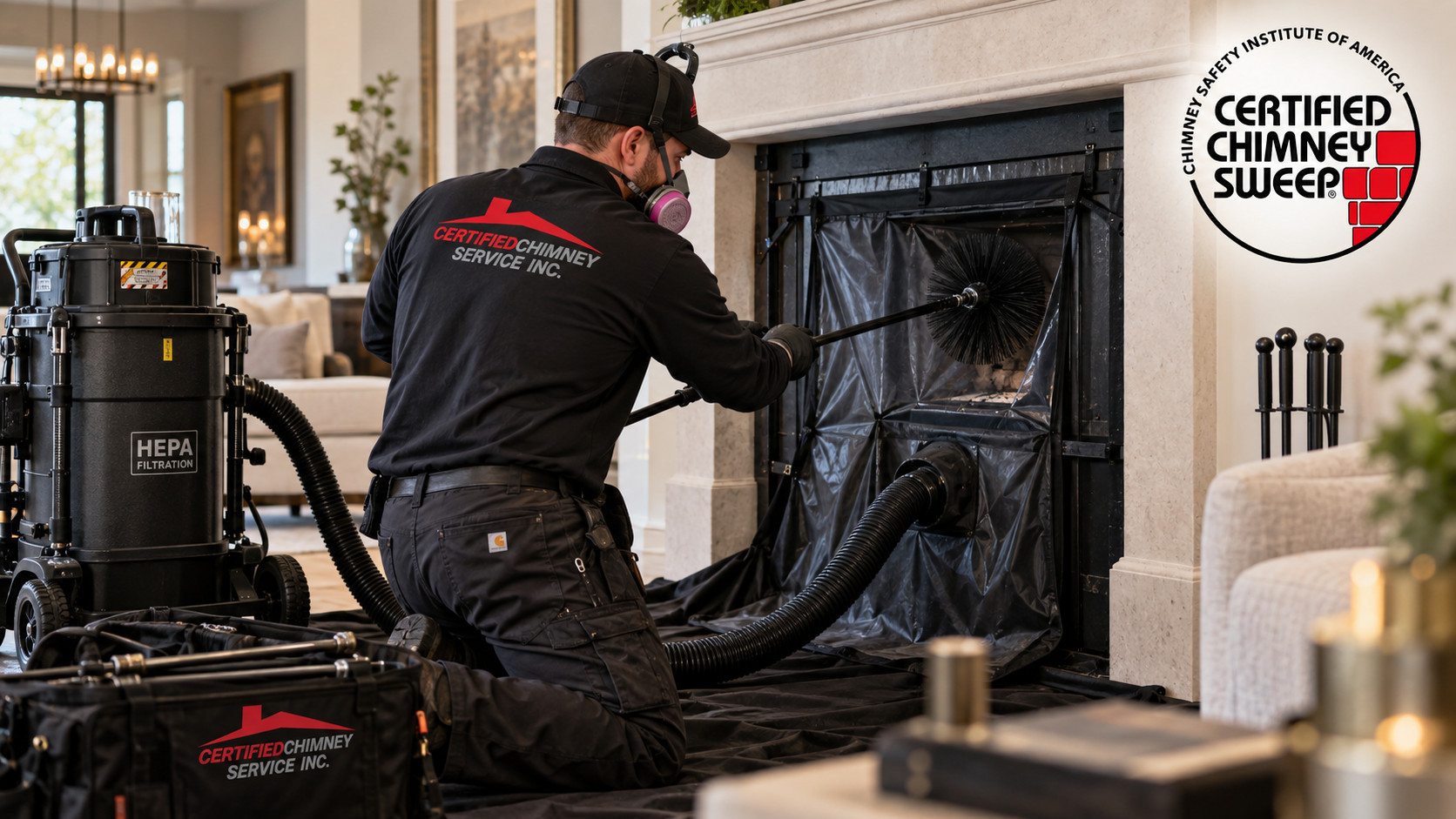
A 12-point chimney fire and safety inspection helps Connecticut homeowners know if their fireplace and chimney system are safe to use. This inspection looks for fire hazards, creosote buildup, carbon monoxide risks, structural damage, blocked vents, and damaged chimney parts before the burning season. Certified Chimney provides fire and safety inspections to help protect home safety and fireplace performance.
12-point inspection standard — reviewing structural integrity, creosote buildup, and overall chimney safety.
Chimney fire safety matters because many chimney problems build slowly and stay hidden inside the flue. Creosote deposits can form when wood smoke cools inside the chimney system, and heavy buildup can increase the risk of chimney fires. A cracked flue liner, blocked chimney cap, damaged smoke chamber, or weak draft can also create carbon monoxide leaks. The U.S. Fire Administration recommends having chimneys and vents cleaned and inspected at least once a year. Regular chimney inspections help reduce fire risk before winter use.
A 12-point fire and safety inspection reviews the main parts of the chimney system that affect fire safety, venting, and structural integrity. The inspection process may include a visual review, fireplace inspection, and chimney inspection. It may also use video scanning technology when hidden areas need a closer look. A certified technician checks for creosote buildup, cracks, blockages, water damage, and signs that the system may not vent correctly.
Common Inspection Points
Get a clear, documented report on all 12 inspection points before burning season.
A level 1 inspection is a basic review for a system that has not changed and is being used the same way.
A level 2 inspection is more detailed and may be needed after a chimney fire, property sale, appliance change, storm damage, or major repair.
A level 3 inspection is used when serious hidden damage may require access behind covered areas.
The National Fire Protection Association explains that NFPA 211 focuses on reducing fire hazards. It does this through safe chimney, fireplace, vent, and solid fuel appliance practices.
Some chimney problems need attention before the fireplace is used again. These warning signs can point to fire hazards, carbon monoxide leaks, structural damage, or ventilation problems inside the chimney system. Connecticut homeowners should not wait until the next maintenance schedule if they notice unsafe conditions. Call for a chimney inspection if you see:
These warning signs can point to fire hazards or carbon monoxide risk — call before using the fireplace again.
A chimney fire and safety inspection is focused on the fireplace and chimney, but it also connects to broader home safety. Homeowners should maintain smoke detectors, carbon monoxide alarms, fire extinguishers, and fire alarms as part of a full fire prevention plan. Commercial buildings may also have fire alarm systems, sprinkler systems, emergency lights, exit signs, fire doors, fire escape routes, and other fire protection systems. These systems have their own inspection standards, such as NFPA 72, NFPA 25, NFPA 17, and NFPA 96. For homes, chimney safety still starts with proper inspection, cleaning, and repair.
From creosote removal to liner repair, we handle every follow-up step in one call.
Certified Chimney Connecticut provides 12-point fire and safety inspections. They also offer regular chimney inspections, chimney services, chimney cleaning, fireplace inspection, fireplace cleaning, chimney sweep service, masonry services, and chimney repair across Connecticut. Their certified technicians serve Fairfield County, New Haven County, West Hartford, and nearby communities. The company's 12-point inspection page explains that these inspections review structural integrity, creosote buildup, and overall chimney safety, and that annual inspections are important for ongoing performance and safety. Homeowners can request service through Certified Chimney Connecticut before burning season. They can also request service after storm damage or when warning signs appear.
Schedule your 12-point fire and safety inspection before burning season.
Prefer to text? Message us anytime at 516-523-7255 · Open 24 hours