Active fire, heavy smoke, or a sounding CO alarm? Leave the home and call 911 first. Then call us at 877-793-3712.
Emergency chimney services in Connecticut help homeowners respond to problems that may threaten the safety of the home. A chimney fire, carbon monoxide leakage, damaged chimney liner, falling masonry, blocked flue, or major water leak should not be ignored. Prompt inspection and repair can reduce fire risk, prevent structural damage, and protect vulnerable citizens in the home.
Certified Chimney technicians — serving Fairfield County, New Haven County, West Hartford, Orange, and surrounding communities.
A chimney problem becomes an emergency when it affects safe venting, structural stability, or fire protection. Smoke entering the home may mean the flue is blocked or the chimney damper is not working. Falling bricks or crumbling mortar may signal structural instability. A carbon monoxide alarm may point to carbon monoxide leakage from a furnace flue, fireplace, pellet stove, or heating stove. Stop using the system when these warning signs appear. Leave the home and contact emergency services when there is active fire, heavy smoke, or a carbon monoxide alarm that continues to sound.
Some chimney emergencies develop suddenly, while others begin as small maintenance problems. Moisture intrusion, creosote buildup, damaged mortar joints, and blocked flues can become more serious during cold Connecticut weather. Homeowners should arrange an urgent chimney inspection when they notice:
Stop using the system and call us — we'll walk you through next steps.
A chimney fire can happen when creosote buildup ignites inside the flue. Signs may include loud cracking sounds, dense smoke, strong heat, sparks, or flames coming from the top of the chimney. Do not attempt chimney fire extinguishment from the roof. Leave the home, call 911, and wait for the fire department. Afterward, do not use the fireplace or wood stove until a certified technician completes a chimney inspection. A fire can damage the chimney liner, smoke chamber, chimney masonry, metal chimney sections, and nearby framing even when the exterior appears normal.
Carbon monoxide is dangerous because it has no color or smell. It may enter the home when the chimney system is blocked, the furnace flue is damaged, or gas, oil, or propane appliances do not vent correctly. If an alarm sounds, move everyone to fresh air and call emergency services. The National Fire Protection Association recommends professional inspection of chimneys and fuel-burning equipment. A chimney sweep can check the flue, liner, damper, and draft before the system is used again.
An emergency chimney inspection helps identify hidden damage before repair work begins. Certified technicians may examine the chimney cap, chimney crown, chimney flashing, liner, smoke chamber, firebox, masonry, and furnace flue. Video scanning may be used to find cracks, blockages, fire damage, or missing liner sections inside the flue. This inspection process helps determine whether the home needs chimney cleaning, flue cleanings, chimney relining, masonry repairs, or a larger chimney rebuild. A clear diagnosis protects safety and prevents unnecessary work.
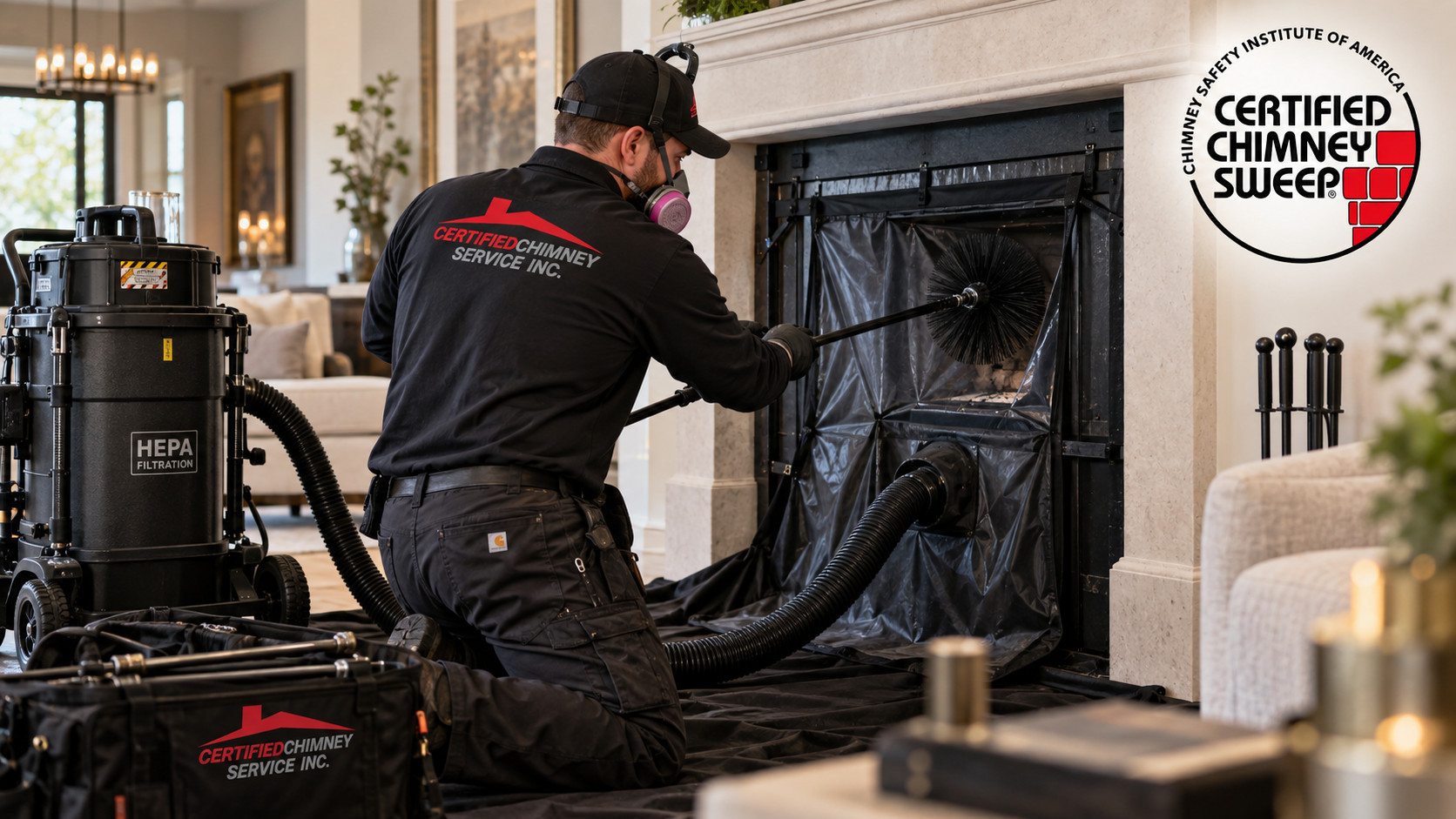
Emergency chimney cleaning may be needed when creosote, soot, animal nests, or debris block the flue. A professional chimney sweep can perform chimney sweeping, furnace flue cleaning, fireplace cleaning, and oil, gas, or propane utility flue cleaning. Removing obstructions helps restore airflow and lowers the chance of smoke backup or chimney fires. The National Chimney Sweep Guild supports professional education and safer chimney practices. Dryer vent cleaning services may also be recommended when lint buildup creates a separate household fire risk.
A chimney leak can quickly damage ceilings, walls, mortar joints, and the fireplace system. Common causes include failed metal flashing, a cracked chimney crown, missing chimney caps, damaged chase covers, and weak masonry waterproofing. Emergency chimney leak repair may include chimney cap installation, chase cover replacement, chimney flashing repair, crown repair, or waterproofing. Stainless steel chimney caps and copper chimney caps can help keep rain, snow, animals, and debris out of the flue. Fast repair helps stop moisture before it causes deeper masonry deterioration.
Loose bricks, chimney tuckpointing failure, crumbling mortar, and leaning masonry may affect structural integrity. These conditions can worsen after storms, freezing temperatures, or long-term water exposure. Emergency masonry repairs may include chimney repointing service, firebox repairs, crown restoration, masonry waterproofing, or chimney rebuilds. Severe damage may require new chimney construction. Homeowners should stay away from unstable masonry and avoid using the fireplace until a trained masonry crew evaluates the chimney.
Stay clear of the area and get a trained masonry crew out to evaluate it.
Emergency fireplace services may involve fireplace inserts, pellet stoves, wood stoves, gas appliances, heating stoves, or damaged dampers. A stuck chimney damper can prevent smoke from leaving the home, while a damaged firebox can expose nearby materials to heat. Common solutions include chimney damper replacement, firebox repairs, fireplace restoration, chimney relining, and caps and dampers service. The correct repair depends on the appliance, chimney liner, draft, and extent of the damage.
Certified Chimney Connecticut provides chimney inspection, chimney repair, chimney sweeping, chimney cleaning, chimney relining, chimney leak repair, masonry repairs, chimney waterproofing, fireplace restoration, and cap installation. The company serves Fairfield and New Haven counties, West Hartford, Orange, and nearby Connecticut areas. For an active fire, heavy smoke, structural collapse, or carbon monoxide emergency, call 911 first. For urgent chimney and fireplace repairs, request service through Certified Chimney Connecticut so the system can be inspected before it is used again.
Active fire, heavy smoke, or CO alarm? Call 911 first — then call us.
Prefer to text? Message us anytime at 516-523-7255 · Open 24 hours