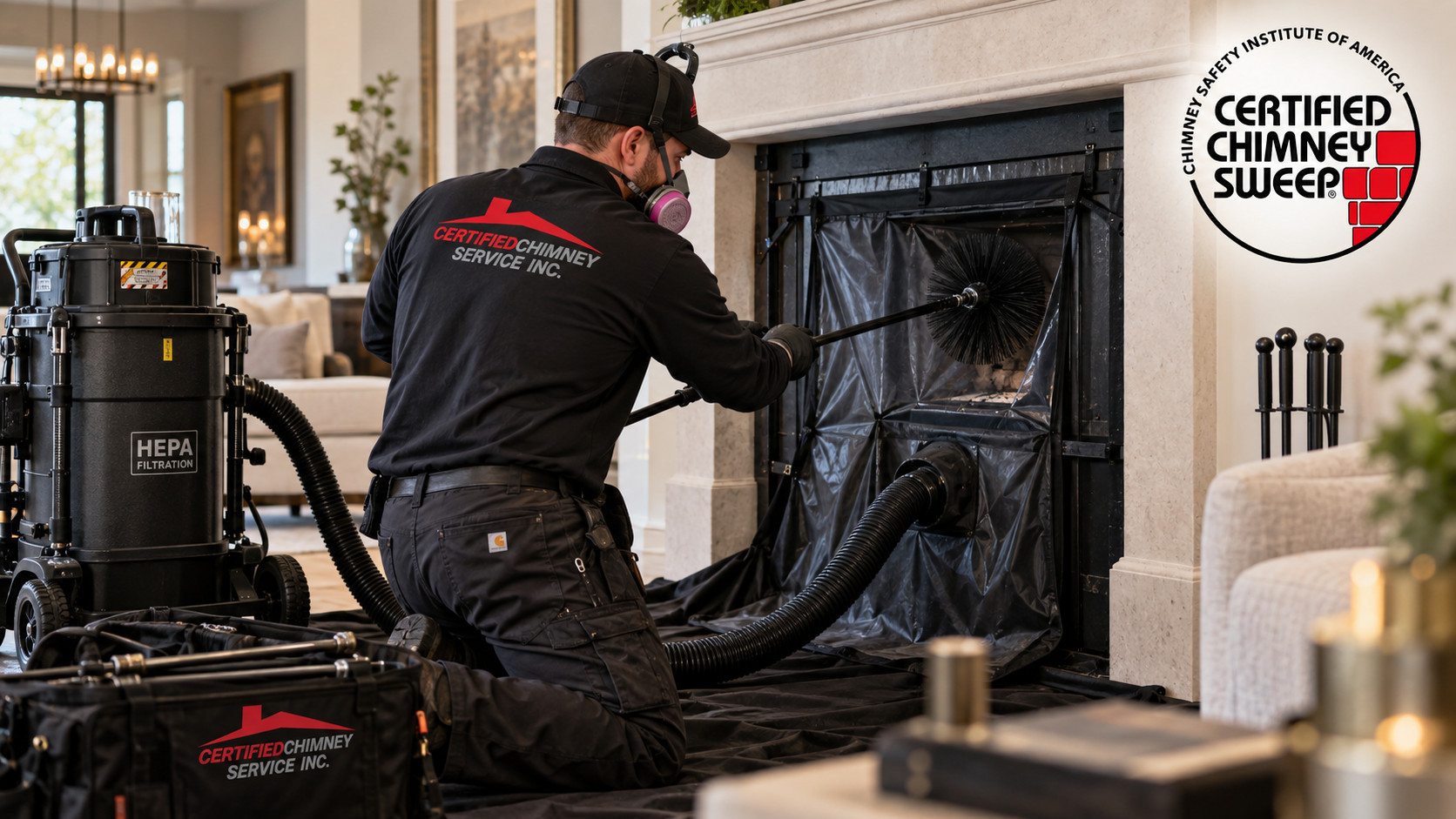
Chimney inspection services in Connecticut help homeowners find fire hazards, structural damage, moisture intrusion, and ventilation issues before they become costly problems. A chimney system can appear normal from the fireplace or roof while hiding creosote buildup, cracked mortar joints, liner damage, or blockages inside the flue. Regular inspections protect the fireplace, wood stove, pellet stove, furnace flue, and surrounding masonry while supporting safer home heating.
Licensed & insured technicians — clear inspection reports and recommendations for Connecticut homeowners.
A chimney inspection checks whether smoke, heat, and gases can leave the home safely. Damage to the chimney liner, cap, crown, or masonry can increase the risk of chimney fires and carbon monoxide entering living areas. Inspections also reveal chimney-related issues that may reduce fireplace draft or cause a heating appliance to work harder. The Chimney Safety Institute of America recommends annual inspections by qualified professionals. Finding a small crack, obstruction, or leak early can prevent larger chimney repair, chimney relining, or chimney rebuild projects later.
The inspection process depends on the condition, use, and history of the chimney. A technician may examine accessible interior and exterior parts, including the firebox, smoke chamber, damper, chimney flue liner, masonry, metal flashing, chimney crown, and chimney cap. Camera technology may be used when the inside of the flue requires a closer view.
A Standard Inspection May Check For
A Level 1 chimney inspection is used when the chimney system has not changed and there are no known performance problems. The technician examines readily accessible parts of the chimney, fireplace, venting system, and appliance connection. This inspection level is often suitable for routine annual service when the same fireplace, wood stove, or heating appliance remains in use. A Level I chimney inspection can identify visible creosote buildup, damaged chimney caps, masonry deterioration, and basic venting concerns. Chimney cleaning or flue cleaning may be recommended when deposits are present.
A Level 2 chimney inspection is more detailed and commonly includes a chimney camera inspection. It may be recommended after a property sale, appliance change, chimney fire, major storm, liner concern, or change in fuel type. Video cameras allow the technician to examine the full flue for cracks, missing mortar, gaps, or hidden damage. A Level II chimney inspection may also include accessible attics, crawl spaces, and basements. This inspection provides a clearer view of structural integrity and helps determine whether liner repair, chimney relining, or masonry repairs are needed.
A Level 3 chimney inspection is recommended when a Level 1 or Level 2 review suggests a serious hidden hazard that cannot be confirmed through accessible areas. This inspection may require opening or removing limited building materials to reach concealed sections of the chimney structure. A Level III chimney inspection is not part of normal annual service. It is generally reserved for suspected structural failure, severe fire damage, or dangerous construction defects. The findings help define the chimney work required to restore safe operation and structural integrity.
Tell us what's going on and we'll recommend the right inspection level.
Video inspections provide a detailed view of areas that cannot be evaluated from the fireplace opening. A high-resolution camera can travel through the chimney flue and record cracked tiles, creosote buildup, liner separation, moisture damage, and signs of heat exposure. This information supports clearer inspection reports and repair recommendations. Certified Chimney uses advanced technology to help homeowners understand the condition of their chimney system. Written findings may include photos, safety concerns, maintenance needs, and recommendations for cleaning, liner repair, masonry waterproofing, or other professional chimney services.
Connecticut chimney inspections often uncover damage caused by weather, fireplace use, or delayed maintenance. These conditions may affect safety, performance, and long-term repair costs.
Catching it during an inspection is cheaper than catching it later.
A chimney inspection and chimney cleaning can often be scheduled during the same visit. The inspection determines whether soot, debris, or creosote removal is needed, while chimney sweeping creates a clearer view of the flue and liner. A professional chimney sweep may perform fireplace and stove service, furnace flue cleaning, or creosote removal based on the system. Cleaning does not correct damaged masonry or liner problems, but it can reveal defects hidden by buildup. Combining services may also reduce repeat appointments and help homeowners prepare before Connecticut's heating season.
Connecticut homeowners should choose a trained, insured chimney company that provides clear inspection reports and explains the inspection levels. The National Fire Protection Association publishes NFPA 211, also known as Standard 211, for chimneys, fireplaces, vents, and solid fuel-burning appliances. Connecticut's Department of Consumer Protection also provides online credential verification. Chimney repair and liner installation require proper home improvement registration in Connecticut. Homeowners should confirm credentials before approving chimney repair, mortar replacement, liner work, or new chimney construction.
Homeowners should schedule an inspection annually, before heavy winter use, or whenever the chimney shows warning signs. Immediate service may be needed after a chimney fire, severe storm, appliance change, or carbon monoxide alarm. Properties in West Hartford, Fairfield County, Litchfield County, New Haven County, and communities near Long Island Sound may face different moisture and weather conditions, but every chimney benefits from regular inspection and preventative care.
Certified Chimney Connecticut provides chimney inspection, chimney cleaning, chimney sweeping, chimney repair, chimney relining, liner repair, chimney leak repair, masonry repairs, and fireplace and stove service. Its licensed and insured team serves Connecticut homeowners across Fairfield County, New Haven County, West Hartford, and surrounding communities. Homeowners can schedule an appointment with Certified Chimney Connecticut for an inspection report and clear recommendations. Regular chimney service supports fire safety, customer satisfaction, reliable venting, and better protection throughout Connecticut's heating season.
Schedule a clear inspection report before your next heating season.
Prefer to text? Message us anytime at 516-523-7255 · Open 24 hours