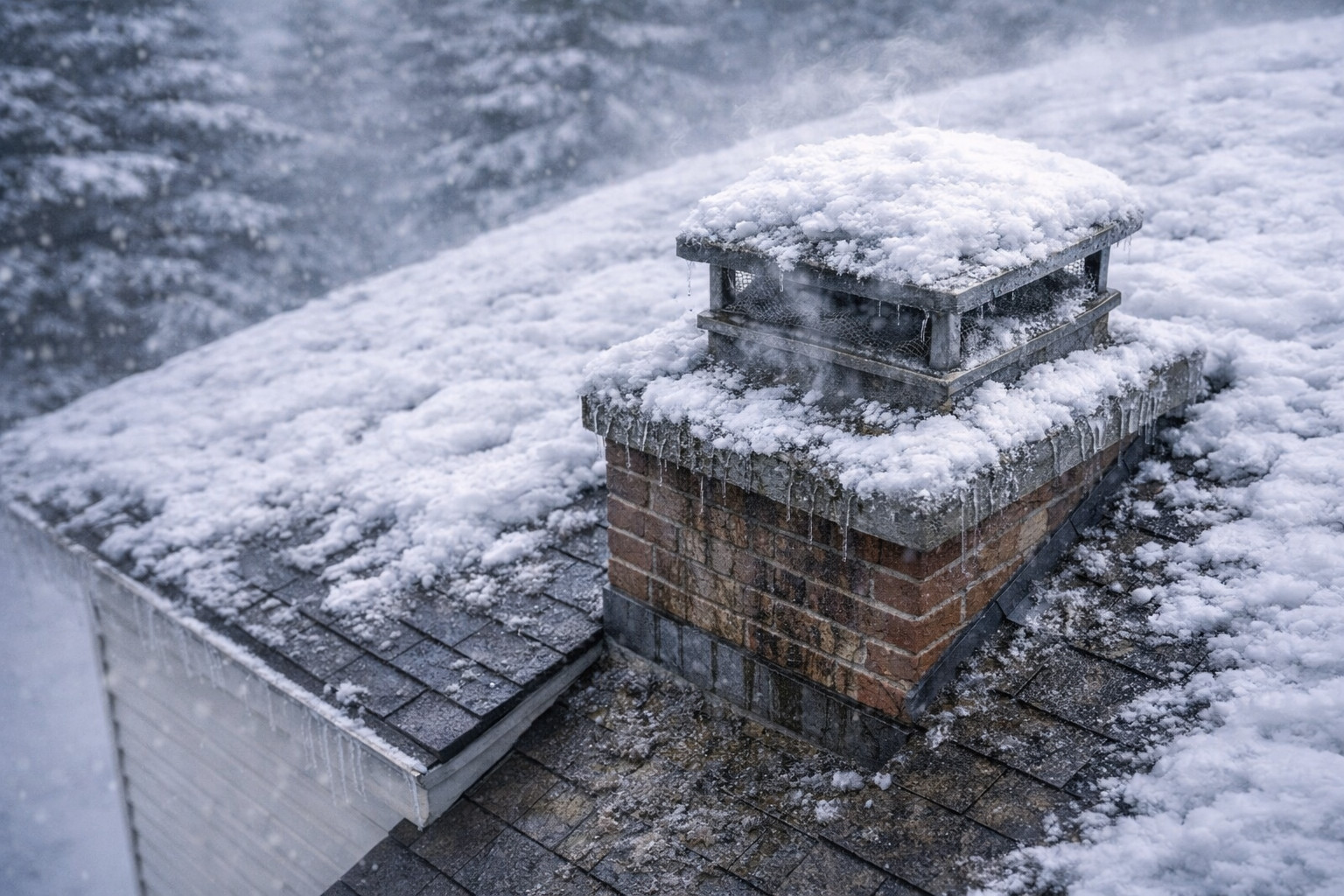
A second home in the Litchfield Hills, along the Sound, or anywhere in Fairfield County is meant to be easy. Then winter arrives and the house sits empty for weeks, and the chimney gets no warmth, no attention and no one watching it. By the time you open the door on a spring weekend, a small problem has had months to grow. A few hours of work before you close up the house prevent most of that.
Closing up for the season? Call 877-793-3712 to book a chimney inspection before you leave.
Why an Empty House Is Hard on a Chimney
In a home that gets used, an occasional fire and a heated living space keep moisture moving out of the flue. In an empty house, nothing does. Dampness settles inside, mixes with leftover soot and forms acidic residue that eats at the liner and mortar joints. Connecticut’s wet fall and freezing nights make it worse, because water trapped in brick expands as it freezes and pops the faces off the bricks, which is the damage known as spalling.
A quiet chimney also attracts visitors. Birds, squirrels and raccoons look for a sheltered spot as the weather turns, and a nest in the flue becomes a blockage and a fire hazard the first time someone lights a fire.
A Closing Up Timeline
| When | What to do |
|---|---|
| Early fall, while you are still visiting | Book a sweep and inspection so any repair is finished before the first hard freeze |
| A week before you leave | Check the cap, crown and flashing from the ground, and trim branches that hang over the chimney |
| The day you leave | Clear the ash, close and seal the damper, and replace the batteries in every smoke and carbon monoxide detector |
| While you are away | Ask a neighbor or property manager to look for water stains, damp smells or debris near the fireplace after big storms |
| When you return | Check the flue for nests or blockage before the first fire of the season |
Why the Inspection Should Come First
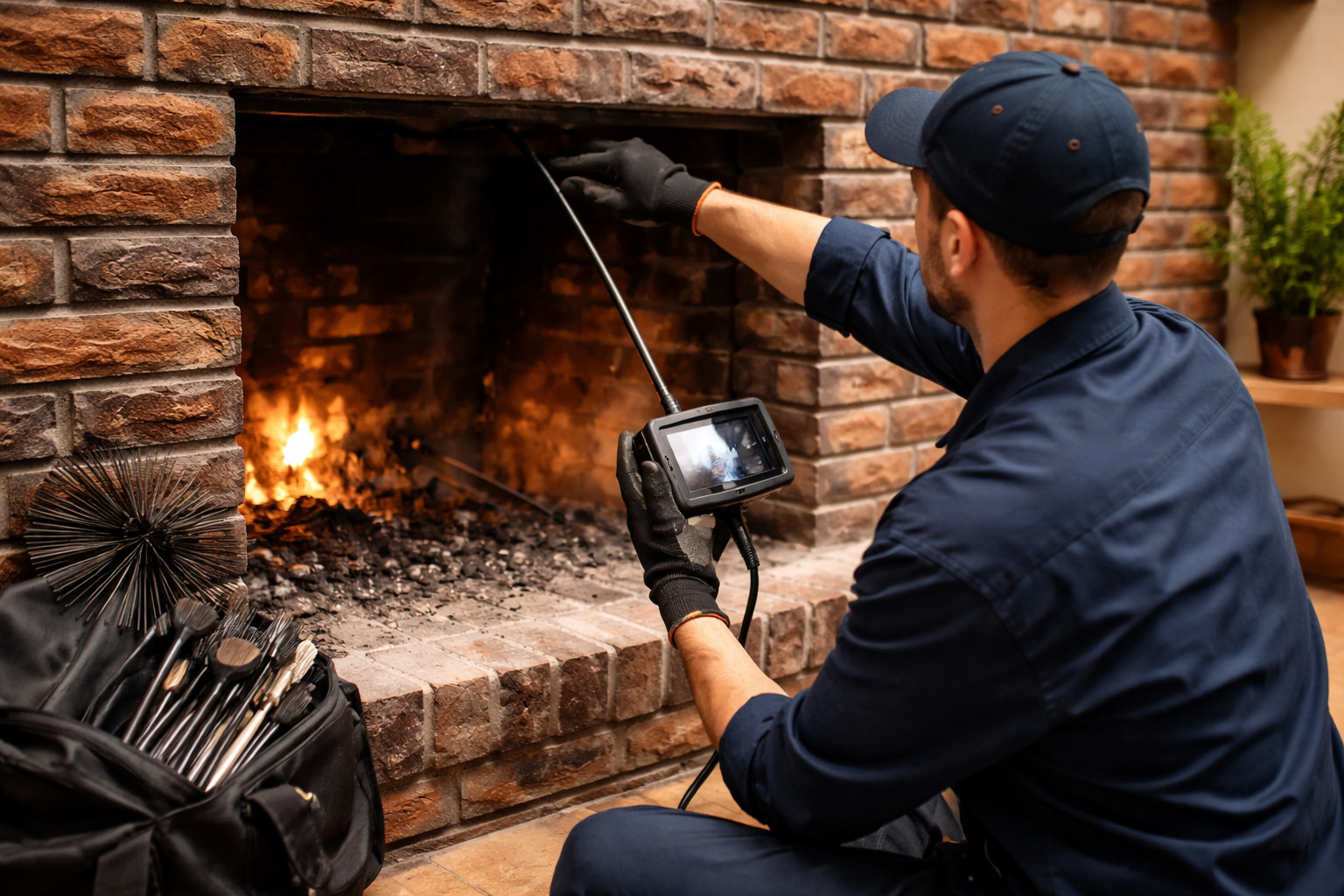
A flashlight and a quick look up the flue will not show hairline cracks in a liner, glazed creosote or a failing crown. A certified chimney inspection uses a camera to see what a person standing in the living room cannot. The National Fire Protection Association’s chimney standard calls for an annual inspection, and a more detailed Level 2 inspection is the right choice when a home has sat vacant, changed hands, or switched to a different fuel or appliance.
Doing it before you leave matters. Anything found can be repaired while the weather is still workable, and the chimney is ready the moment you come back.
Creosote That Sits All Winter
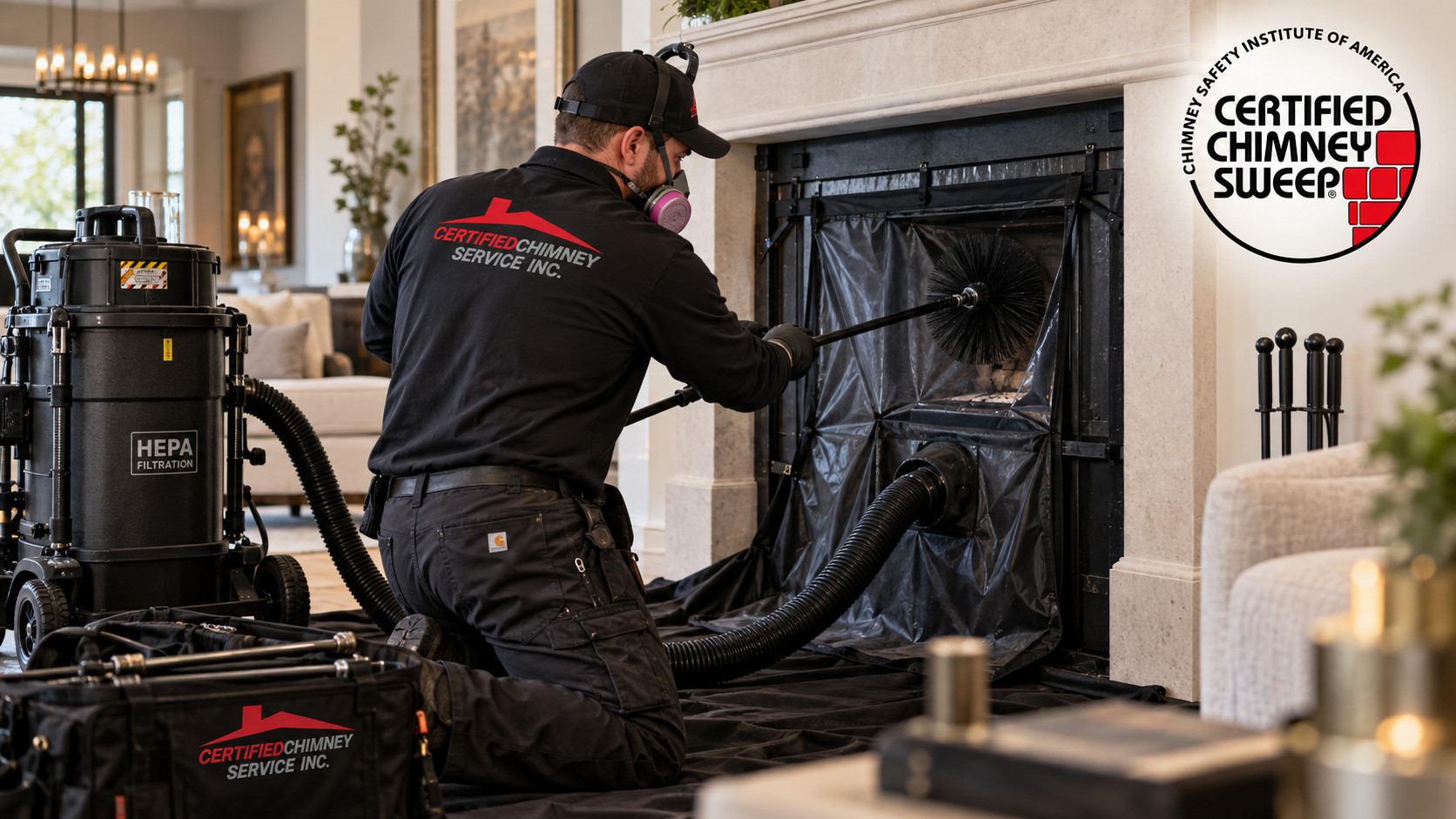
Creosote forms when wood burns at low temperatures and the smoke cools against the flue walls. It moves through stages, from a light, flaky soot to a hard, shiny glaze that a wire brush will not remove. Leaving it in place over a damp winter lets it harden further. Having the chimney swept before you close the house means the fuel for a chimney fire is gone before the empty months begin.
Burn only seasoned hardwood such as oak or maple, with moisture content under about 20 percent, and build smaller, hotter fires during your last visits.
Sealing the Flue Without Causing New Problems
A damper that does not seat tightly acts like an open window, letting heat leak out and cold air in. Repair or replace a warped damper before you go. A top sealing damper closes the flue at the very top, which also keeps animals out, and an inflatable chimney balloon can block drafts at the throat of the fireplace. If you use one, leave a visible reminder so no one lights a fire with it in place.
Keep any outside air supply for a wood stove clear as well. A closed house still needs a little airflow to stay free of mold and mildew.
Protecting the Masonry From Outside
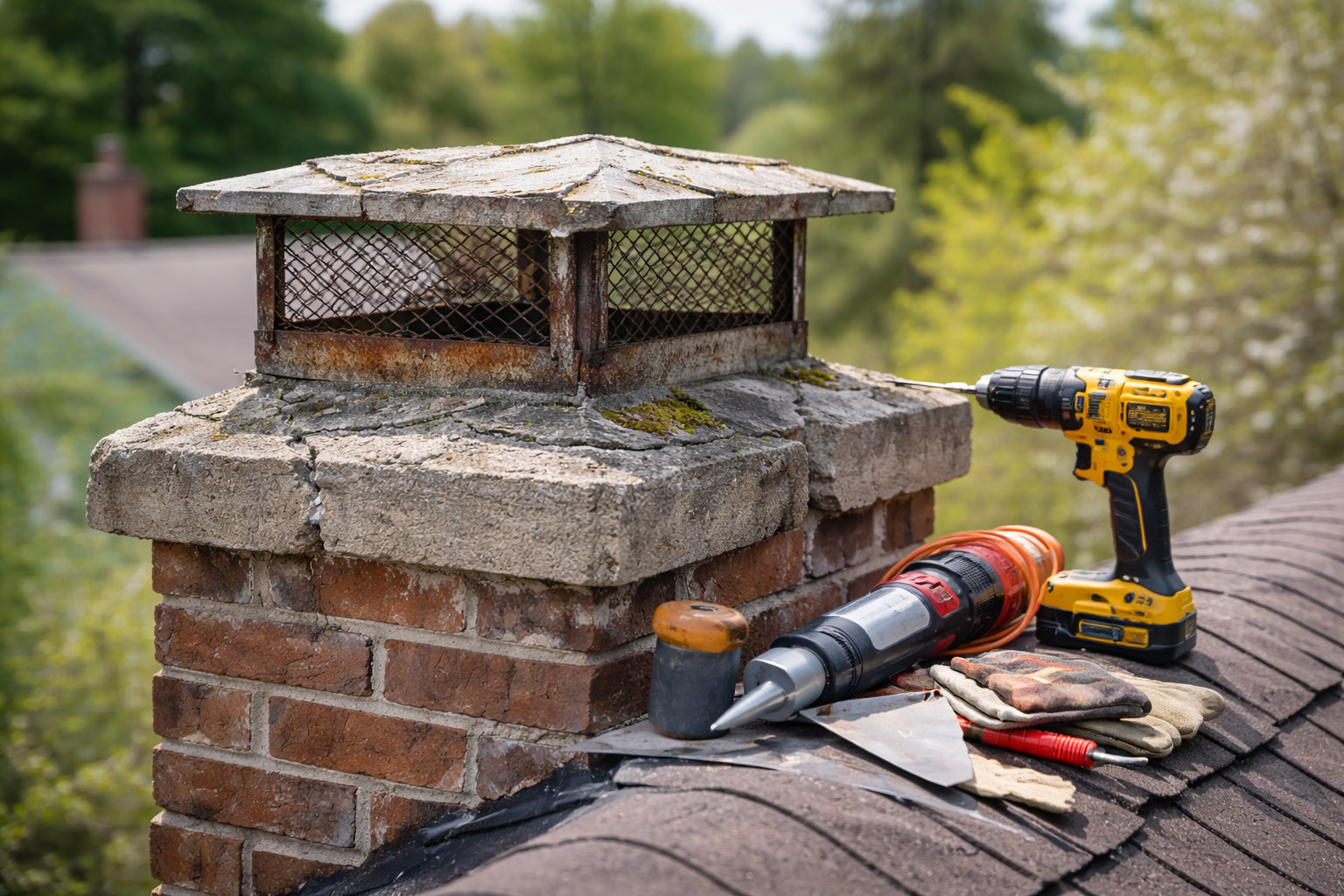
The crown, the slab at the top of the stack, takes the worst of the weather. A hairline crack there sends water straight into the structure, so seal it before winter. A stainless steel cap with mesh screening keeps out rain, ice and animals, and a breathable masonry sealer on the brick keeps liquid water out while letting trapped moisture escape. Ice dams along the roofline can also force water against the base of the chimney, so check the flashing for gaps.
Safety Systems for a House Nobody Is Watching
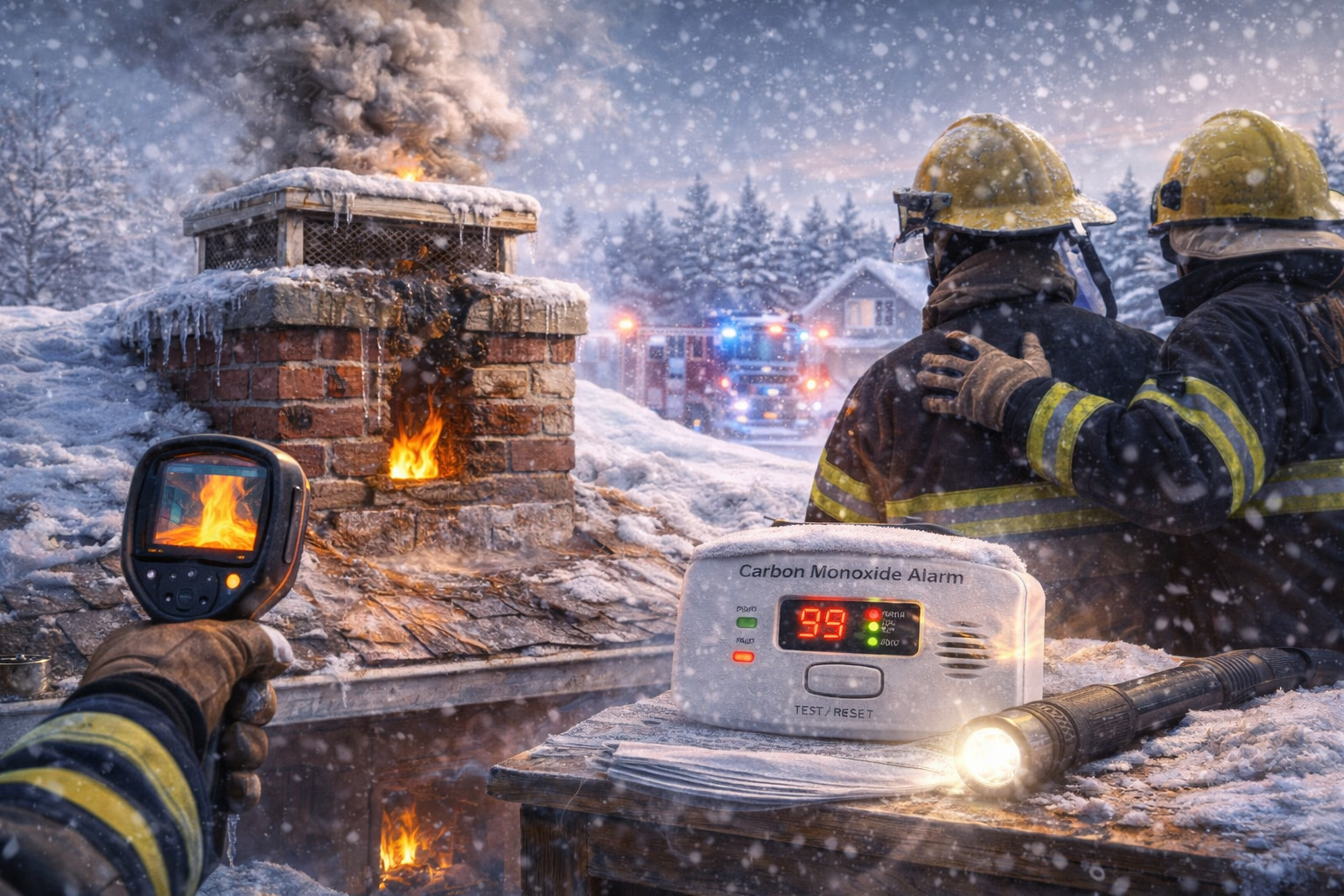
Replace the batteries in every smoke and carbon monoxide detector before you leave, even if they still have charge. Carbon monoxide has no smell, and an empty house has no one to notice it. Wifi connected detectors send an alert to your phone, which is worth having on a property you cannot check often. Keep a fire extinguisher near the fireplace for your next visit, and ask whoever looks in on the house to report anything unusual rather than trying to deal with it.
After a Nor’easter When You Cannot Be There
A big storm can crack a crown, loosen flashing or knock a cap crooked while you are hours away. Ask your property manager to look for ice dams near the chimney, new water stains on the ceiling, or debris in the firebox. If anything looks wrong, call before you light a fire, not after.
Frequently Asked Questions
How long can a vacation home chimney go without an inspection?
No more than a year, and the best time is just before you close up for the season, so any damage is found before winter instead of after it.
Is it worth upgrading to smart detectors for a second home?
Yes. A standard alarm only helps if someone is there to hear it. A wifi connected one tells you the moment something trips, wherever you are.
Will a chimney balloon damage my fireplace?
No, as long as you remove it before lighting a fire. It is made to sit in the throat of the fireplace and block drafts while the fireplace is not in use.
Should I leave firewood stacked at the house?
Store it off the ground, covered on top, with the sides open for airflow, and keep it away from the house walls so pests do not move indoors.
Local Resources for Second Home Chimney and Winter Safety (click to expand)
A few hours of preparation before you lock up saves a lot of trouble in spring. Call Certified Chimney Service at 877-793-3712 to schedule your pre-winter inspection, or request service online and we will follow up with a time that works.