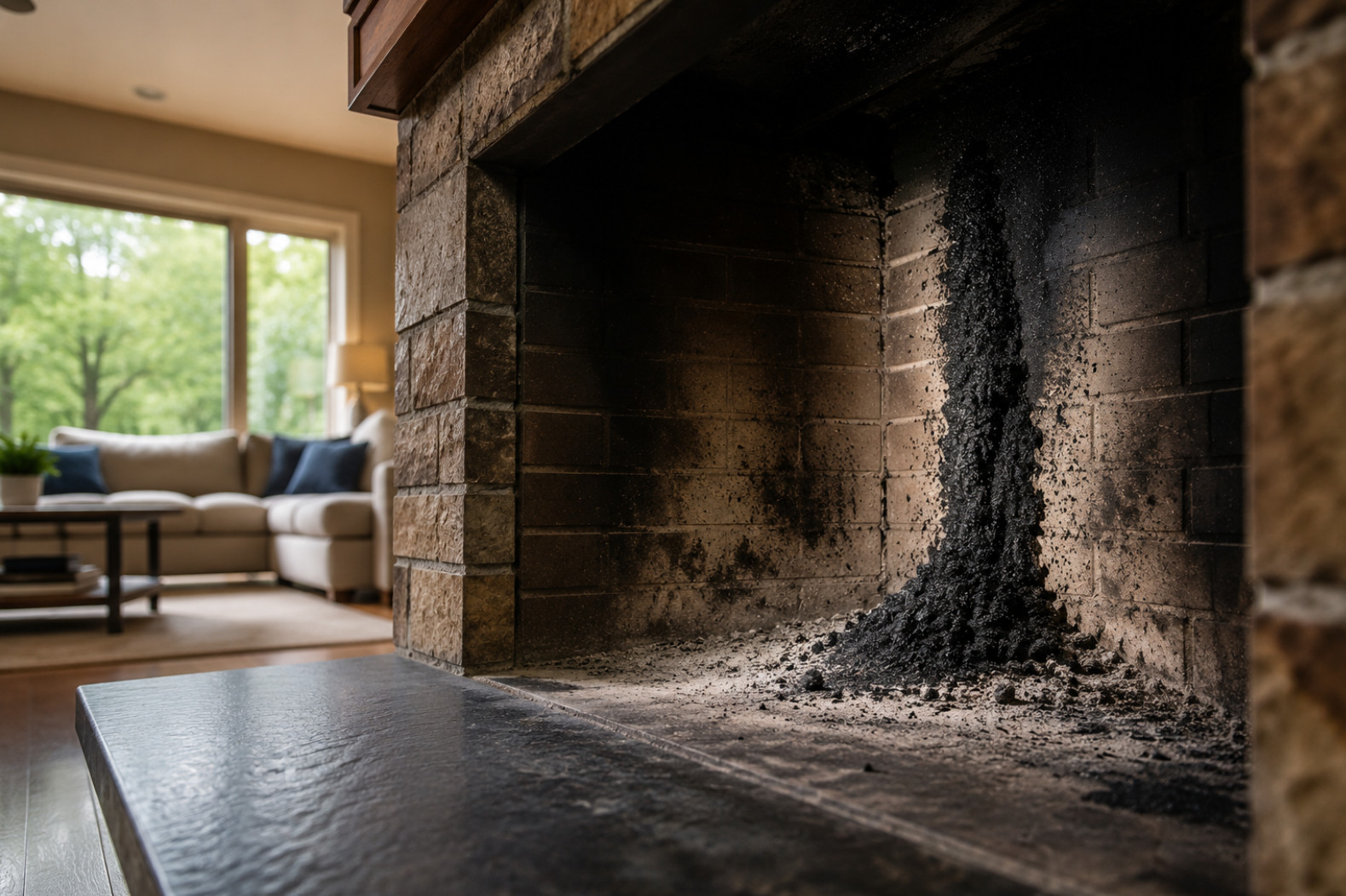
Yes, it can be. Black soot on a gas fireplace usually means the fuel is not burning cleanly, and incomplete combustion is also how carbon monoxide gets made. A light film of dust on the logs after a long summer is normal. Dark, greasy residue on the glass, the ceramic logs or the wall above the opening is not, and it is worth stopping to look at before you light the next fire.
Connecticut homeowners lean on gas fireplaces heavily from November through March, which is exactly when a problem that built up quietly all year starts to matter. Here is what the soot is telling you and what to do about it.
What black soot is really telling you
A healthy gas flame is mostly blue at the base with a softer yellow tip. When the flame is starved of air or touches something it should not, it turns lazy and orange, and carbon that did not burn settles as soot. The usual causes are:
- Ceramic logs that were moved or replaced out of order, so the flame licks the logs directly
- Burner ports clogged with dust, pet hair or debris
- A dirty pilot assembly or weak thermocouple
- Blocked air intake on the unit, or a restricted vent or flue
- Gas pressure that is off from what the manufacturer specifies
Carbon monoxide is the real concern
Carbon monoxide has no smell and no color. The CDC notes that it can build up indoors from fireplaces, furnaces, stoves and other fuel burning equipment, and that it causes sudden illness and can be fatal. Headaches, dizziness and nausea that clear up when you leave the house are the classic warning pattern.
Working CO alarms outside bedrooms and on every level are not optional with a gas fireplace. If one sounds, get everyone outside and call 911 from there. Do not stay to find the cause.

A quick safety check you can do yourself
| What you see | What it may mean | What to do |
|---|---|---|
| Black film on the glass | Incomplete combustion | Turn it off, book service |
| Soot staining above the opening | Poor draft or spillage | Stop using, get the venting inspected |
| Lazy orange flame, soot on logs | Flame touching logs or blocked ports | Professional cleaning and log check |
| Pilot that keeps going out | Dirty assembly or draft trouble | Service before relighting |
Can you clean it yourself?
You can wipe light dust from cool glass with a product the manufacturer approves. Beyond that, leave it alone. Do not shuffle the logs, scrape the burner or run a household vacuum through the firebox. Log placement affects the flame pattern, and the cause of the soot is usually hidden in the burner, the venting or the gas pressure rather than on the surface you can see.
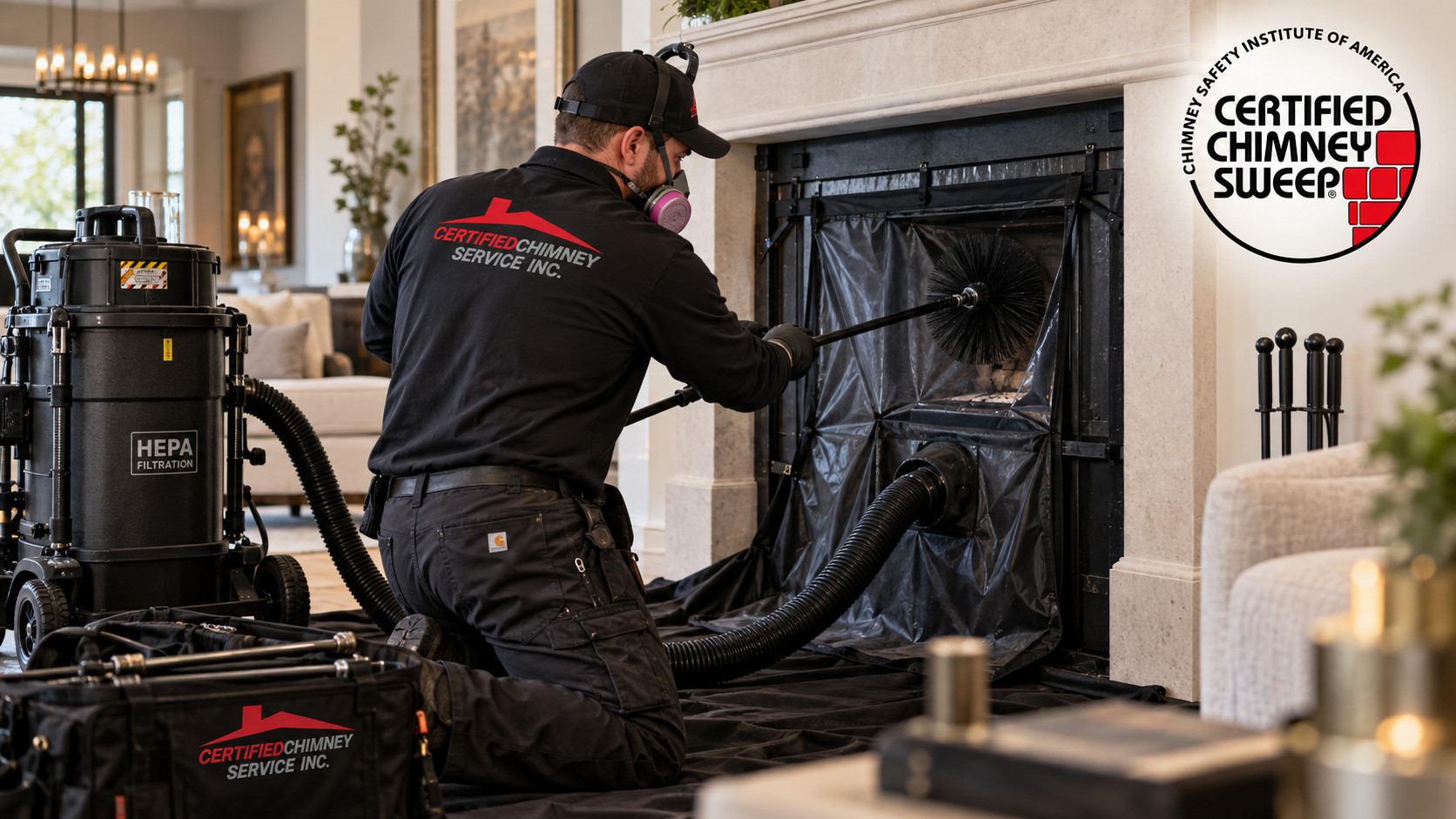
The Consumer Product Safety Commission recommends a yearly professional inspection of fuel burning heating equipment, and that includes the chimney or vent behind a gas fireplace. A sweep who understands venting will check the flue, the cap, the connections and the burner assembly in one visit. If you are not sure what a visit covers, our guide to chimney inspection levels explains the difference.
Why Connecticut homes see this more than you would expect
Coastal moisture in Fairfield and New Haven counties, tight modern construction and long winter burn seasons all push gas fireplaces harder than the manual assumes. Homes in Stamford, Darien, Norwalk and Westport that were weatherproofed in the last decade often have less natural make up air, which makes soot and spillage more likely.
When to call
Call before the next use if you see soot on the glass or walls, smell anything unusual, notice delayed ignition, or have a pilot that will not stay lit. Our CSIA certified technicians service gas and wood burning systems across Fairfield and New Haven counties, and a service visit costs far less than the problems that develop when soot is ignored.
Local Help and Related Reading
Our crews handle chimney sweeps and chimney cleaning across the shoreline, plus chimney repair in Greenwich, chimney caps in Westport and repairs in Danbury. You can also browse our full list of service areas.
More to read: How Winter Weather Damages Chimneys in Fairfield County, Why Is My Chimney Not Drawing? Causes of a Smoking Fireplace, What Happens When a Chimney Flue Is Blocked?.
For general guidance, the EPA Burn Wise program covers cleaner wood burning, and the U.S. Department of Energy explains how fireplaces and chimneys affect home efficiency. Connecticut residents can find state energy and safety resources through CT DEEP.