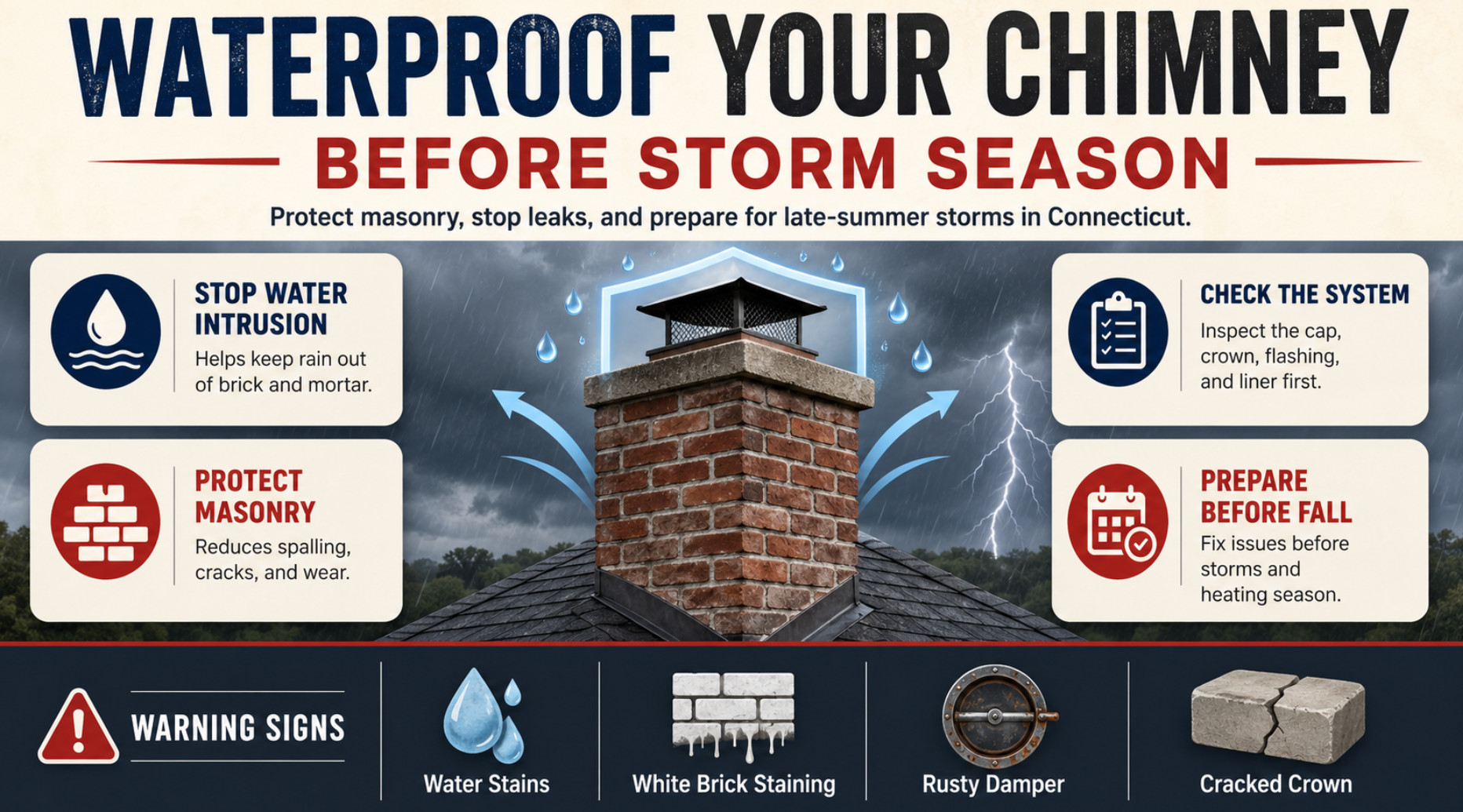

Connecticut winters are hard on masonry. Coastal moisture, heavy snow and repeated swings above and below freezing all work on a chimney from the outside, while smoke, steam and creosote work on it from the inside. By the time you see a leak in the ceiling, the damage has usually been building for several seasons.
The freeze and thaw cycle
Brick and mortar are porous. Rain and melting snow soak in, then freeze overnight and expand. When that happens dozens of times a winter, the surface of the brick flakes away, a problem called spalling, and mortar joints crumble. Homes in Stamford, Norwalk and Fairfield, where salt air adds to the moisture, tend to show it first.
Where winter damage shows up
- The crown. The concrete slab on top cracks, and water runs straight into the masonry below.
- The flashing. The metal seal where the chimney meets the roof lifts or rusts, and snowmelt finds the gap.
- The flue liner. Moisture and acidic condensate crack clay tiles from the inside.
- The chimney cap. Missing or bent caps let rain, snow and animals straight down the flue.

Signs to check after a cold snap
- White powdery staining on the brick, which is salt deposits from moisture moving through
- Brick faces lying in the flower bed or on the roof
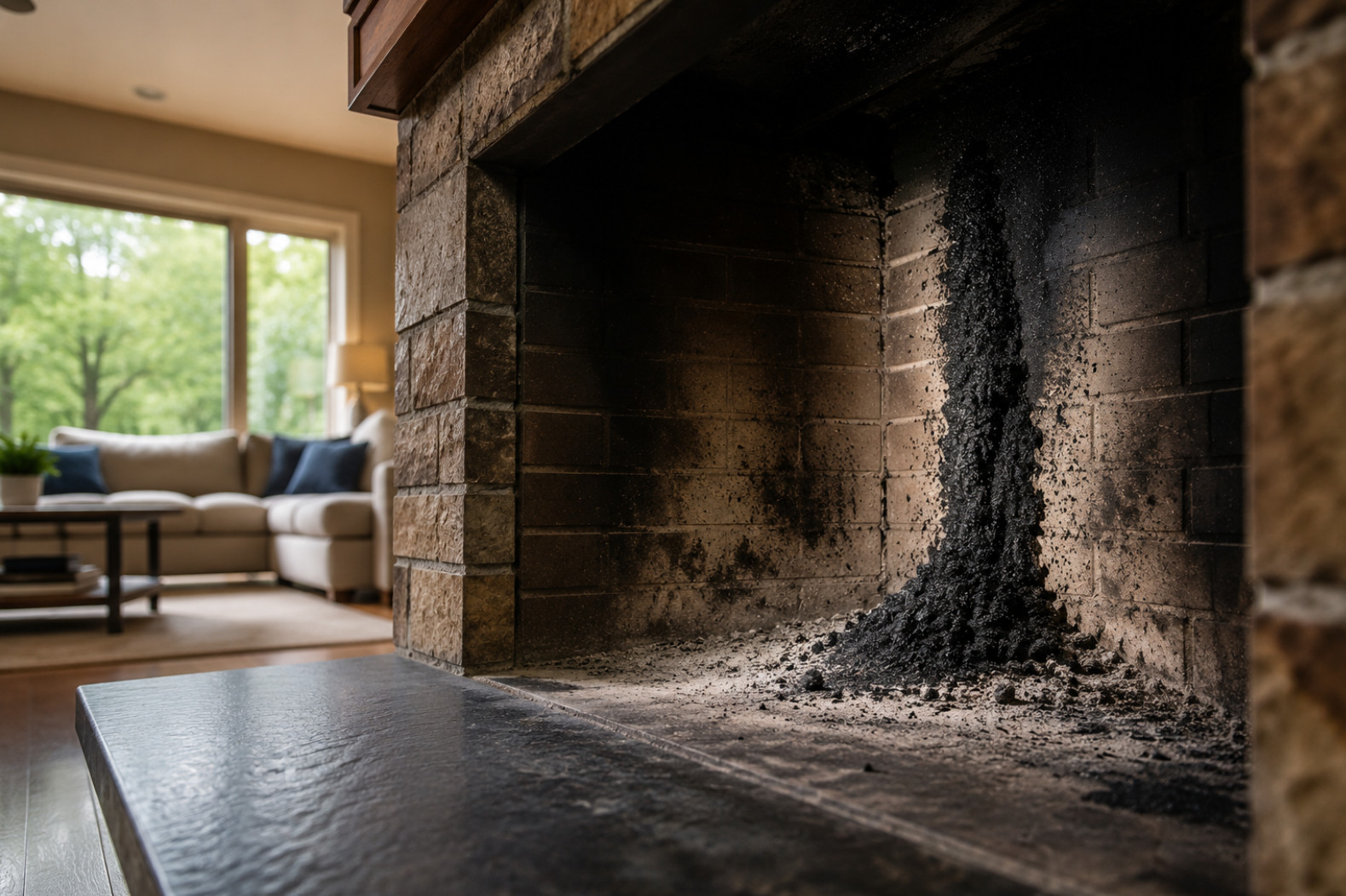
- Rust streaks inside the firebox or a damp, musty smell when the fireplace is cold
- Water stains on the wall or ceiling near the chimney
The Chimney Safety Institute of America recommends a yearly inspection because damage like this is often invisible from the ground. A technician looks at the flue interior with a camera, which is the only reliable way to catch a cracked liner before it becomes a fire or carbon monoxide risk.
What you can do before the next storm
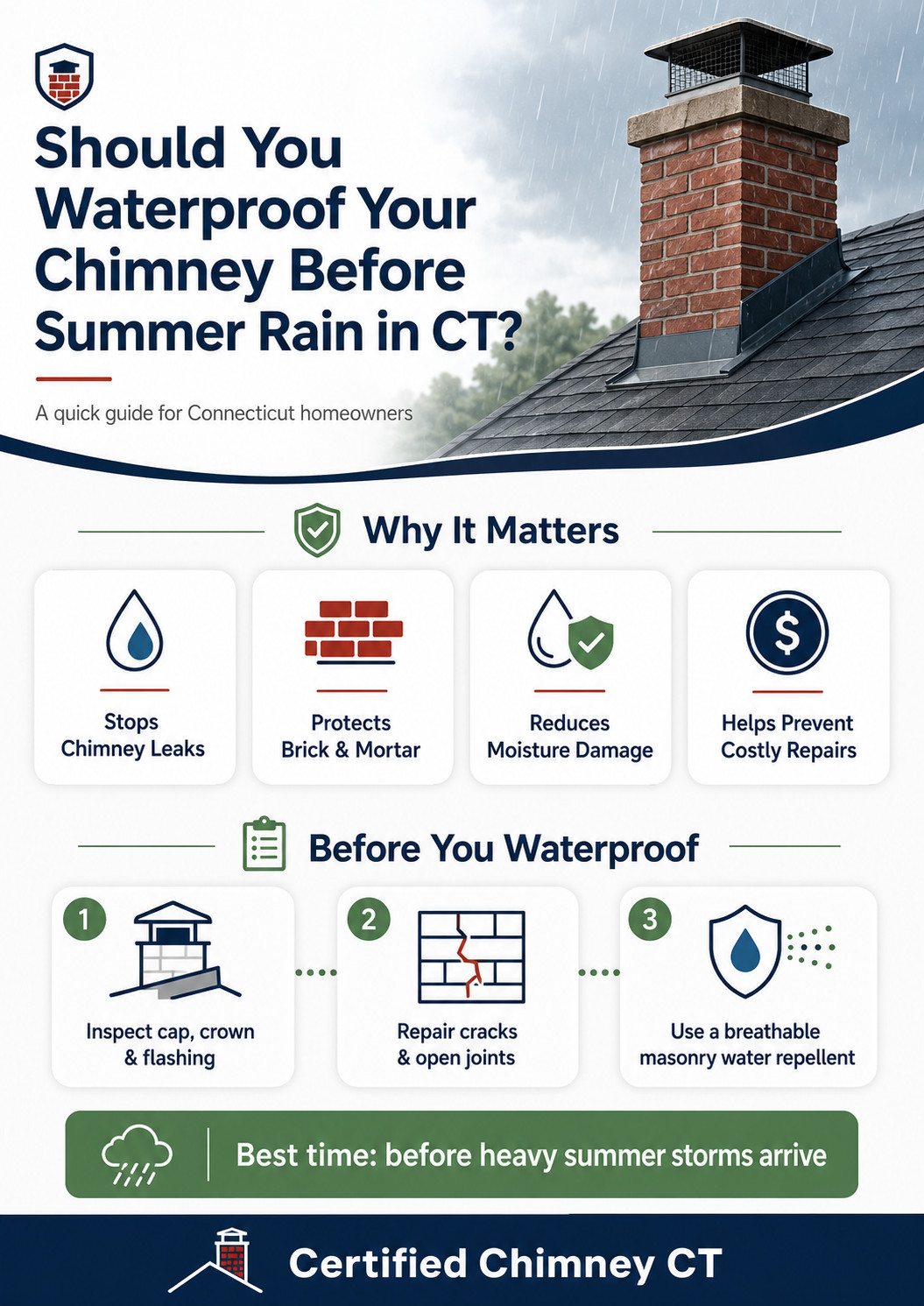
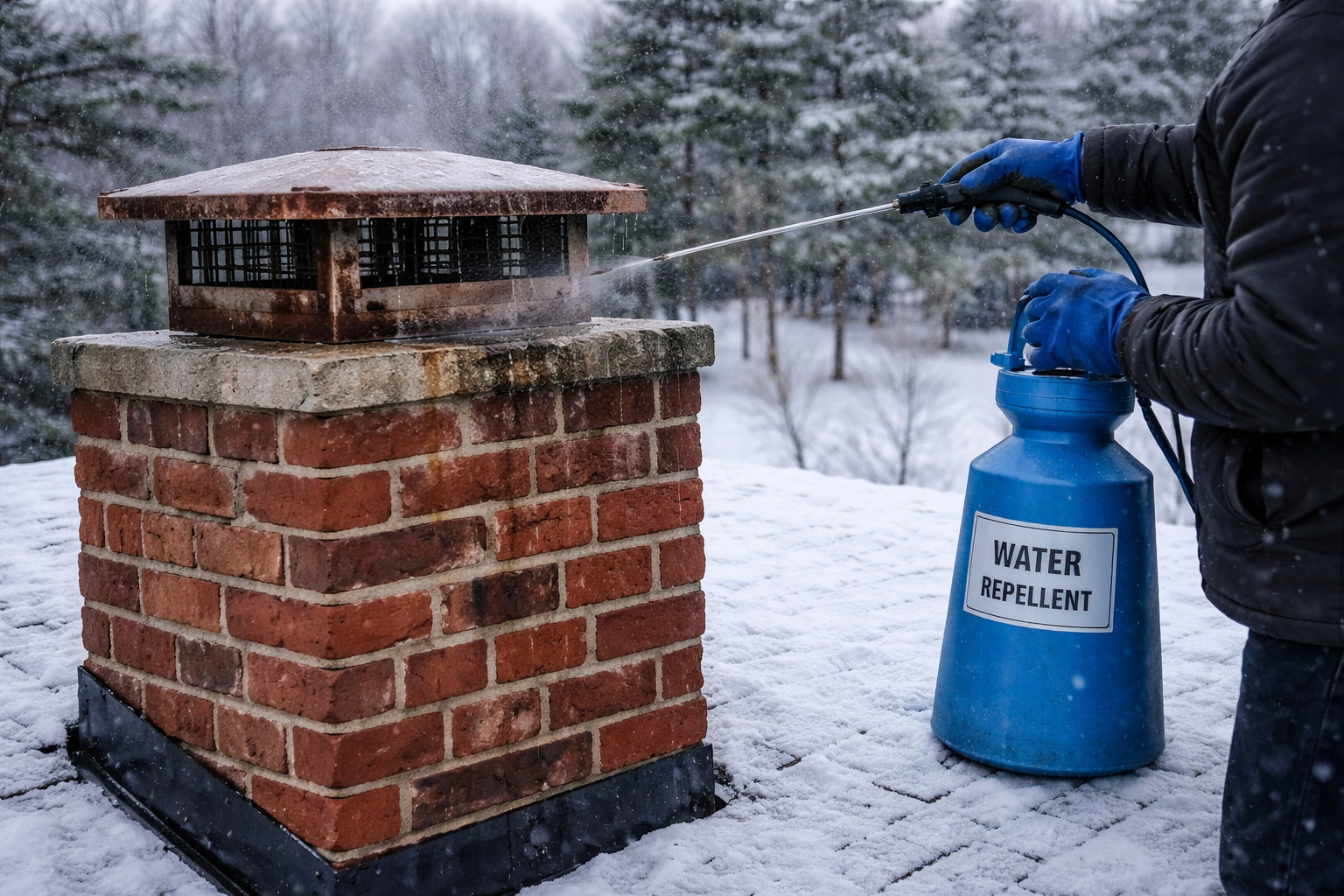
Have the crown sealed or rebuilt, replace damaged flashing, repoint failing mortar and install a stainless steel cap. Waterproofing the masonry with a breathable sealant helps too, but only after the repairs are done. Sealing over damaged brick traps moisture and makes things worse. Our repair services cover each of these across Fairfield and New Haven counties.
Questions about fuel burning safety in winter are also worth a look at the NFPA home heating guidance, which tracks how many house fires start with heating equipment each year.
Local Help and Related Reading
Our crews handle chimney sweeps and chimney cleaning across the shoreline, plus chimney repair in Greenwich, chimney caps in Westport and repairs in Danbury. You can also browse our full list of service areas.
More to read: Is Black Soot From a Gas Fireplace Dangerous?, Why Is My Chimney Not Drawing? Causes of a Smoking Fireplace, What Happens When a Chimney Flue Is Blocked?.
For general guidance, the EPA Burn Wise program covers cleaner wood burning, and the U.S. Department of Energy explains how fireplaces and chimneys affect home efficiency. Connecticut residents can find state energy and safety resources through CT DEEP.