A blocked flue is one of the quickest ways for a chimney to go from an inconvenience to an emergency. When exhaust cannot leave the house, it comes back in. That means smoke, soot and carbon monoxide in the rooms where your family sleeps and eats.
What can block a flue
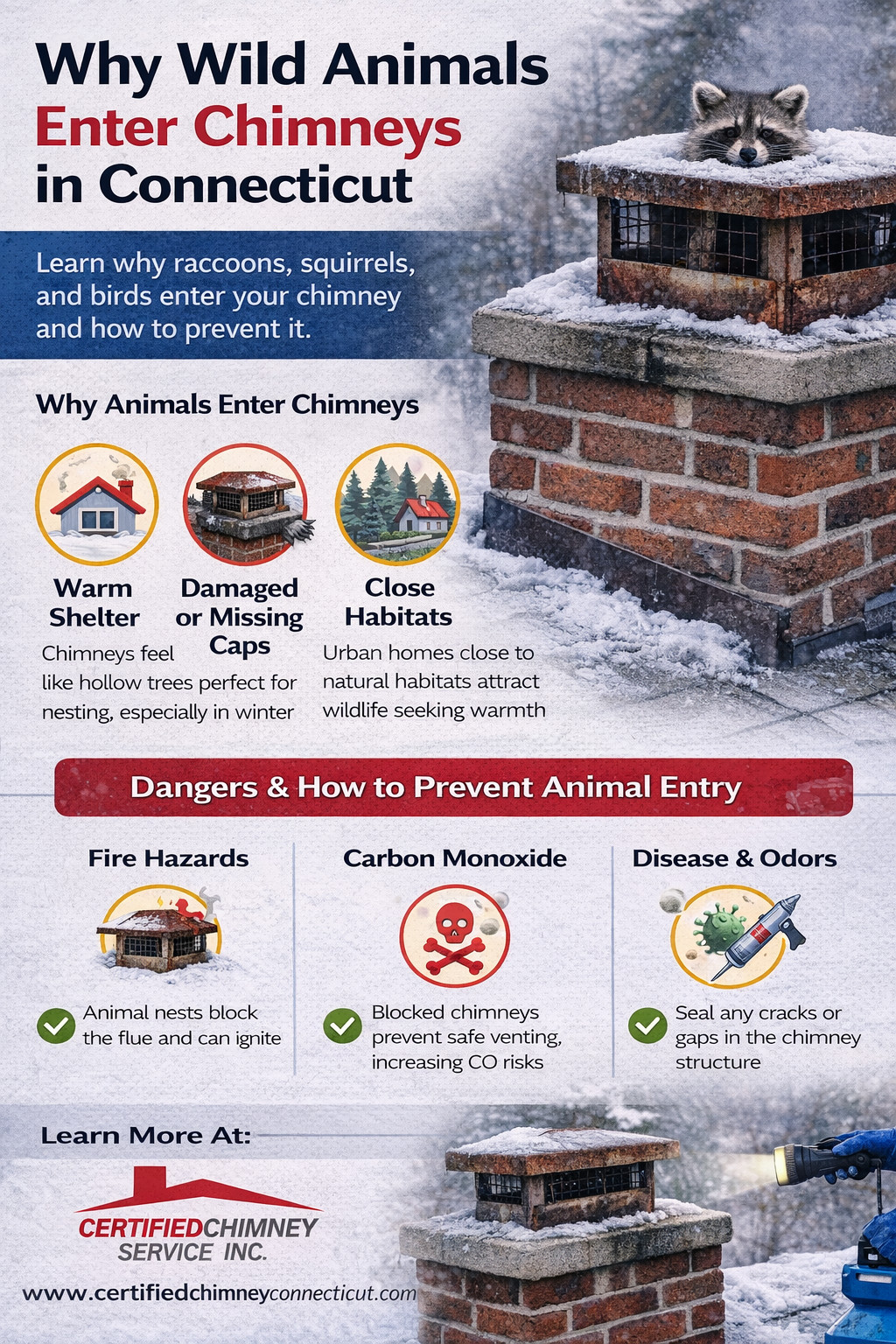
- Bird nests, leaves and branches, especially in chimneys without a cap
- Squirrels, raccoons and bats that moved in over the summer
- Creosote buildup that hardens into thick glaze
- Fallen pieces of cracked flue tile or loose brick
- A closed or broken damper
What happens when exhaust cannot escape
Carbon monoxide
The CDC warns that carbon monoxide from fuel burning appliances can reach dangerous levels indoors without any smell or visible sign. A blocked flue on a gas or oil furnace, water heater or fireplace is a classic cause.
Chimney fires
Restricted airflow makes a fire burn cooler and dirtier, which lays down more creosote. A heavy creosote layer can ignite and burn hot enough to damage the liner and spread to the framing around the chimney.
Smoke damage and odors
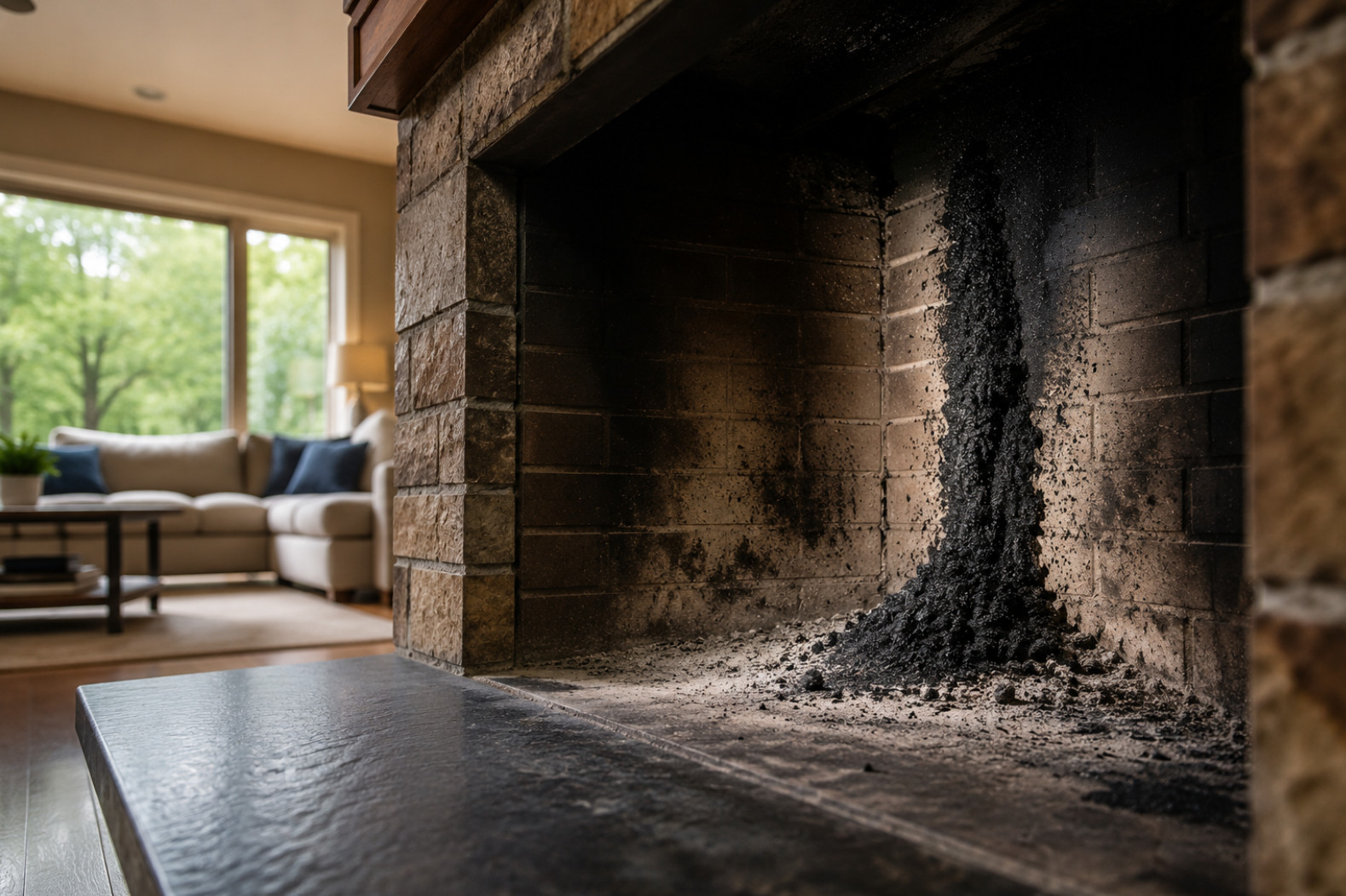
Smoke staining on walls, a sharp smell when the fireplace is cold, and a sooty film on nearby surfaces all point to exhaust spilling where it should not.

How a technician finds and clears it
- Look into the flue with a camera to see exactly what is in the way.
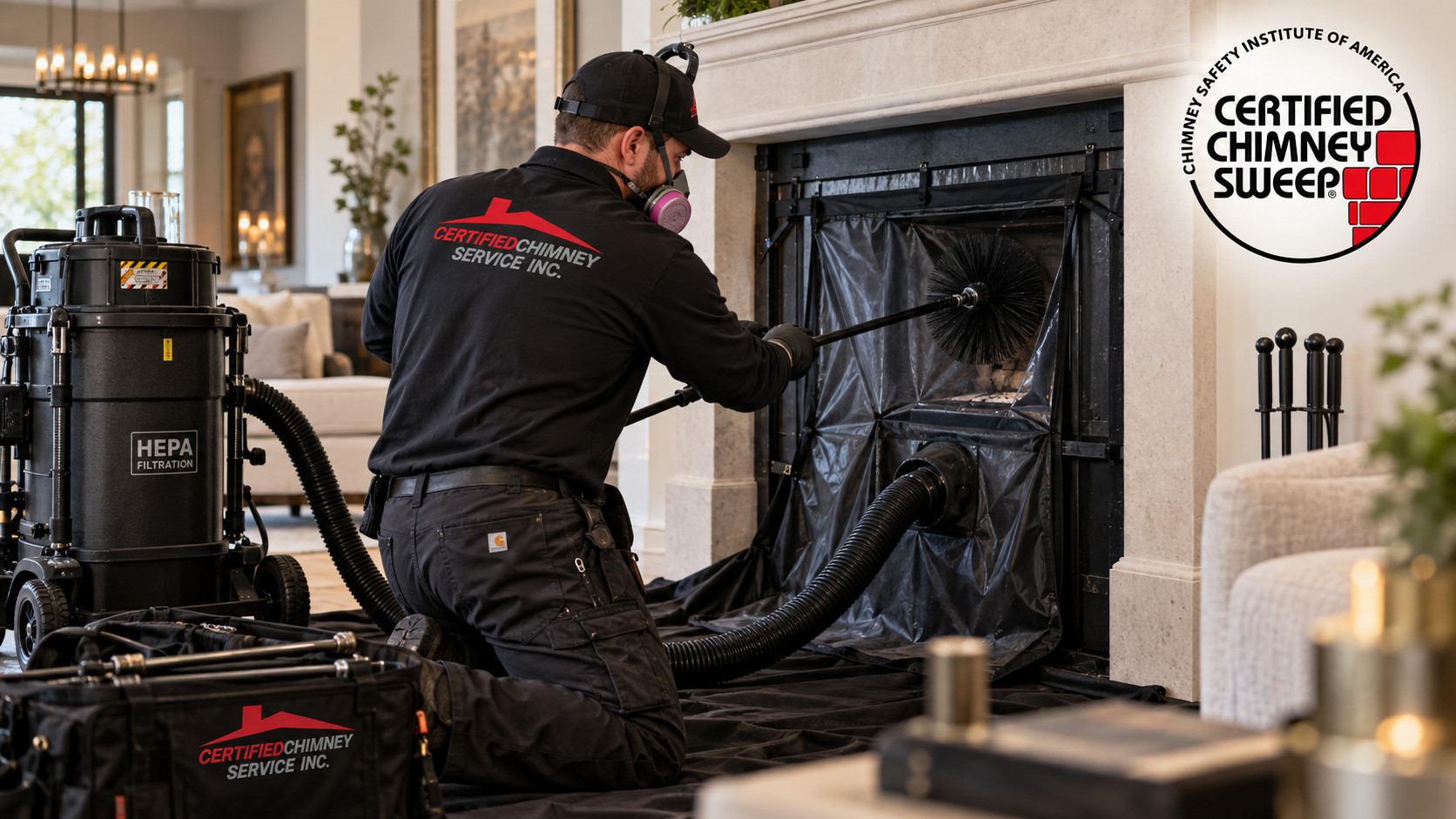
- Remove debris from the top or bottom with the right tools, never by dropping weight down the flue.
- Sweep creosote and check the liner for cracks.
- Install a cap with mesh so it does not happen again.
The CPSC and the CSIA both recommend a yearly inspection, because a blockage can form between one fall and the next. If you are unsure what to expect, our service area pages show the Connecticut towns where our crews work daily.
Warning signs worth acting on today
A fireplace that smokes, a furnace that keeps tripping off, scratching or chirping sounds in the wall, loose debris in the firebox, and any carbon monoxide alarm. Any one of these deserves a call, and the alarm deserves an immediate exit.
Local Help and Related Reading
Our crews handle chimney sweeps and chimney cleaning across the shoreline, plus chimney repair in Greenwich, chimney caps in Westport and repairs in Danbury. You can also browse our full list of service areas.
More to read: Is Black Soot From a Gas Fireplace Dangerous?, How Winter Weather Damages Chimneys in Fairfield County, Why Is My Chimney Not Drawing? Causes of a Smoking Fireplace.
For general guidance, the EPA Burn Wise program covers cleaner wood burning, and the U.S. Department of Energy explains how fireplaces and chimneys affect home efficiency. Connecticut residents can find state energy and safety resources through CT DEEP.