Connecticut has some of the oldest homes in the country, and many still have their original chimneys. Those chimneys were built to last, but they were never designed for modern heating, modern codes or two hundred winters.
What makes old chimneys different
Many were built with soft lime mortar and no flue liner at all. Smoke passed directly against brick and mortar. Over decades, that wears the joints and lets gases leak through.
Common problems we see
- Missing or cracked liners, or no liner at all
- Mortar that has eroded from the flue side
- Multiple fireplaces sharing a chimney stack
- Settled or leaning chimneys
- Old flashing patched with tar
What good preservation looks like
| Issue | Respectful fix |
|---|---|
| Eroded interior mortar | Reline with stainless steel |
| Surface crumbling | Repoint with matching lime mortar |
| Leaking crown | Rebuild with a proper drip edge |
| Unused flues | Cap and seal safely |
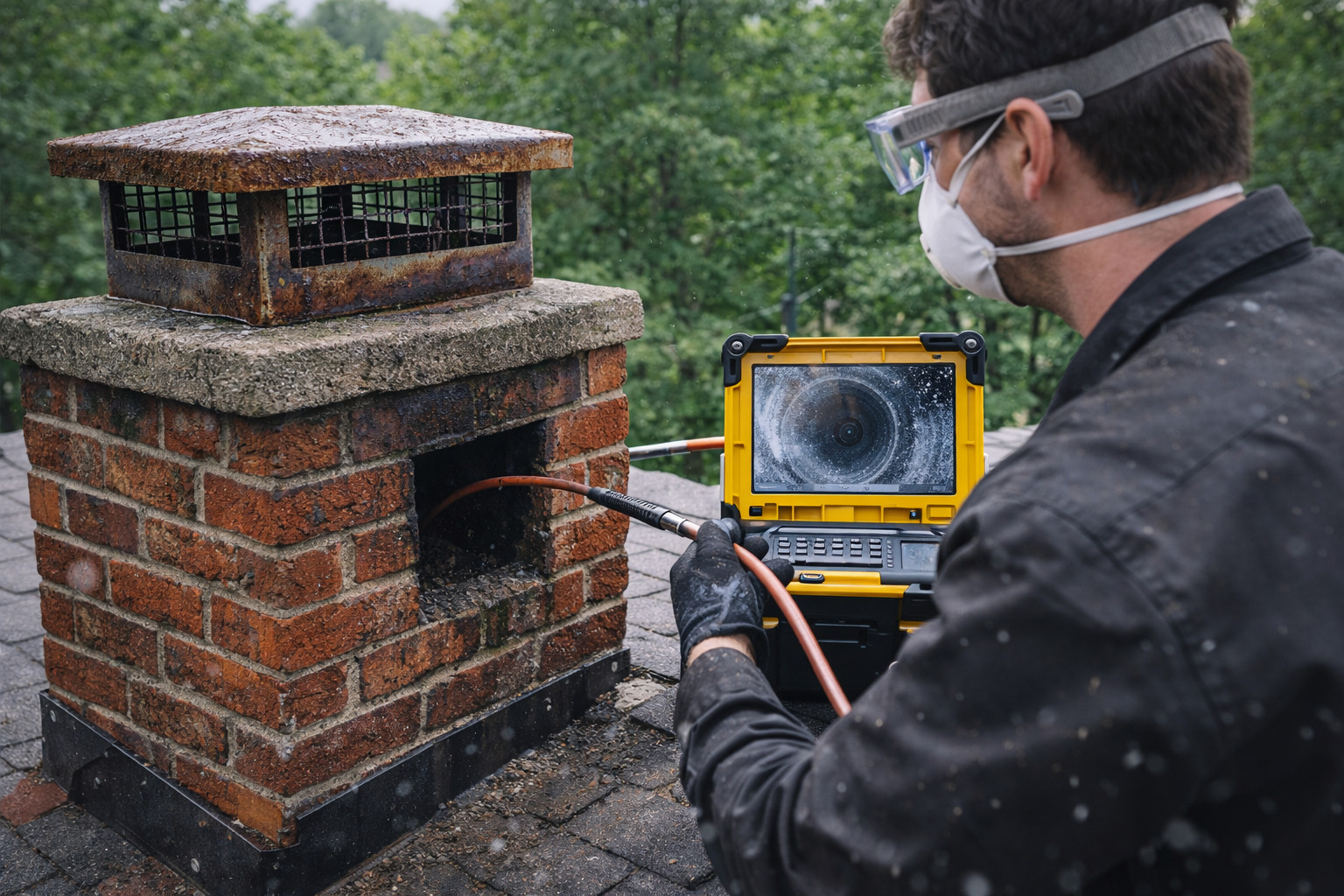
The CSIA recommends a Level 2 inspection when a historic home is purchased or an old fireplace is put back in use, and the NFPA sets safety standards for venting. Read about the Level 2 inspection to see what is involved.
Where to find preservation help
Homeowners can learn about state preservation resources through the State of Connecticut, and the National Park Service publishes guidance on historic masonry.
FAQ
Can an old fireplace still be used? Often yes, once it is relined and inspected.
Why Historic Connecticut Chimneys Need Special Care
Chimneys in colonial, Federal and Victorian homes across Fairfield and New Haven counties were built with lime mortar, soft brick and often no flue liner at all. Many have a central chimney serving several fireplaces, with wide flues designed for open cooking fires rather than modern appliances. Standard modern repair methods can damage them, and using them for stoves or furnaces without changes can be dangerous.
Common Problems in Older Chimneys
- No liner, so smoke and heat contact old brick and wood framing directly
- Hard portland cement mortar used in past repairs, which cracks soft brick
- Deteriorated mortar joints inside the flue
- Chimney leaning or separated from the house
- Wood framing too close to the masonry
- Fireplace openings too large for efficient draft
Preservation Friendly Repairs
Repointing should use lime based mortar that matches the original in strength and color. Replacement brick should match the original in size, color and softness. Stainless liners can be added without changing the look from the street. A top sealing damper or cap should be chosen to blend with the roofline.
Using a Historic Fireplace Safely
- Get a Level 2 inspection before the first fire
- Have the flue lined if it has none
- Burn small fires of dry hardwood
- Install carbon monoxide alarms on every floor
- Keep furniture and drapes well away from the opening
Frequently Asked Questions
Can a historic fireplace be used
Often yes, after inspection and with proper liner and repairs.
Will a liner change the look
Not from the outside. A liner is installed inside the existing flue.
Are there rules for historic districts
Some towns require approval for exterior changes. Check with your local commission.
Local Help and Related Reading
Our crews handle chimney sweeps in Darien, chimney repair in Greenwich, chimney caps in Westport and chimney cleaning in Fairfield. Browse every town on our service areas page or our services.
More to read: Fall Chimney Inspection Checklist for Connecticut Homeowners, What to Do After a Chimney Fire in Connecticut, Do You Need a Chimney Liner for a Wood Stove?.
For wider guidance, see the EPA Burn Wise program, the U.S. Department of Energy and CT DEEP.