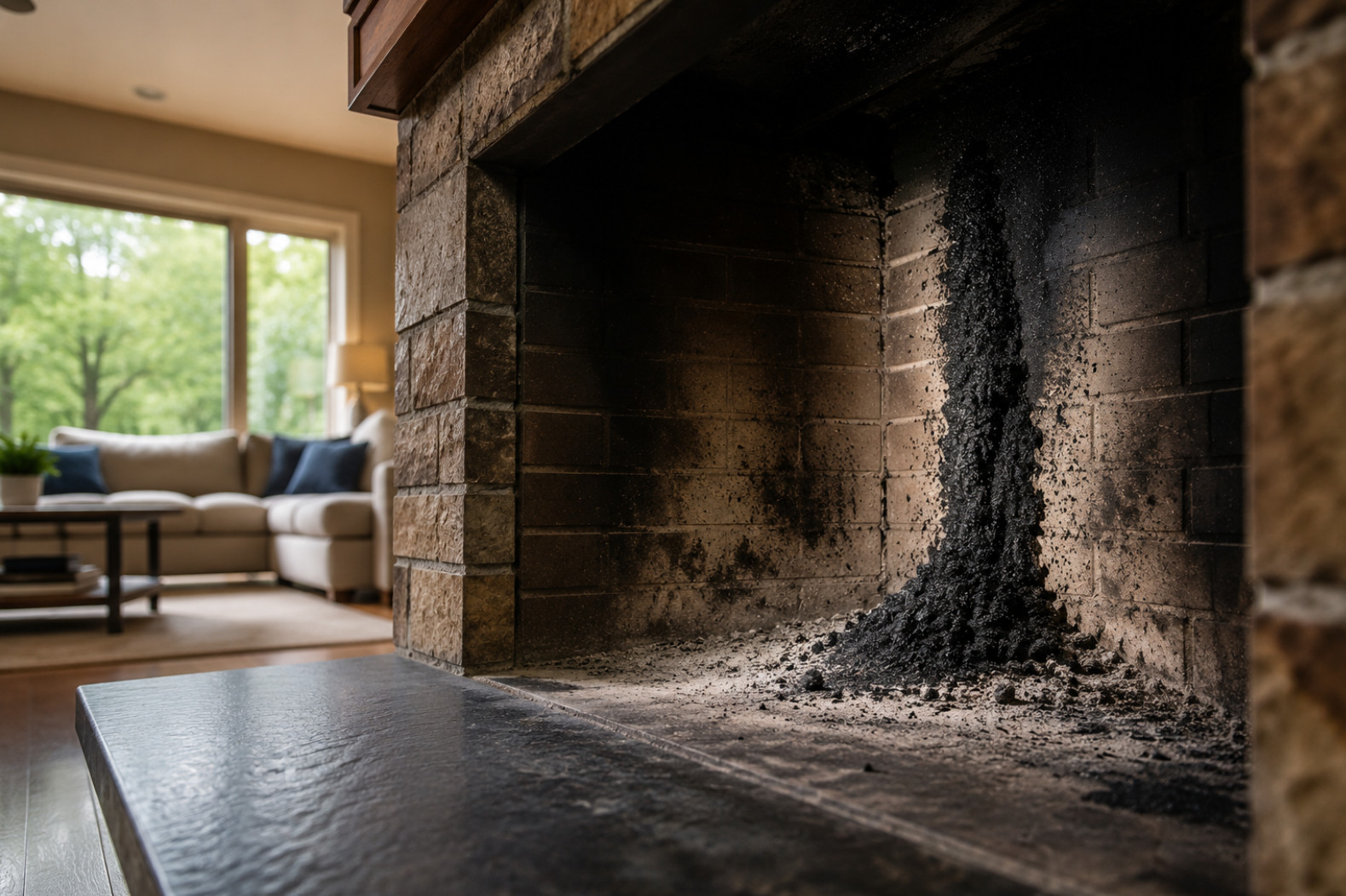
Not every chimney fire is dramatic. Some burn quietly inside the flue with a low roar, a hot chimney and thick smoke, then burn out on their own. Either way, the danger is not over when the flames stop.

In the first few minutes
- Get everyone out of the house.
- Call 911 from outside.
- If it is safe and you can reach it, close the damper and glass doors to starve the fire of air.
- Do not pour water into the fireplace. It can crack the flue and create steam.
What happens next
Firefighters will make sure nothing is burning inside the walls. After they leave, call your insurer and then a certified chimney company. The NFPA advises a full inspection after any chimney fire before the system is used again.
What a post fire inspection looks for
- Cracked, warped or missing flue tiles
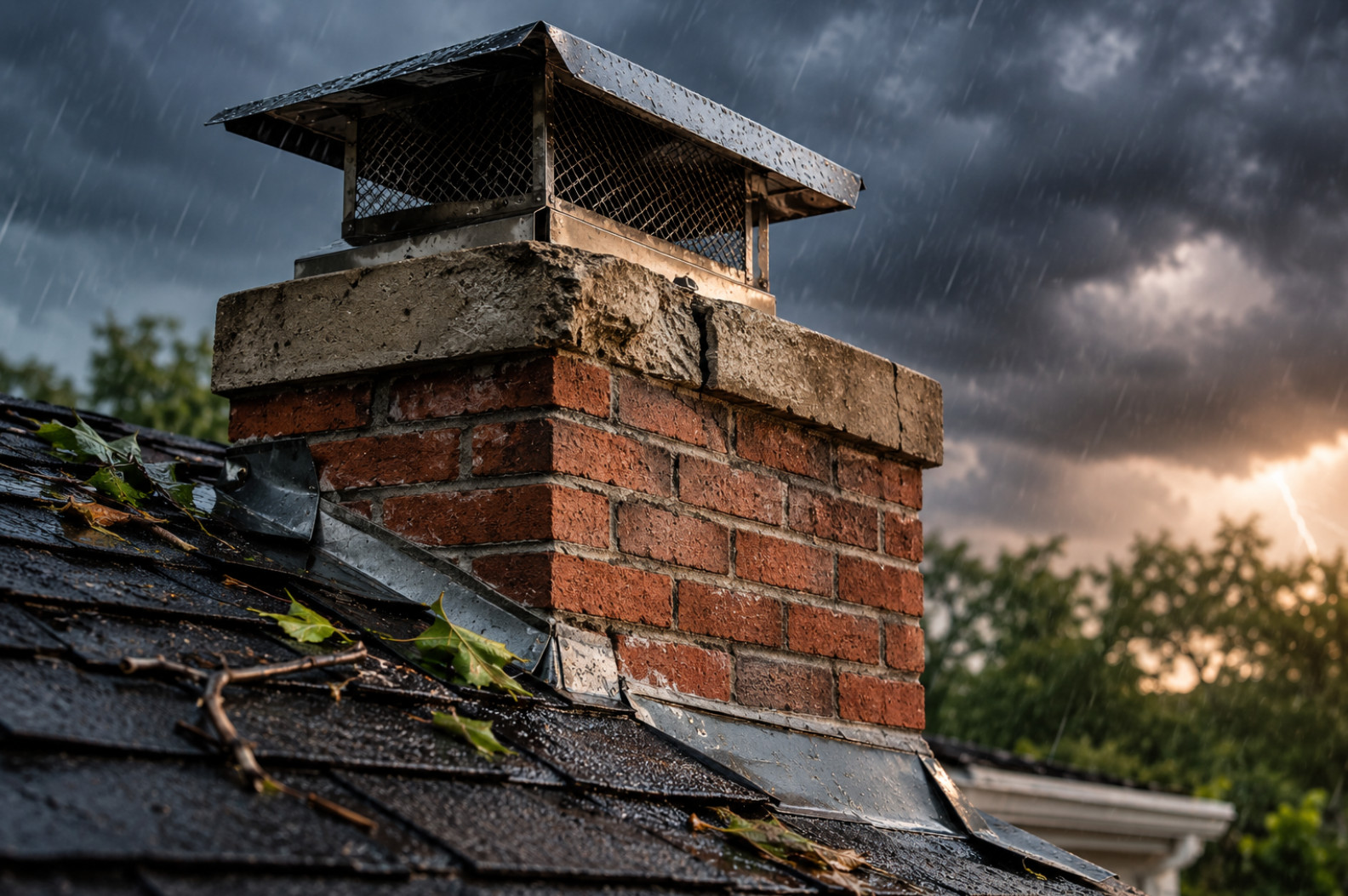
- Heat damage to the crown, cap and flashing
- Soot or scorching on nearby framing
- Damage to the damper and smoke chamber
Repair options at a glance
| Damage | Usual repair |
|---|---|
| Cracked clay tile | Stainless steel relining |
| Damaged crown or cap | Rebuild or replace |
| Mortar failure | Repointing |
| Structural heat damage | Rebuild affected section |
How to prevent the next one
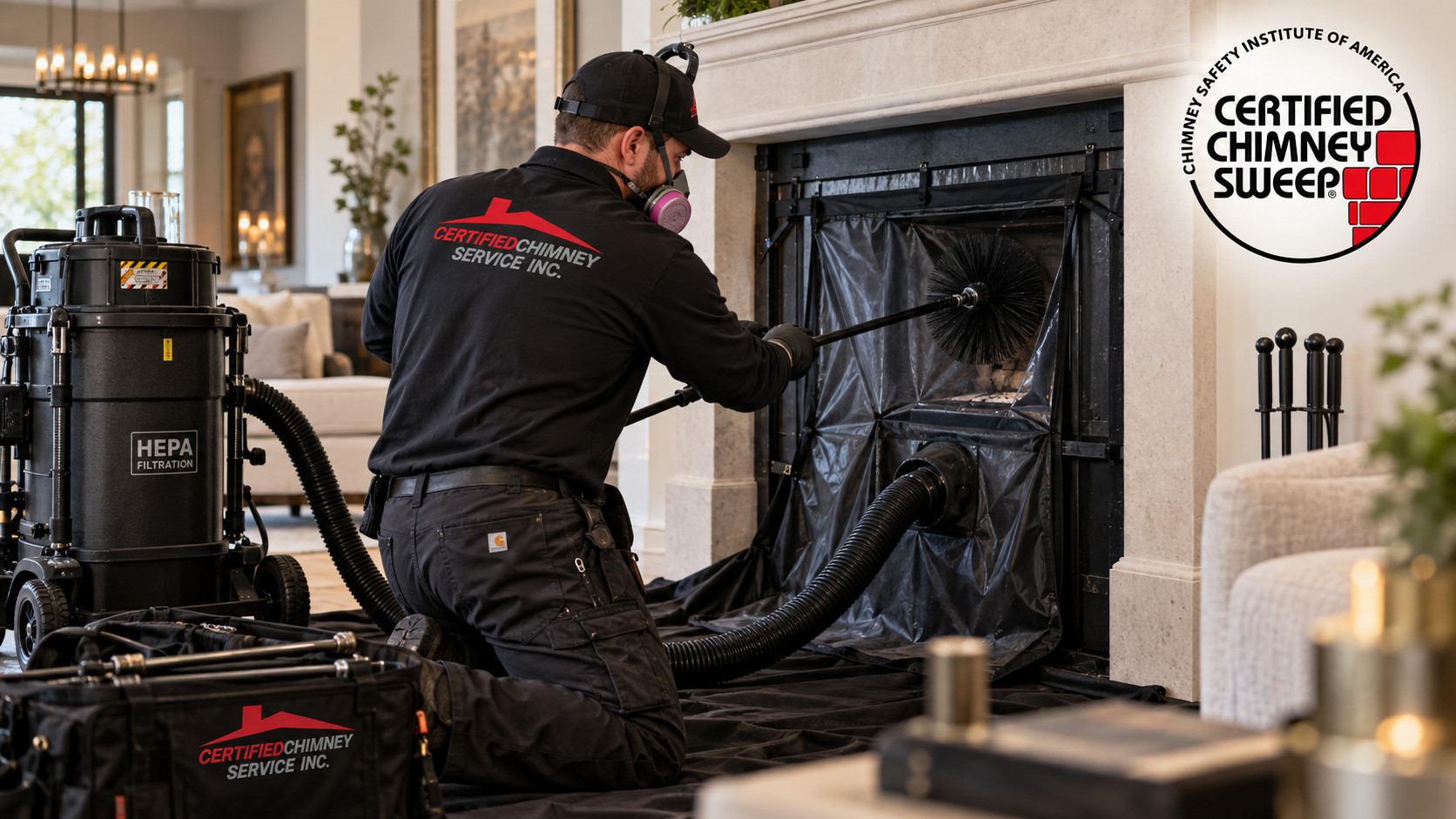
Most chimney fires start with creosote. A yearly sweep and burning dry hardwood remove the fuel. The CSIA has detailed guidance on creosote levels, and our Level 2 inspection is the right starting point after a fire.
FAQ
Will insurance cover it? Often yes, but they will want an inspection report. Ask your provider.
Local Help and Related Reading
Our crews handle chimney sweeps in Danbury, chimney repair in Stamford, chimney caps in Norwalk and chimney cleaning in Fairfield. Browse every town on our service areas page or our services.
More to read: Fall Chimney Inspection Checklist for Connecticut Homeowners.
For wider guidance, see the EPA Burn Wise program, the U.S. Department of Energy and CT DEEP.