Shared chimneys are common in older Connecticut multi family homes, condos and converted properties in cities like Stamford, Norwalk, Bridgeport and New Haven. Whether they are safe depends on how they were built, how they are used and how well they are maintained. Here is how to tell.
How shared chimneys work
A single masonry stack can carry several flues, each serving one fireplace, furnace or water heater. Those flues are supposed to be separated by solid masonry and a liner for each appliance. Problems start when two appliances share one flue or when the dividing wall between flues has cracked.
The risks of a shared system
| Risk | What it means for neighbors |
|---|---|
| Cross flow of exhaust | Smoke or carbon monoxide enters another unit |
| Cracked dividing wall | Fire in one flue reaches the next |
| Unlined flues | Heat and gases leak through the masonry |
| One owner skips maintenance | Everyone shares the creosote or blockage |
Who is responsible
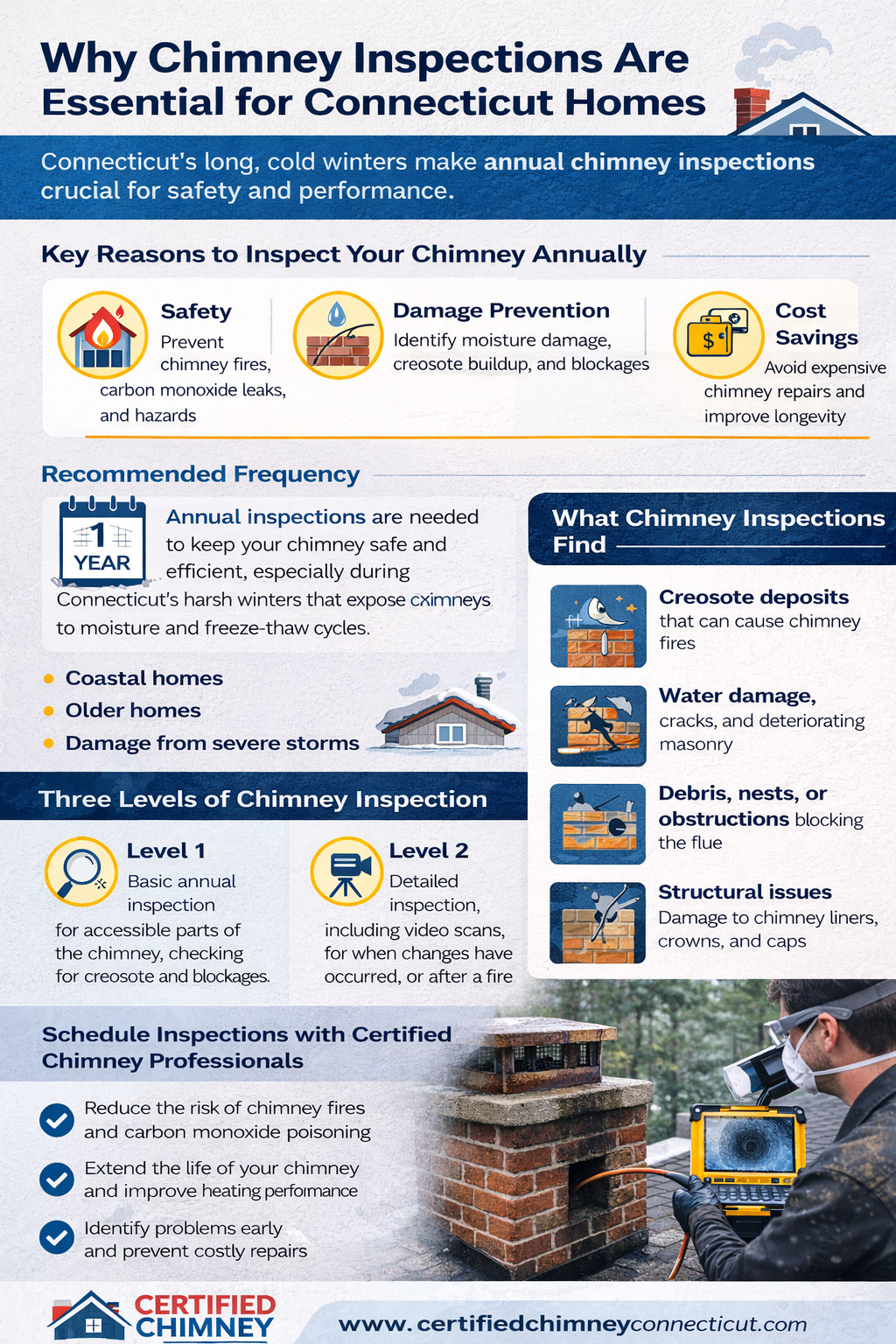
In condos and co ops the chimney is usually a common element handled by the association. In a two family house, the owner is responsible. If you rent, tell your landlord in writing about smoke, odors or alarms, and keep a copy.
Local Help and Related Reading
Our crews handle chimney sweeps and chimney cleaning across the shoreline, plus chimney repair in Greenwich, chimney caps in Westport and repairs in Danbury. You can also browse our full list of service areas.
More to read: Is Black Soot From a Gas Fireplace Dangerous?, How Winter Weather Damages Chimneys in Fairfield County, Why Is My Chimney Not Drawing? Causes of a Smoking Fireplace.
For general guidance, the EPA Burn Wise program covers cleaner wood burning, and the U.S. Department of Energy explains how fireplaces and chimneys affect home efficiency. Connecticut residents can find state energy and safety resources through CT DEEP.
What a proper inspection covers
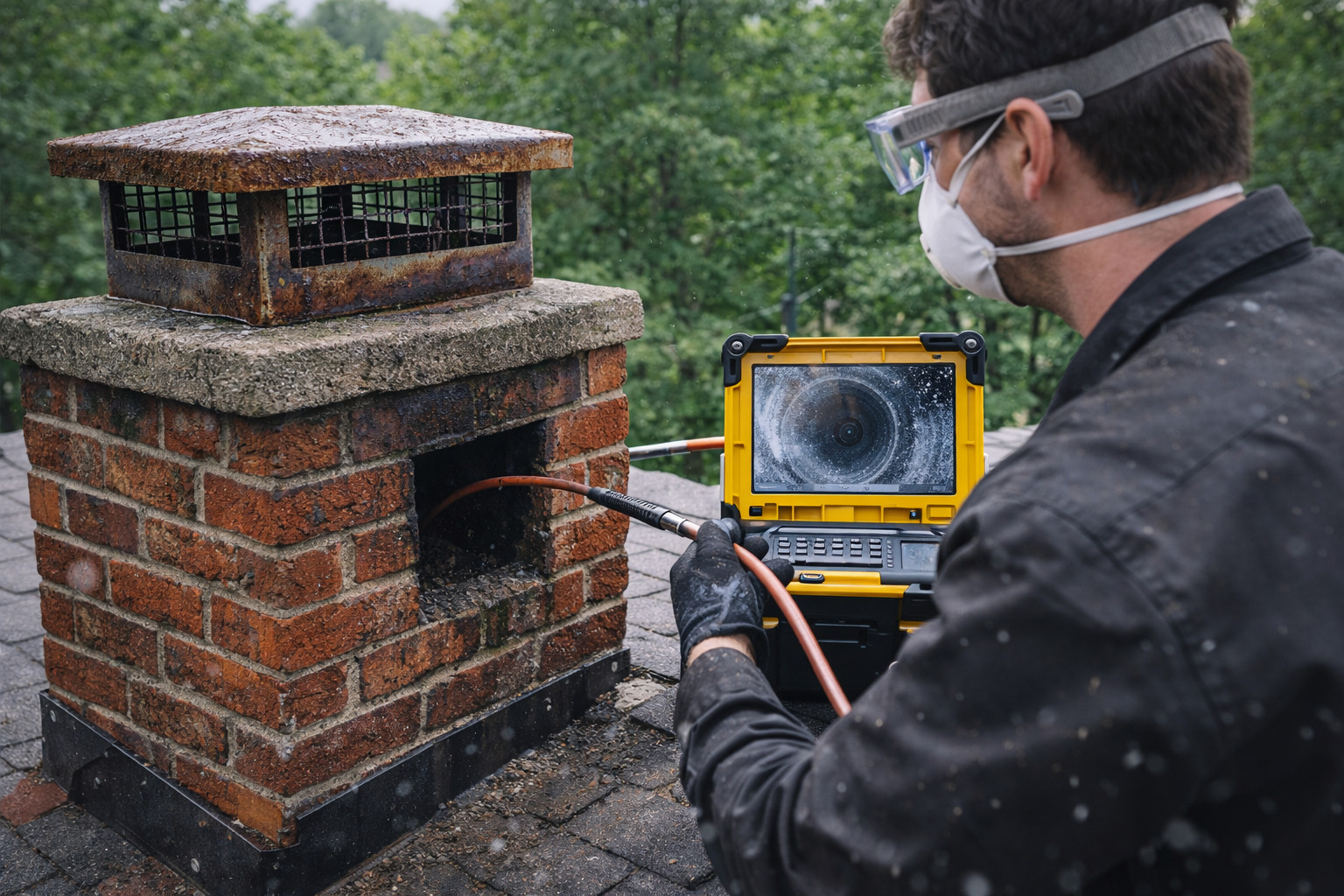
- A camera run through every flue in the stack, one at a time
- A check that each appliance has its own correctly sized liner
- Smoke testing to confirm no cross leakage between units
- Inspection of the crown, cap and flashing for the whole stack
The NFPA sets codes covering chimneys and venting, and the CSIA trains technicians to apply them. We follow both. Read our overview of a Level 2 inspection to see why a camera is required for shared systems.
Frequently asked questions
Can two appliances share one flue? Only if the manufacturer and local code allow it and the flue is sized for both. Many older setups do not meet that standard.
Can I use my fireplace if my neighbor does not use theirs? Yes, if the flues are separate and intact. An inspection confirms it.
Property managers and homeowners across Fairfield and New Haven counties schedule shared chimney inspections with us. Request a free estimate to get started.