Homes located near the Connecticut shoreline experience environmental conditions that are very different from inland areas. Coastal towns along Long Island Sound are exposed to stronger winds, higher humidity, and frequent coastal weather systems throughout the year. These conditions constantly expose exterior structures to moisture and salt-heavy air. Over time, this environment can accelerate deterioration in building materials that already absorb water.
Chimneys are particularly vulnerable in coastal climates because they extend above the roofline and remain exposed on all sides. Masonry materials such as brick and mortar joints naturally absorb moisture when left unprotected. In Connecticut coastal towns, repeated exposure to rain, salt-heavy air, and humidity can slowly break down chimney masonry and lead to long-term structural concerns.
Coastal humidity can have a serious impact on masonry structures. Brick and mortar joints are porous materials, which means they naturally absorb moisture from the surrounding air. In coastal regions of Connecticut, humidity levels remain higher than inland areas for much of the year. This constant exposure allows moisture to penetrate deeper into the chimney system.
Once water enters masonry materials, it can remain trapped inside the structure. When temperatures drop during colder months, that moisture expands as it freezes. This freeze-thaw cycle gradually weakens masonry work and contributes to cracks, loose mortar joints, and exterior deterioration. Without proper masonry protection, the chimney structure becomes more vulnerable to water damage.
Chimney waterproofing helps protect masonry chimneys from moisture damage. Brick and mortar naturally absorb water, especially during rain, snow, and freeze-thaw cycles. When moisture enters the masonry, it can weaken mortar joints and lead to cracks over time. Professional waterproofing chimney services apply a specialized water-repellent coating to the chimney surface. This coating allows the masonry to breathe while blocking water from soaking into the brick and mortar. By reducing moisture absorption, waterproofing helps prevent water damage, protects the chimney structure, and extends the life of the entire chimney system.
These waterproof materials are specifically designed for exterior masonry protection. Unlike sealants that trap moisture inside brick, chimney waterproofing solutions allow trapped vapor to escape while blocking rainwater and humidity from entering the structure. In coastal areas of Connecticut, this protective layer helps preserve chimney crowns, mortar joints, and other masonry components.
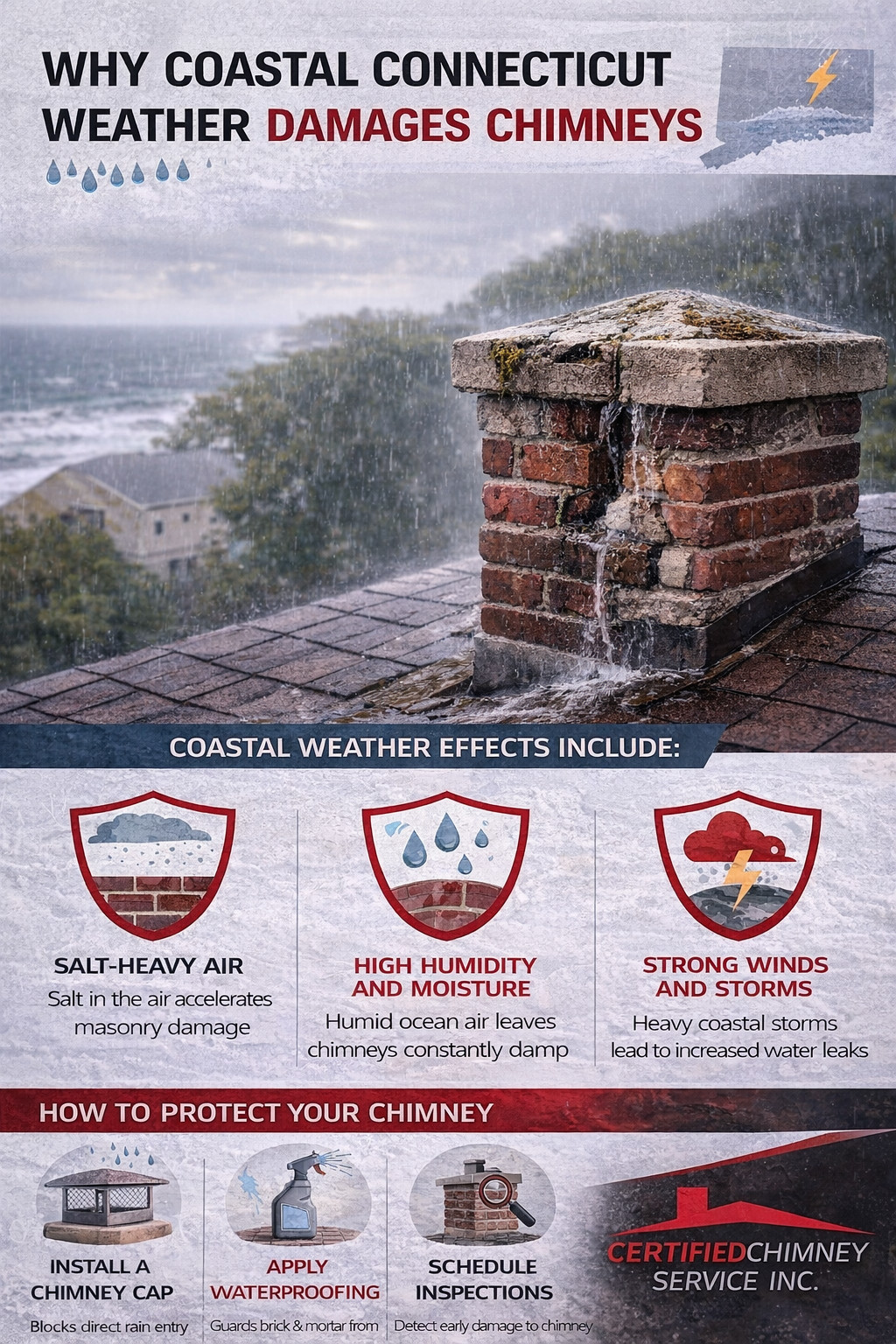
Water damage in chimney masonry often develops slowly over time. Homeowners may begin noticing small cracks forming along mortar joints or bricks. These cracks allow even more moisture to enter the structure, which accelerates the deterioration process.
Other warning signs include loose materials, flaking bricks, and visible staining along the exterior chimney. In some cases, water leaks may also appear inside the home near the fireplace chimney. These signs typically indicate that moisture has penetrated the chimney system and repairs may soon be necessary.
Salt-heavy air near coastal Connecticut towns can further accelerate chimney deterioration. Salt particles carried by coastal winds settle on masonry surfaces and slowly break down brick and mortar over time. When moisture mixes with these salt deposits, it creates an even more corrosive environment for masonry work.
Salt air and moisture can slowly damage a chimney over time. In coastal areas, tiny salt particles settle on brick and masonry surfaces. When rain or humidity mixes with these particles, the moisture begins to break down mortar joints. As the mortar weakens, small gaps can form in the chimney structure. These openings allow more water to enter the masonry. Over time, this damage can lead to chimney crown repair or larger masonry restoration projects. Salt exposure can also affect metal components such as chimney flashing and copper flashing, which may lead to water leaks around the fireplace chimney.
Chimney flashing plays a critical role in protecting the roof and chimney connection point. Chimney flashing consists of metal sheets installed where the chimney meets the roof surface. These materials create a watertight seal that prevents rainwater from entering the roofing system.
In coastal areas, flashing materials face additional stress from wind-driven rain and humidity. Flashing repair may become necessary if metal sheets loosen or corrosion develops. Proper flashing repair and residential chimney flashing restoration help maintain a secure barrier that protects both the roof and chimney structure.
The chimney crown sits at the very top of the chimney structure and serves as a protective cap for the masonry below. This concrete surface directs water away from the chimney opening and helps protect the flue liner and chimney liner inside.
When chimney crowns develop cracks, water can easily enter the chimney system. Over time, this moisture can lead to chimney liner repair needs, flue repair issues, and structural masonry concerns. Chimney crown repair combined with waterproofing services helps prevent these problems and extends the lifespan of the chimney system.
Waterproofing protects multiple components of the chimney system at once. By limiting moisture penetration, waterproofing reduces the risk of water damage to bricks, mortar joints, chimney crowns, and flashing materials. This protection helps maintain the structural integrity of the entire chimney structure.
A properly waterproofed chimney also helps prevent costly chimney repair or chimney rebuilding projects in the future. With the right waterproofing services applied by experienced masonry professionals, homeowners can extend the life of their chimney system significantly.
Regular chimney inspection services play an important role in maintaining chimney safety in coastal regions. Professional chimney services often include structural masonry assessments that examine the condition of the chimney liner, mortar joints, chimney flashing, and chimney crowns.
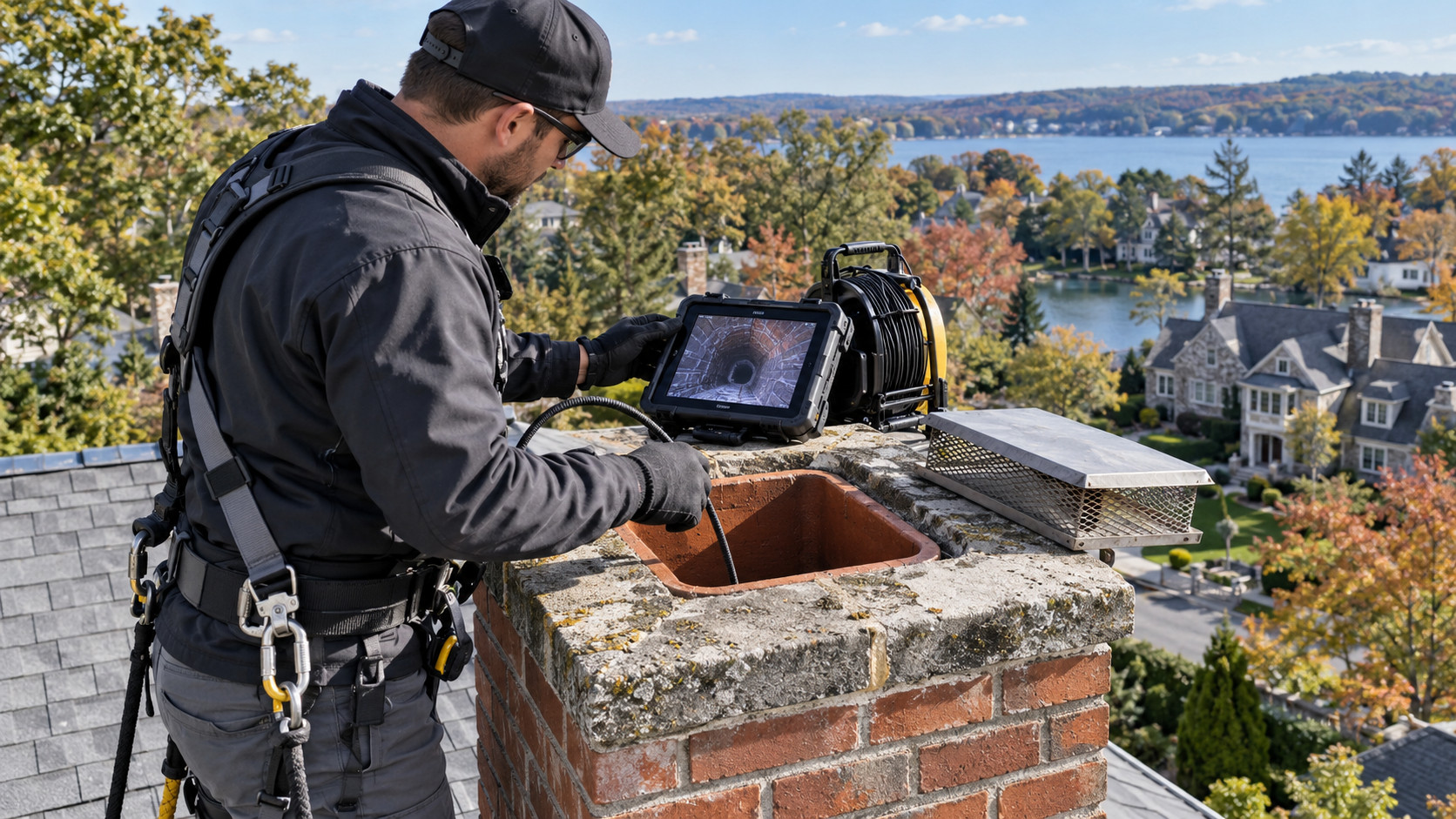
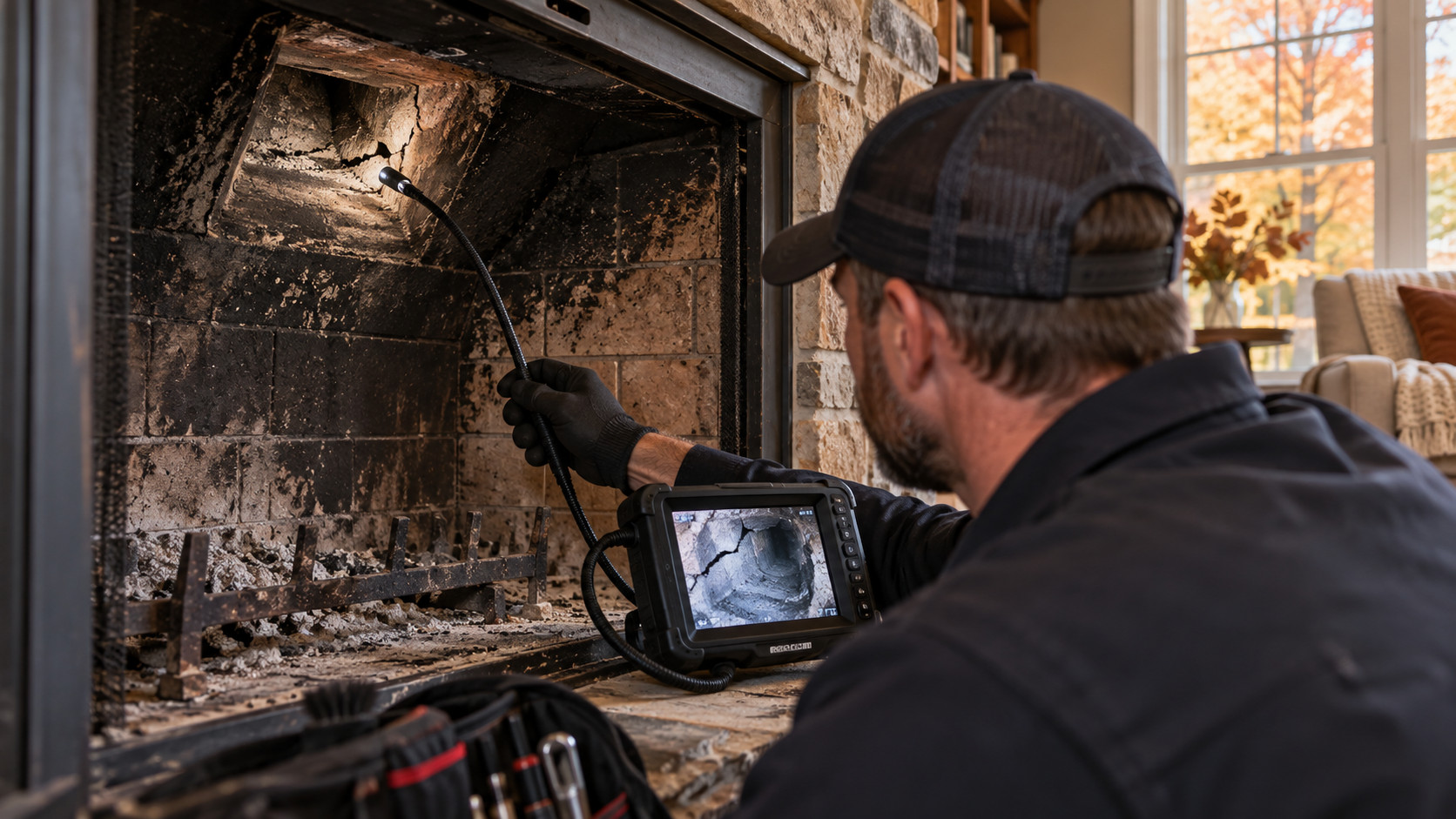
Advanced inspection methods such as video flue scanning and High-Resolution Video Scanning allow technicians to examine the interior of the chimney liner and flue liner. These inspections help identify early warning signs of moisture damage or structural deterioration that may require chimney repair.
Level 2 chimney inspections are recommended when buying or selling a home or after major weather events. These inspections look deeper into the chimney system than a standard inspection. A professional inspector evaluates the entire venting system, including the smoke chamber, flue liner, and fireplace chimney components. Special cameras or scanning equipment may be used to examine hidden areas inside the chimney liner. This process helps detect cracks, blockages, or damage that cannot be seen from the outside. Identifying these problems early helps prevent safety risks and ensures the chimney system is operating properly.
These inspections are performed for validation purposes to ensure the chimney system operates safely. Identifying problems early helps prevent chimney fire hazards, carbon monoxide exposure, and other safety concerns associated with damaged chimney structures.
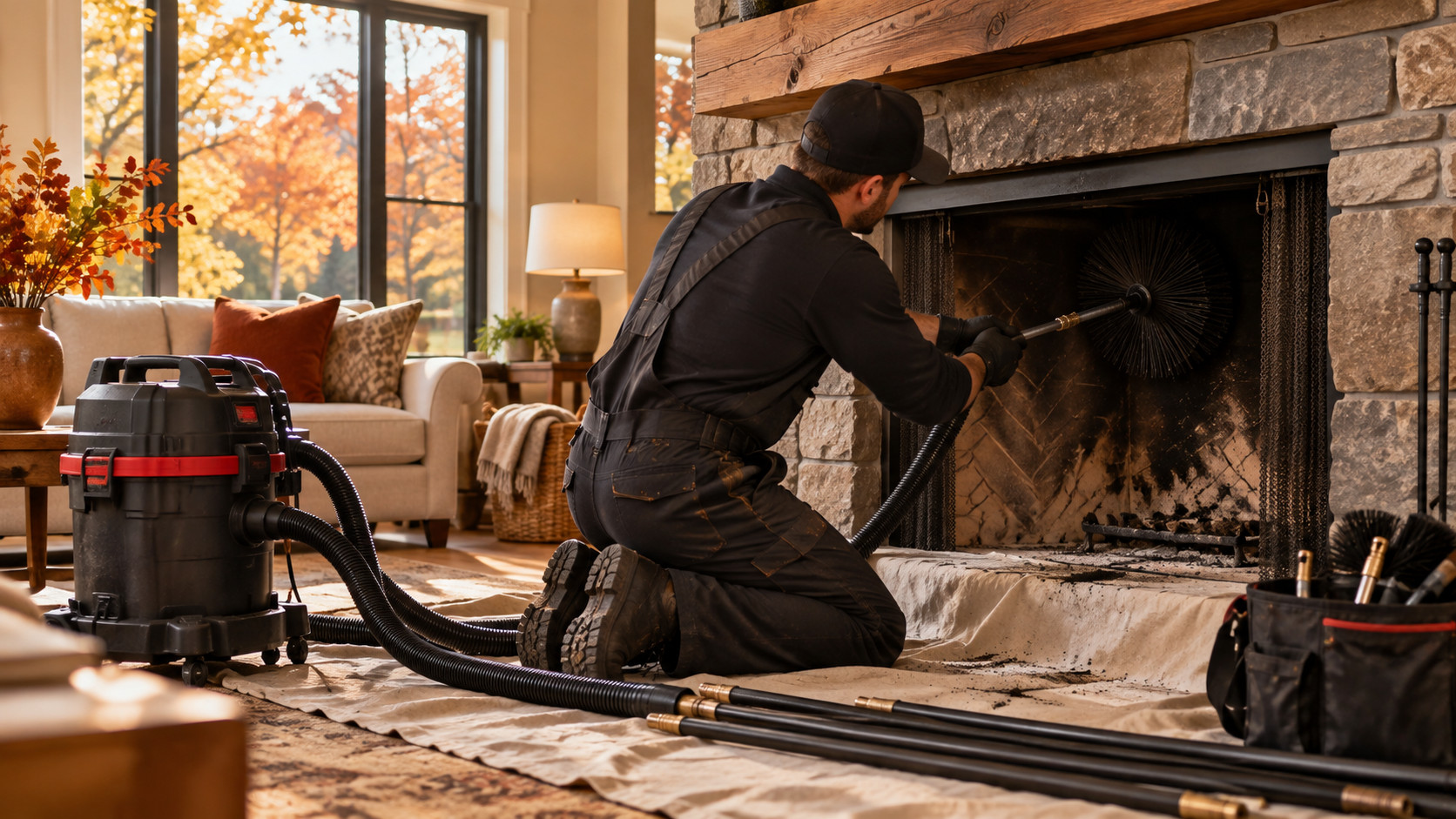
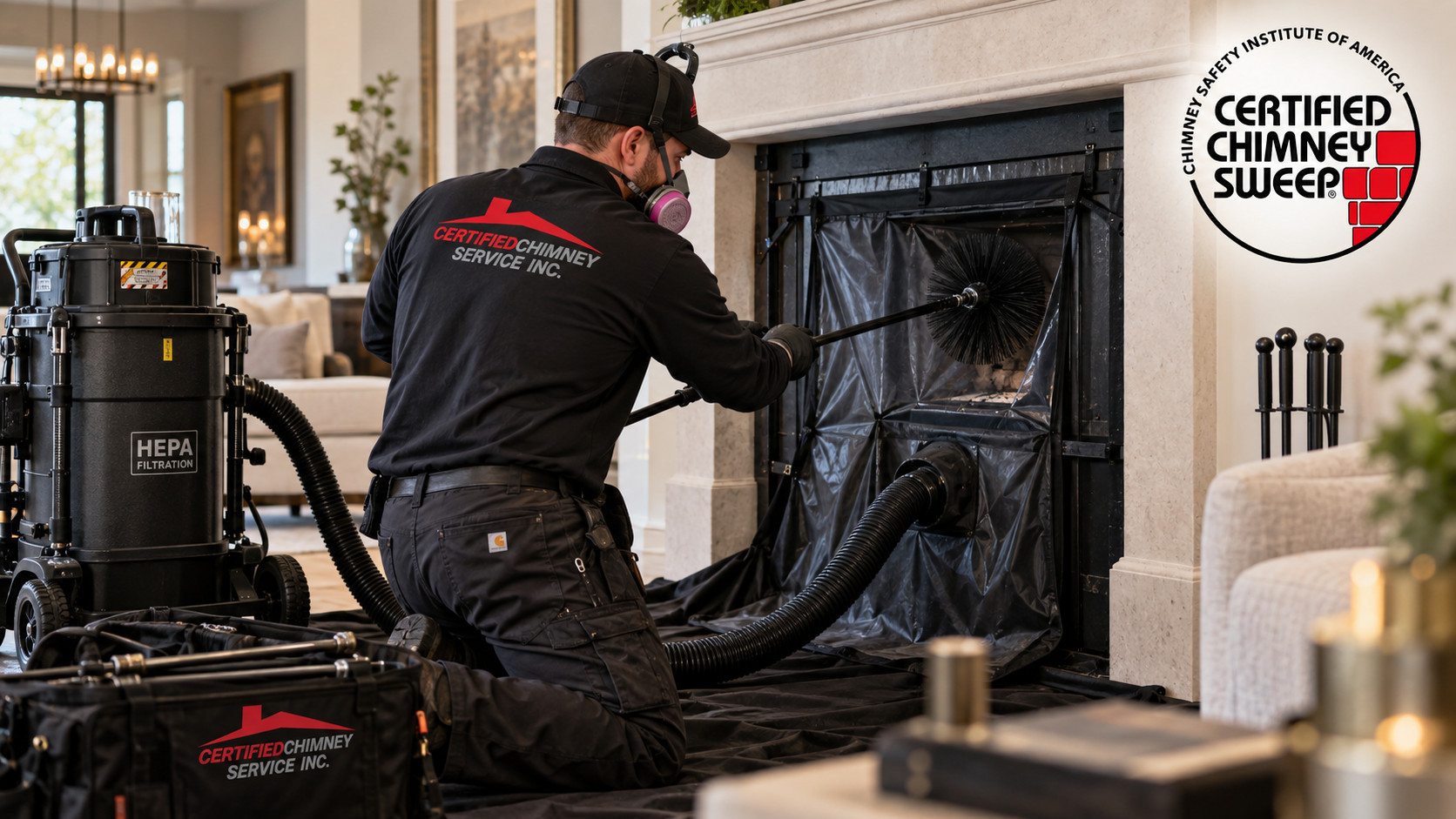
Regular chimney cleaning is an important part of chimney maintenance. Over time, soot, creosote buildup, and small debris collect inside the chimney liner and smoke chamber. When these materials build up, they can restrict airflow and create safety concerns. During chimney cleaning, a professional chimney sweep removes these deposits using specialized tools. Removing creosote buildup helps reduce the risk of chimney fire and improves airflow through the chimney system. Clean chimneys allow heating systems and fireplaces to vent smoke properly, which helps maintain safe operation inside the home.
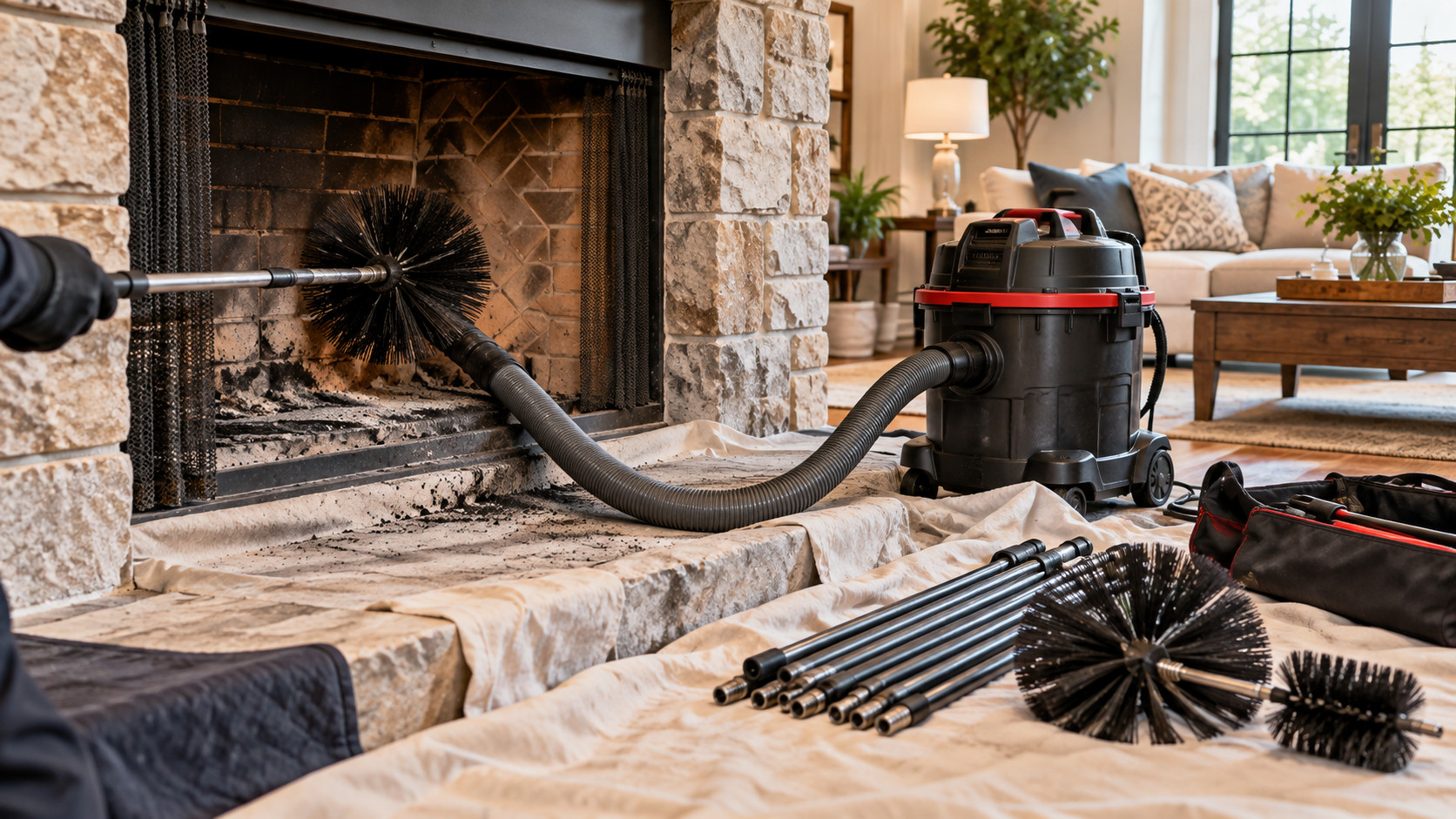
Modern chimney cleaning methods use specialized tools to remove soot and creosote safely. Many professional chimney sweep services use rotary powered brushes that spin inside the chimney flue. These brushes break apart creosote buildup and loosen debris along the chimney liner. At the same time, HEPA filtered dust containment systems capture soot and fine particles during the cleaning process. This prevents dust from spreading inside the home. These methods allow chimney professionals to clean the chimney system thoroughly while keeping the indoor environment clean and reducing airborne debris.
Chimney caps play an important role in preventing water intrusion. A properly installed chimney cap prevents rainwater, debris, and animals from entering the flue liner. Chimney cap replacement may be recommended if the existing cap becomes damaged or corroded.
Top-sealing dampers provide another layer of protection for the chimney system. These components help seal the chimney opening when the fireplace is not in use. By blocking moisture and cold air from entering the chimney, these systems improve overall chimney protection.
When chimney waterproofing is applied early, homeowners can often avoid larger masonry restoration projects. Continuous moisture exposure can eventually lead to chimney rebuild or extensive chimney restoration work. Preventative waterproofing helps reduce this risk. It protects the chimney from moisture before damage begins.
Using high-quality materials and proper masonry work techniques helps preserve historic chimney restoration projects and modern chimney structures alike. Waterproofing services protect the chimney crown, mortar joints, and exterior masonry from further deterioration.
Homes located in coastal areas of Connecticut face constant exposure to humidity, rain, and salt-heavy air. These environmental conditions place additional stress on masonry structures such as fireplace chimneys. Without proper protection, water damage can slowly compromise the chimney system.
Scheduling a professional chimney inspection and waterproofing evaluation with Certified Chimney Connecticut can help protect your chimney from coastal weather damage. Professional chimney services, including chimney cleaning, flashing repair, chimney restoration, and waterproofing chimney services, help ensure the chimney system remains safe and durable for years to come.
Article details:
Share:
Continue learning:
Covers fireplaces, wood stoves, pellet stoves, and heating systems including gas and oil systems. Book now before the winter rush fills our schedule.