Why Regular Chimney Cleaning Matters in Connecticut
Connecticut winters put fireplaces, wood stoves, pellet stoves, oil furnaces, and other heating systems through months of repeated use. Each fire sends combustion products through the smoke chamber, smoke shelf, flue liners, and chimney walls. When soot and creosote remain inside, airflow can weaken and fire hazards increase. The U.S. Fire Administration recommends having chimneys professionally cleaned and inspected each year. For homeowners in Fairfield, New Haven, and Hartford County, routine chimney services are an important part of seasonal home maintenance before cold weather brings heavier fireplace use.
What Is Creosote and Why Is It Dangerous?
Creosote is a combustible residue created when wood smoke cools and condenses inside a chimney flue. According to the EPA’s wood-burning guidance, restricted airflow, unseasoned wood, cold chimneys, and smoldering fires can increase creosote buildup. As the deposit becomes thicker, it can harden into glaze in the system that is difficult to remove. If that material ignites, temperatures can rise quickly and cause a chimney fire. Regular inspection catches buildup before it becomes a larger fire safety concern for wood-burning fireplaces and fireplace inserts.
How Do You Know if Your Chimney Needs Cleaning?
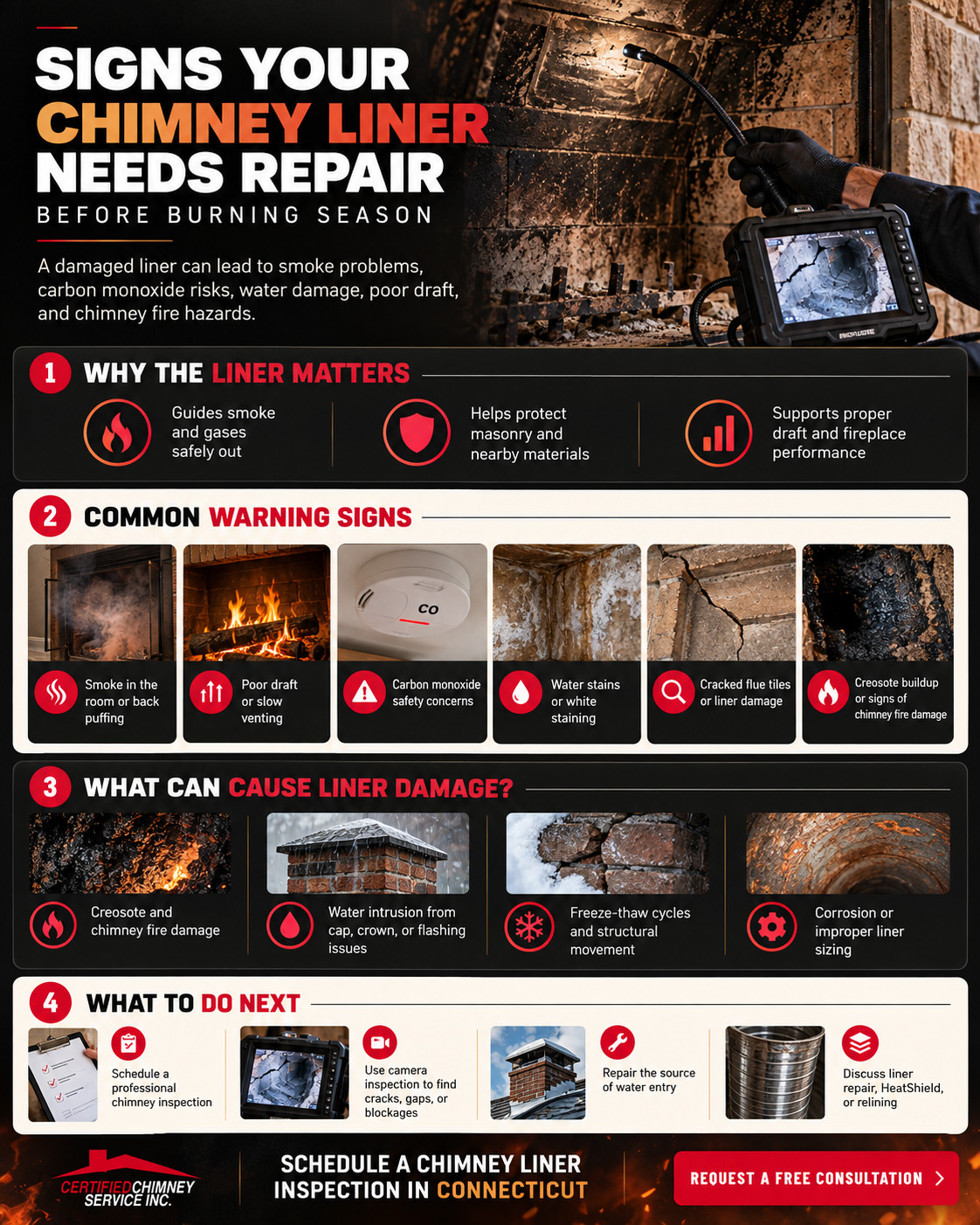
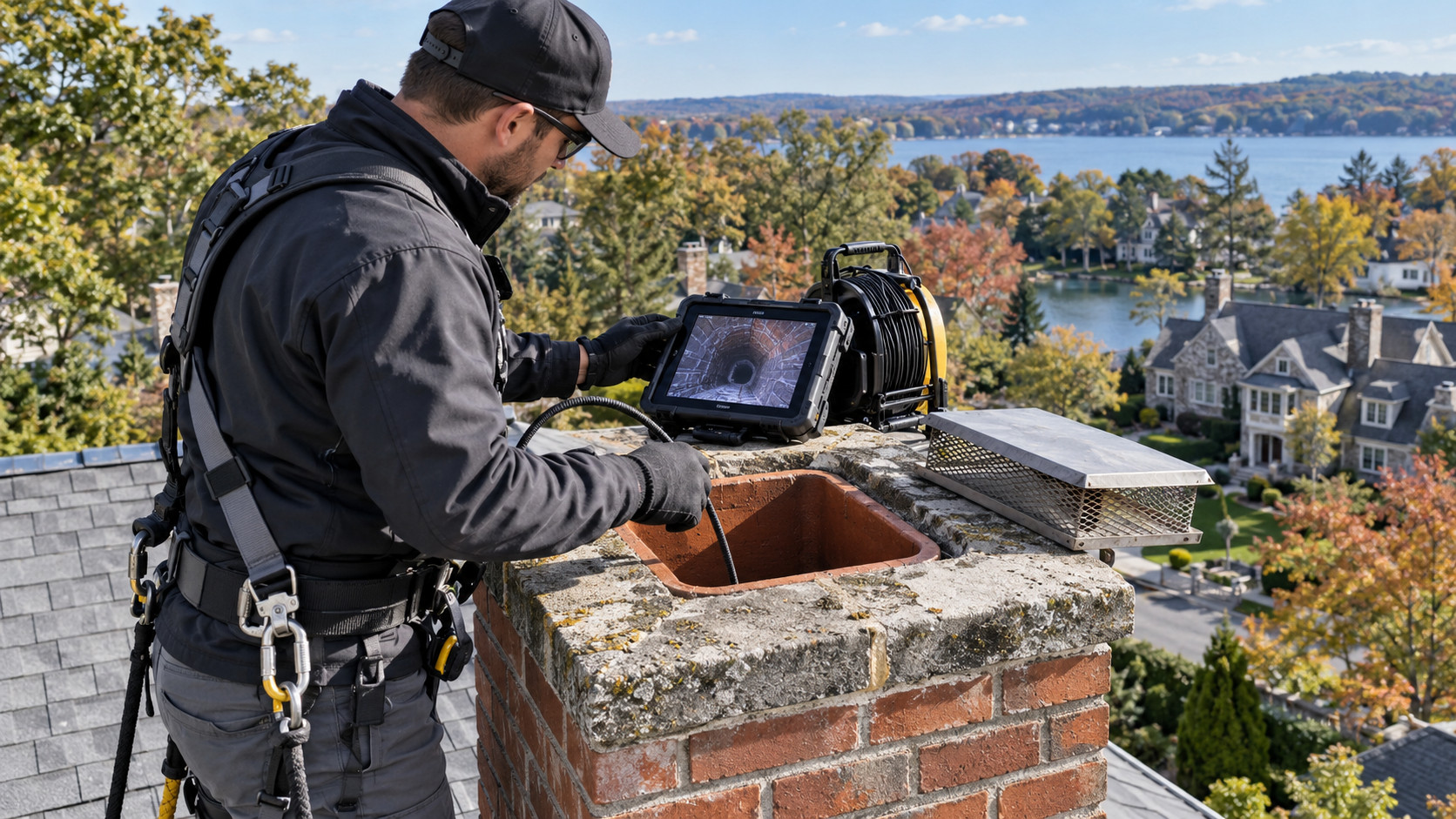
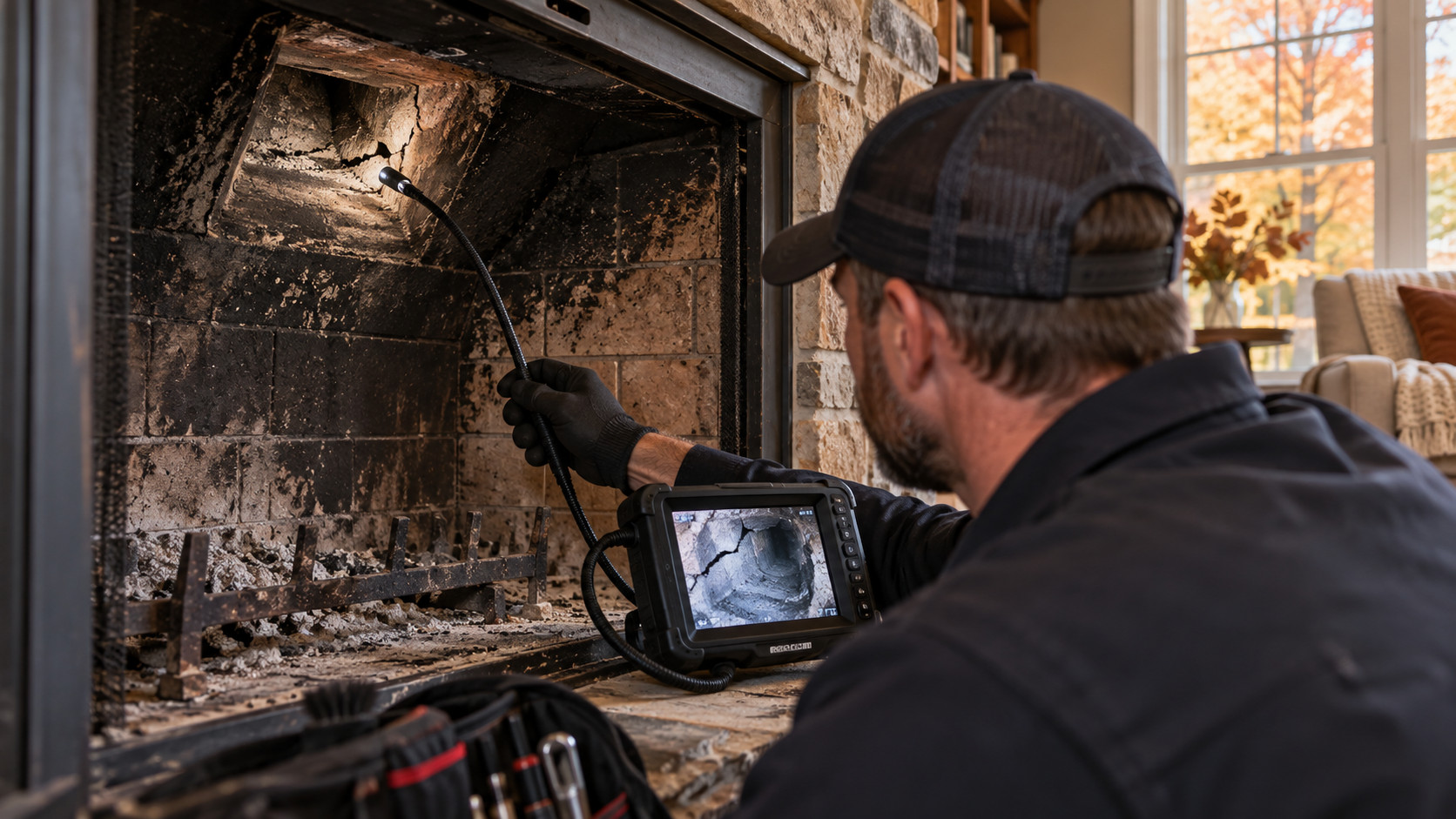
Visible black deposits around the firebox, smoke entering the room, a strong fireplace odor, falling soot, poor draft, or debris inside the flue system can all signal that chimney cleaning is due. Animal nests, rusted dampers, moisture damage, and damaged chimney liners can create similar venting problems. A professional chimney sweep can also use advanced camera equipment to examine areas that cannot be seen from the fireplace opening. Homeowners should not wait for dramatic symptoms because dangerous deposits or damaged flue liners can remain hidden behind otherwise normal-looking masonry fireplaces.
Can a Dirty Chimney Cause Carbon Monoxide Problems?
Yes. Creosote itself is primarily a chimney fire concern, but blockages and damaged venting systems can prevent combustion gases from leaving the home correctly. The CDC recommends having chimneys checked or cleaned every year because debris can block the flue and allow carbon monoxide to build indoors. The same concern applies to a furnace flue, oil furnace, gas fireplace, or other fuel-burning appliance. Carbon monoxide has no color or smell, which is why chimney inspection, working CO alarms, and proper venting should all be part of a Connecticut home’s fire safety plan.
Do Gas Fireplaces and Furnace Flues Need Cleaning?
Gas fireplaces usually do not produce the same creosote deposits as wood-burning fireplaces, but their flue liners and venting systems still need inspection. Furnace flues can collect debris, develop corrosion, or become blocked by animal nests. The Consumer Product Safety Commission recommends annual professional inspection of heating systems and checking chimneys and flues for blockages, corrosion, and disconnected components. Cleaning is then performed when the inspection shows it is needed. This inspection schedule helps keep exhaust gases moving outside instead of allowing safety risks to develop inside the home.
Is Chimney Sweeping Messy?
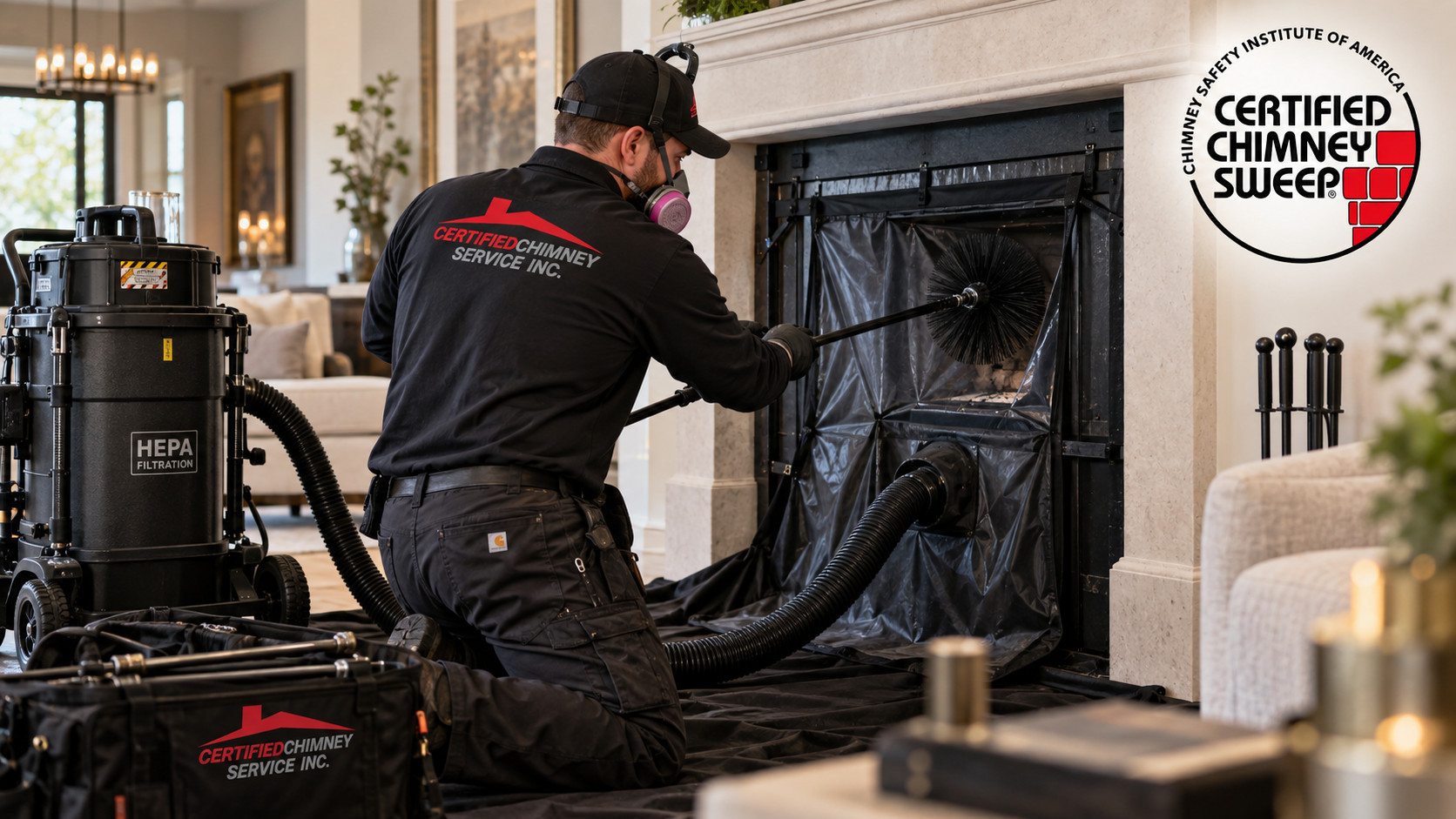
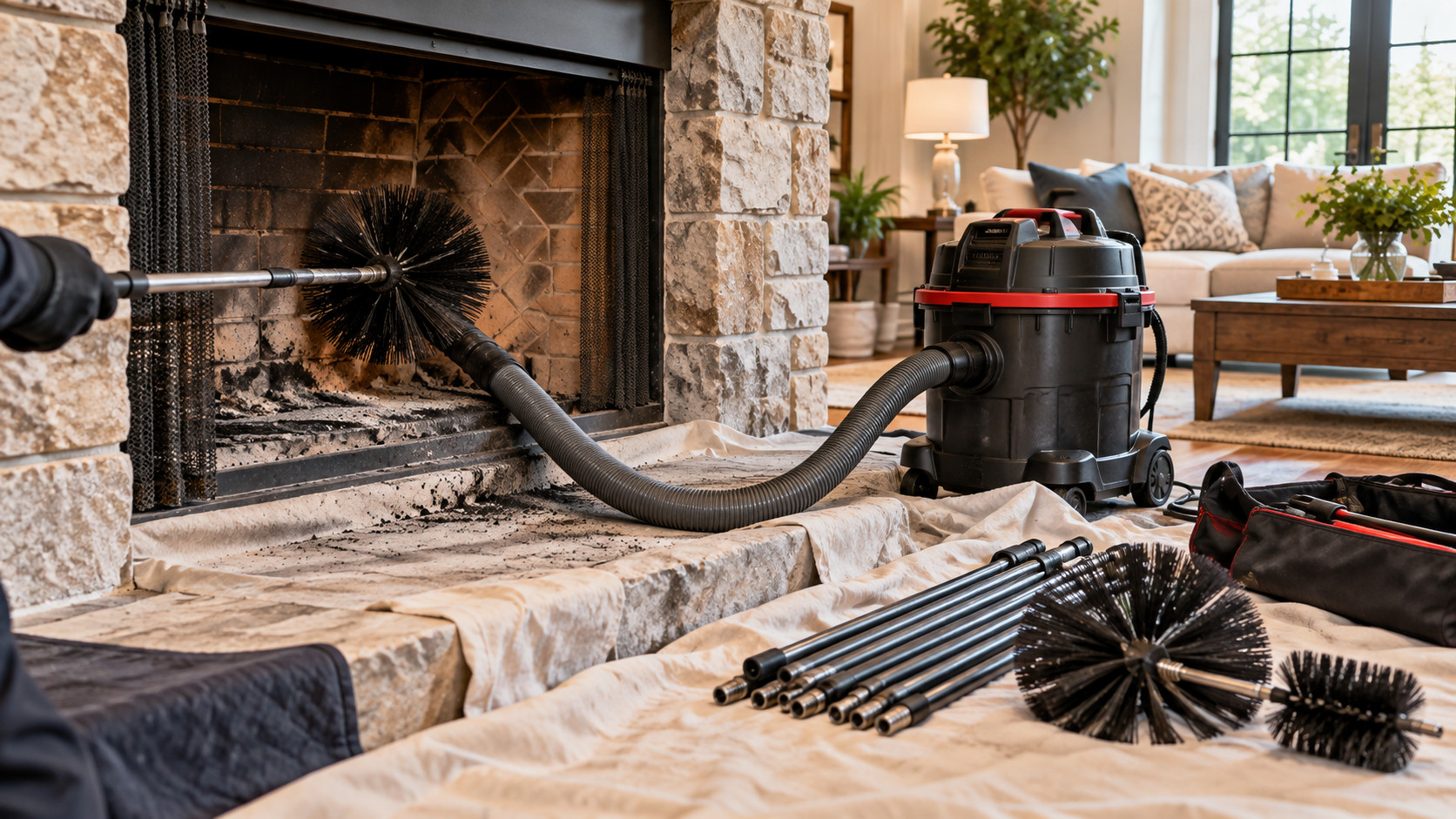
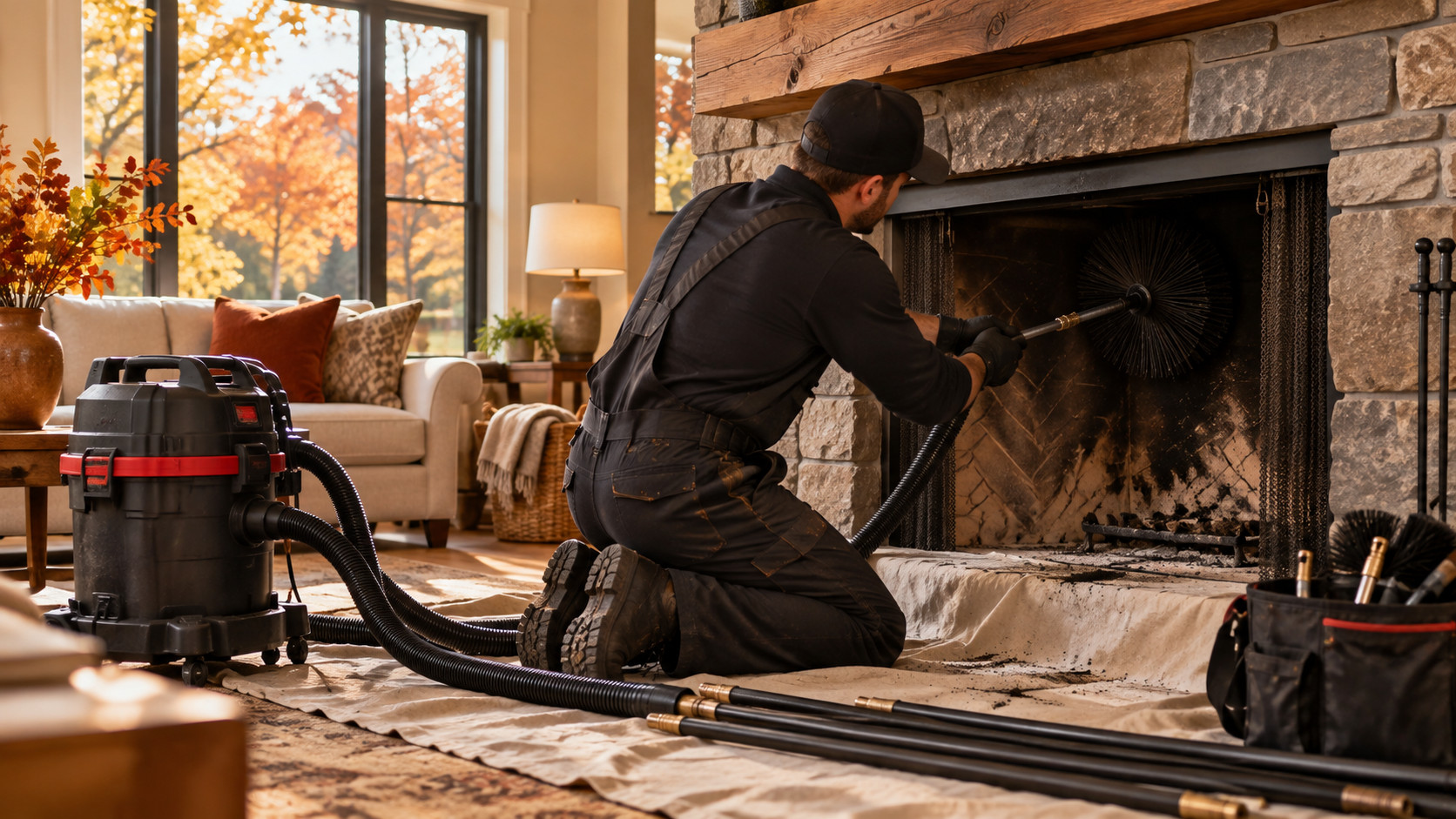
Professional chimney sweeping should not leave soot spread throughout the living room. A certified chimney sweep typically isolates the work area and uses a vacuum system, drop protection, brushes, safety gear, and HEPA-filtered vacuums to control fine soot during cleaning. The chimney is cleaned through the flue while deposits are contained at the fireplace or appliance. Good chimney cleaning logs can also help homeowners track previous service and inspection findings. Chimney cleaning is practical maintenance, not something designed to “sweep you off your feet.” The goal is simply a cleaner flue and safer fireplace operation.
Can You Clean Your Own Chimney?
DIY chimney cleaning kits are available, but brushing the visible part of a chimney does not provide the same information as a professional chimney inspection. Problems can develop inside the chimney liner, smoke chamber, masonry, damper, or areas hidden above the firebox. Homeowners may also miss hardened creosote, damaged flue tiles, or an obstruction higher in the system. The EPA recommends professional annual inspection of wood-burning appliances, chimneys, and vents. A CSIA Chimney Sweep can determine whether cleaning alone is enough or whether repair is also needed.
Schedule Chimney Cleaning Before Connecticut’s Heating Season
Late summer and early fall are good times to check the chimney before regular heating begins. Scheduling early gives homeowners time to address creosote, animal nests, moisture damage, a damaged chimney liner, or other problems before the first cold stretch arrives. Certified Chimney provides chimney cleaning and sweeping in Connecticut using CSIA-certified technicians and professional cleaning equipment. Homes with frequent fires may need service more often, but every chimney benefits from a consistent inspection schedule. A yearly check keeps small problems from becoming larger safety or venting concerns during Connecticut’s winter heating season.