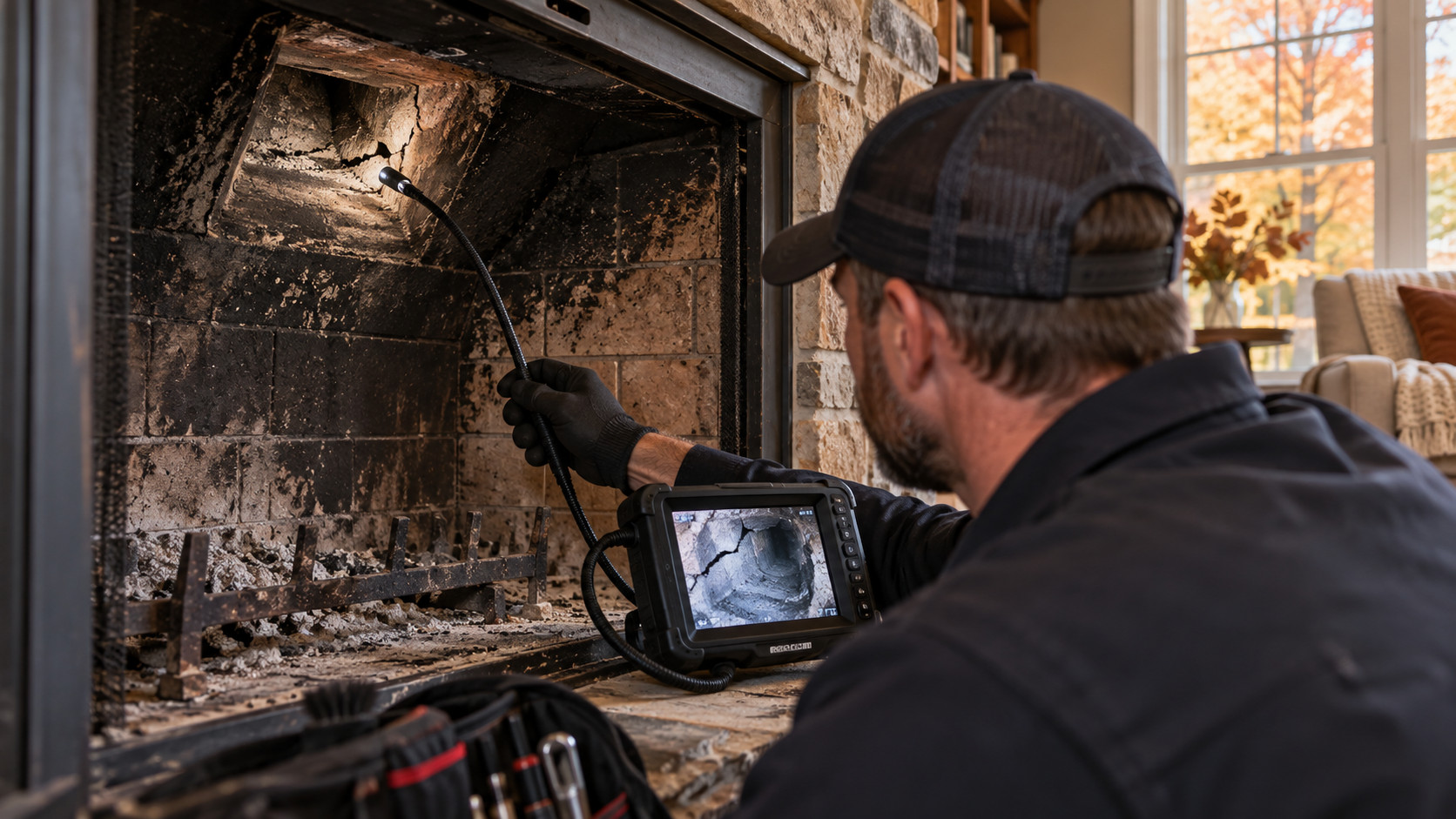
A chimney can look perfectly clean from the living room while telling a very different story a few feet above the firebox. That is something chimney professionals see often. A homeowner enjoys fires all winter, notices no obvious problem, and assumes the chimney system is fine. Inside the flue, however, creosote residue, soot, leaves, or even pest infestations may be narrowing the passage used to carry smoke and gases outside. Chimney cleaning is the process of removing those deposits and obstructions so the fireplace and heat exhaust system can vent properly and be checked for safety concerns.
A chimney cleaning, also called chimney sweeping, removes soot, creosote, debris, and other material from the chimney flue and related areas of the fireplace system. A professional chimney cleaner may work on the chimney liner, smoke chamber, smoke shelf, damper area, and accessible sections of the fireplace. The Chimney Safety Institute of America emphasizes maintaining chimney and venting systems because combustible deposits can create serious hazards. Connecticut homeowners should think of cleaning as preventive maintenance rather than something done only after smoke starts backing into the house or the fireplace develops a strong odor.
Cleaning is also an opportunity to look at how the system is performing. The Connecticut Department of Consumer Protection advises that a sweep check areas such as the firebox, damper, smoke shelf, airflow path, bricks, and flue liners while removing deposits. Those safety checks matter because a blockage, cracked chimney liner, damaged chimney cap, or deteriorated component can affect how combustion gases leave the home. The process therefore combines physical cleaning with observations that may point to the need for a more detailed chimney inspection.
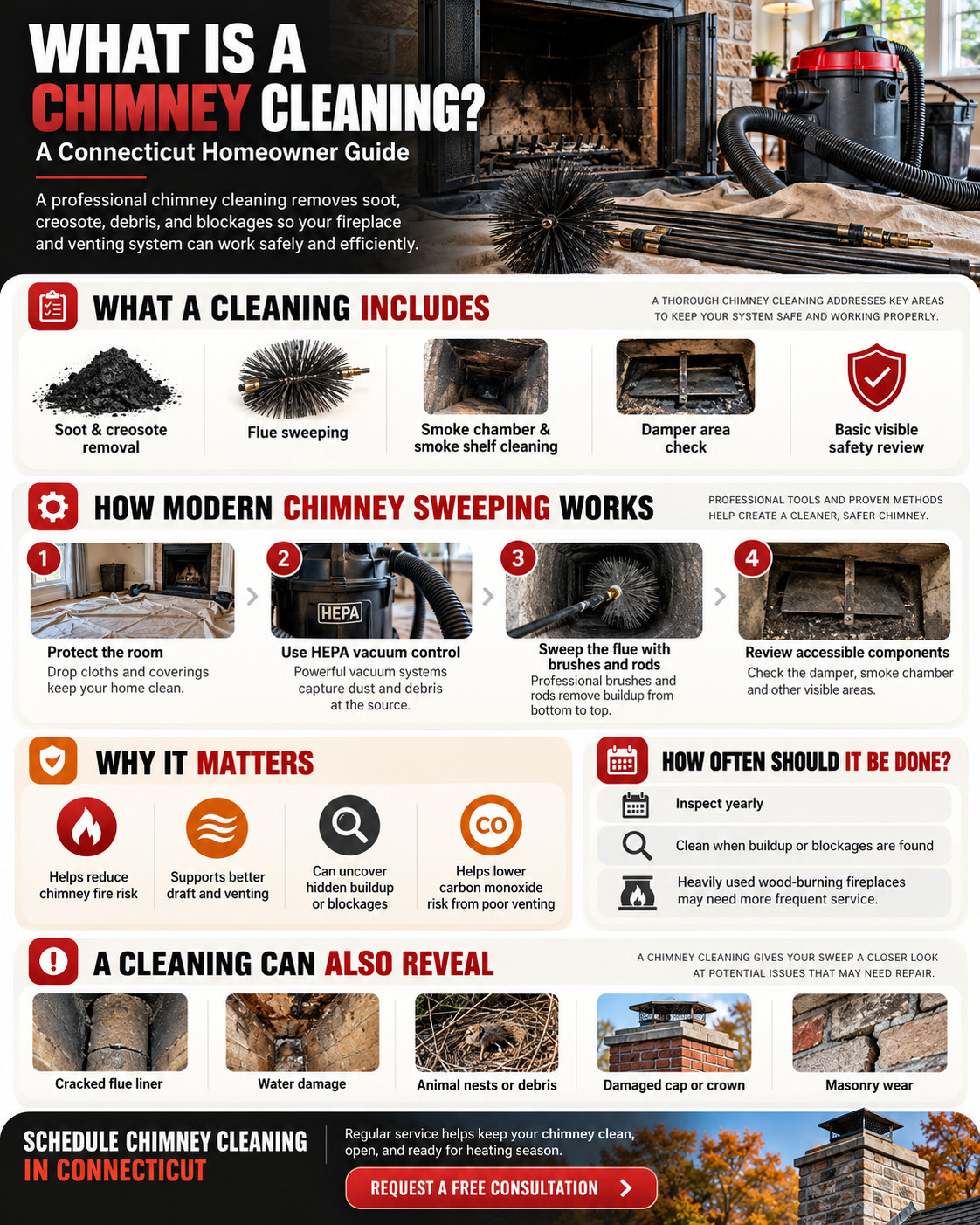
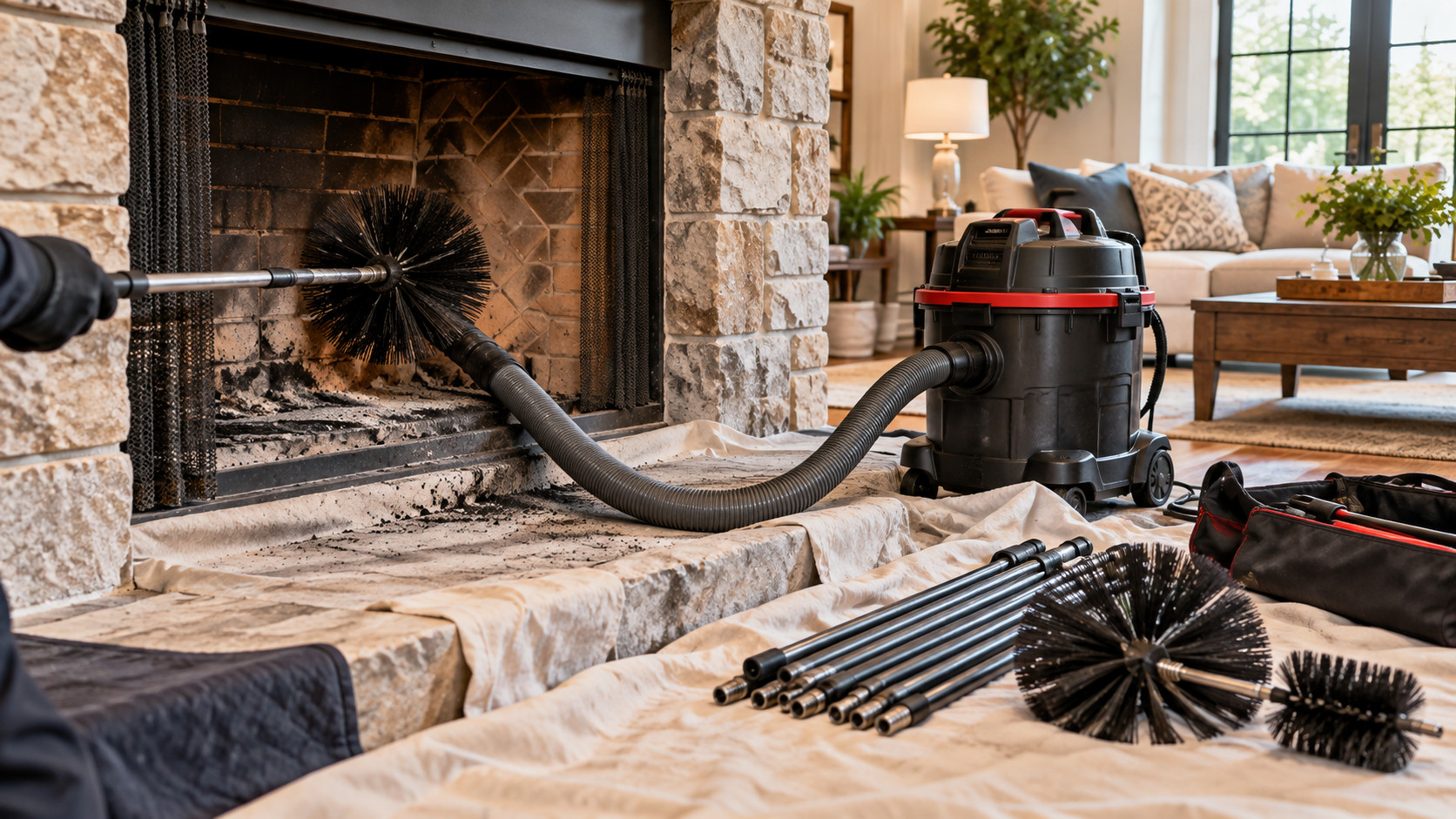
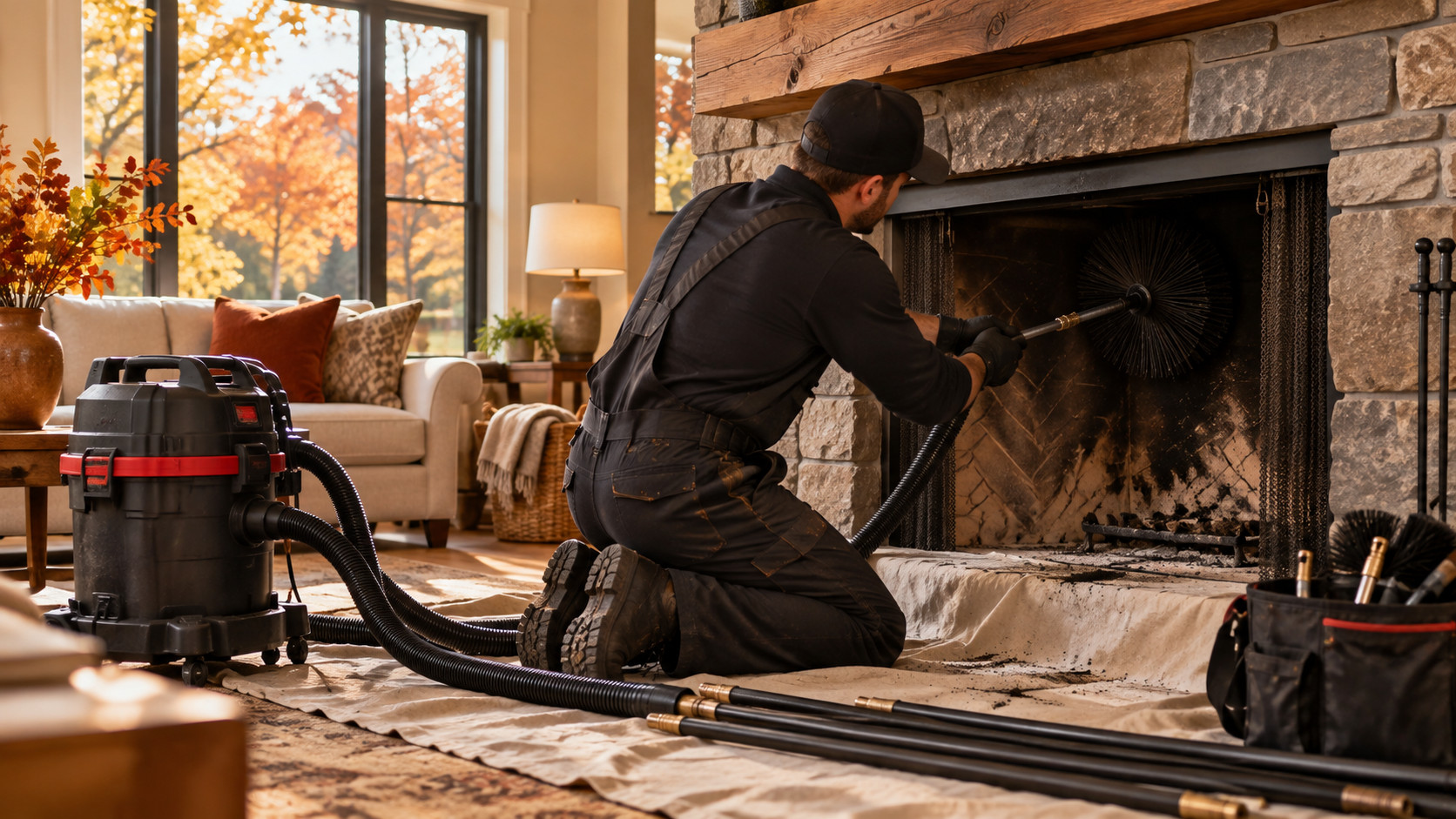
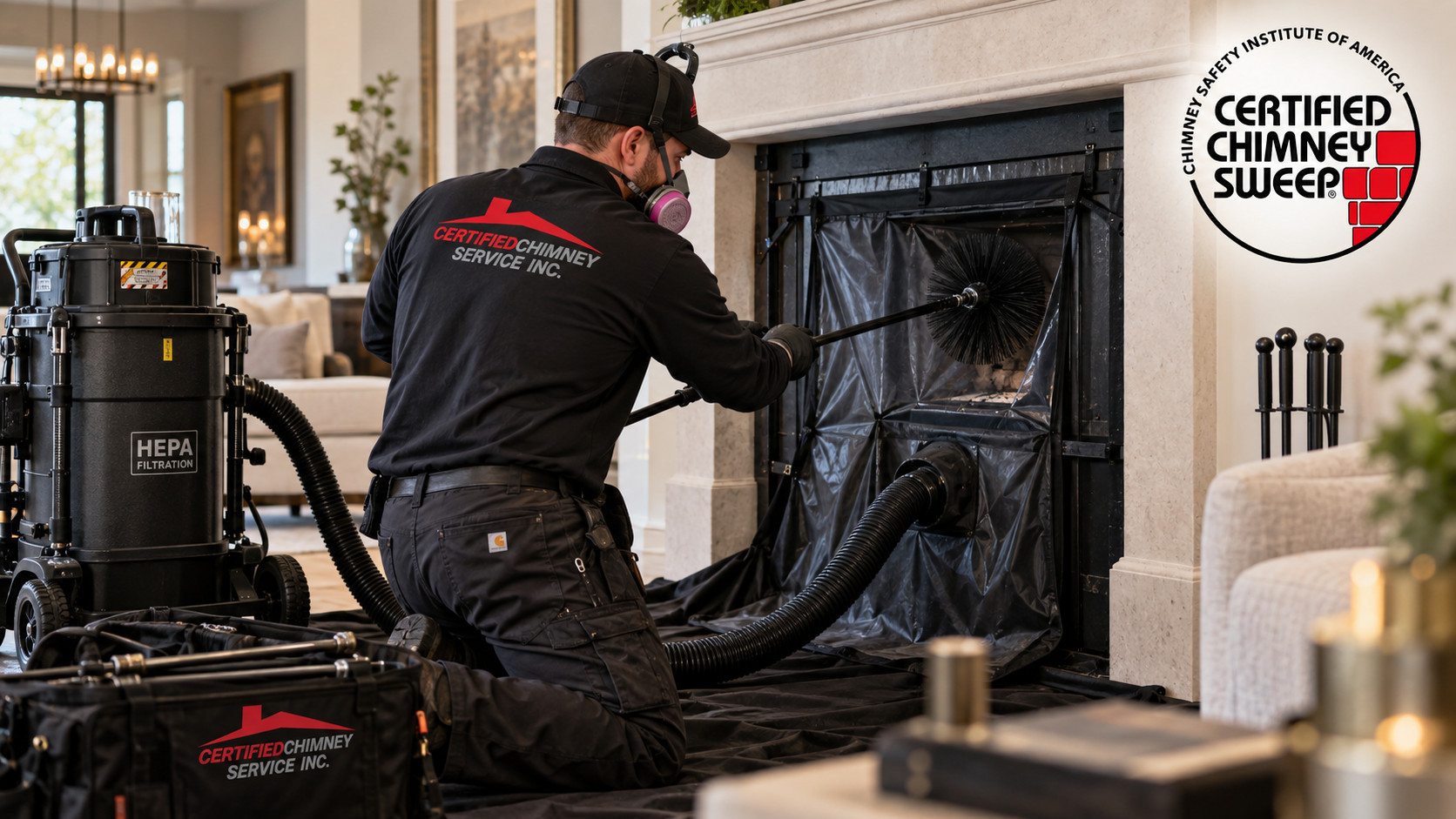
Modern chimney cleaning usually begins with protecting the room around the fireplace. Drop protection and specialized HEPA vacuums can help control the fine soot released during sweeping. The technician then accesses the flue from the fireplace, roof, or both, depending on the chimney system. A chimney brush or rotary brushes are moved through the flue to break creosote residue and soot away from interior surfaces. Mechanical sweeping continues until loose deposits can be collected rather than remaining inside the pathway used by smoke and exhaust.
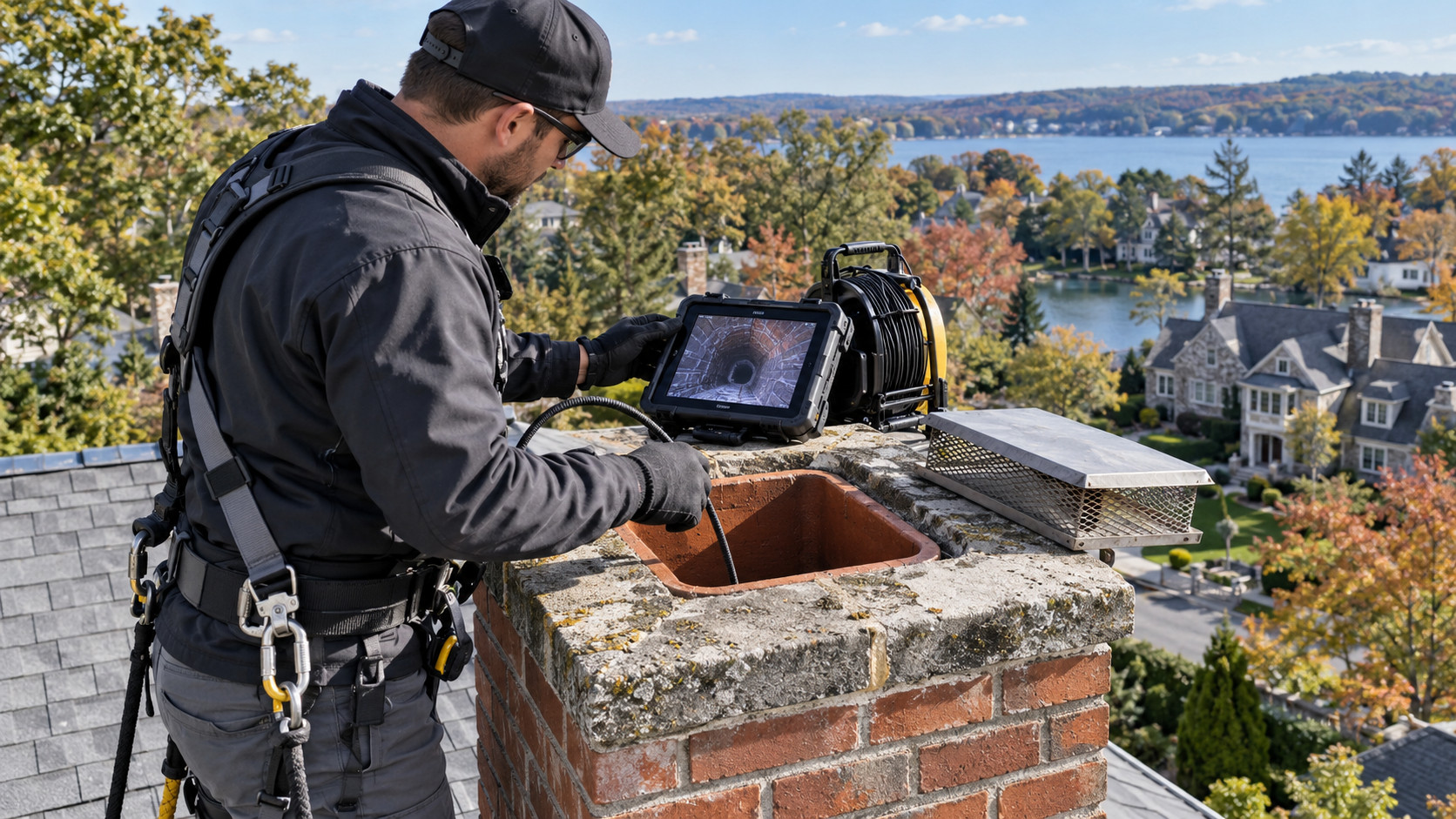
Once the chimney is swept, the technician can examine accessible components and look for conditions that deserve attention. This may include the chimney crown, chimney cap, masonry, smoke chamber, damper, and chimney liner. Some companies use video inspection equipment, lights, or closed-circuit cameras to show areas that cannot be viewed easily from below. Connecticut DCP specifically notes that many sweeps use video cameras and lights during chimney service. The goal is not to turn every cleaning into chimney repair. It is to identify visible concerns before another heating season begins.
Today’s process is far removed from the image many people have of soot-covered chimney sweepers carrying a simple brush over one shoulder. Mechanical sweeping machines and rotary cleaning systems allow technicians to scrub the interior flue while using vacuum equipment to contain debris. A professional follows safety protocols based on the fireplace, appliance, chimney height, fuel type, and venting design. The National Fireplace Institute also stresses specialized knowledge of hearth appliances and venting because gas and wood-burning fireplaces do not all operate the same way. Different systems require different inspection and cleaning approaches.
The profession itself has a long history. During the Industrial Revolution, British climbing boys were used to enter narrow chimneys, leading to reforms including the Chimney Sweepers Act 1834, the Chimney Sweepers and Chimneys Regulation Act 1840, and later regulations. The Chimney Sweepers Act 1875 further regulated the trade. Brass cap badges, climbing boys, and hand brushing belong to chimney-sweep history. Modern chimney cleaning instead relies on mechanical equipment, HEPA vacuuming, cameras, training, and established fire-safety practices.
Connecticut’s heating season can put fireplaces, wood stoves, furnaces, and venting systems through months of repeated use. Burning wood produces smoke containing particles and compounds that can collect inside the flue. The EPA’s Burn Wise program explains that proper wood burning and appliance maintenance help improve safety and performance. If creosote buildup is allowed to become heavy, it may develop into hard creosote glaze that is difficult to remove. Because that material is combustible, an ignition inside the flue can produce a chimney fire and expose nearby building materials to intense heat.
This is why fire-safety organizations emphasize regular maintenance instead of waiting for a problem. The U.S. Fire Administration recommends having chimneys cleaned and inspected each year by a professional. CSIA also explains how creosote and chimney fires can damage flue tiles, masonry, metal components, and other parts of the chimney system. For Connecticut homeowners, cleaning before heavy winter use can uncover soot, water damage, nesting material, or damaged components while there is still time to address them before fireplaces and heating equipment are needed regularly.
A dirty chimney does not automatically mean there is a carbon monoxide leak, but a blocked or poorly venting chimney can interfere with the safe removal of combustion gases. Carbon monoxide is especially concerning because it cannot be seen or smelled. The Centers for Disease Control and Prevention recommends having chimneys checked or cleaned every year because debris can block a flue and allow carbon monoxide to build inside a home. The same principle applies to fireplaces and fuel-burning heating appliances that rely on a functioning chimney or vent to carry exhaust outdoors.
Fireplace safety therefore involves more than preventing visible smoke and chimney fires. Proper venting helps reduce the risk of carbon monoxide poisoning, while working carbon monoxide alarms provide another layer of protection. The CDC also recommends annual service for gas, oil, and coal-burning heating equipment. Homeowners can review additional winter fireplace and flue guidance before Connecticut’s colder months. Natural gas flames may produce less soot than wood fires, but gas appliances still require properly installed and maintained venting. A chimney contractor can help determine which parts of a specific system need inspection or cleaning.
For most homeowners, an annual chimney inspection is a good baseline, while the need for actual sweeping depends on use and buildup. The National Fire Protection Association’s NFPA 211 covers inspection, maintenance, and cleaning requirements for chimneys, fireplaces, vents, and solid-fuel-burning appliances. A fireplace used several nights each week may develop deposits faster than one used only during holidays. Wood moisture, burning habits, appliance type, chimney temperature, and flue design can also change how quickly creosote forms inside the system.
Connecticut has also issued more direct consumer guidance. In 2025, the state’s DCP and Connecticut Fire Academy reminded homeowners to have chimneys cleaned and inspected annually. The National Chimney Sweep Guild provides homeowner resources and credential information as well. If you are unsure whether your chimney needs cleaning, a professional inspection can determine the amount of creosote, identify blockages, and evaluate visible components instead of relying only on how many fires you remember having during the previous winter.
Yes, but cleaning and chimney repair are separate services. Sweeping may uncover cracked flue tiles, deteriorated mortar, a damaged chimney crown, water damage, loose masonry, or chimney-cap problems. Connecticut makes that distinction important. The state says chimney sweeping itself does not require DCP home-improvement registration, while work such as liner replacement, chimney masonry repair, mortar replacement, and chimney-cap repair does. Homeowners can use Connecticut’s contractor credential guidance before authorizing additional repairs that are discovered during a cleaning.
A trustworthy inspection should explain what was found rather than using fear to pressure a homeowner into immediate masonry repairs. Connecticut DCP warns homeowners about unsolicited offers and high-pressure chimney-repair tactics. Professional organizations such as the National Chimney Sweep Guild also maintain resources for checking chimney professionals. If a sweep identifies damage, ask to see images or video of the affected area and understand whether the recommendation concerns chimney safety, water intrusion, structural masonry, or venting. Clear documentation makes it easier to separate necessary maintenance from optional work.
The best chimney cleaning is the one completed before soot, creosote, debris, or a hidden obstruction has a chance to become a larger problem. Connecticut homeowners should make chimney maintenance part of the same seasonal routine as servicing heating equipment and testing smoke and carbon monoxide alarms. Cleaning keeps the flue pathway clear, while inspection gives the homeowner a better picture of the chimney liner, smoke chamber, masonry, cap, crown, and other components exposed to heat and Connecticut weather throughout the year.
Certified Chimney provides professional chimney cleaning and sweeping throughout Connecticut for homeowners preparing fireplaces and venting systems for the heating season. A professional chimney sweep can remove soot and creosote, inspect accessible components, and explain whether any additional chimney inspection or repair should be considered. Regular service supports better fireplace safety, cleaner venting, and fewer surprises when temperatures drop. For a Connecticut homeowner, that is ultimately what modern chimney cleaning is about: keeping the pathway from the fire to the outdoors clean, open, and ready to work properly.
Article details:
Share:
Continue learning:
Covers fireplaces, wood stoves, pellet stoves, and heating systems including gas and oil systems. Book now before the winter rush fills our schedule.