Share:
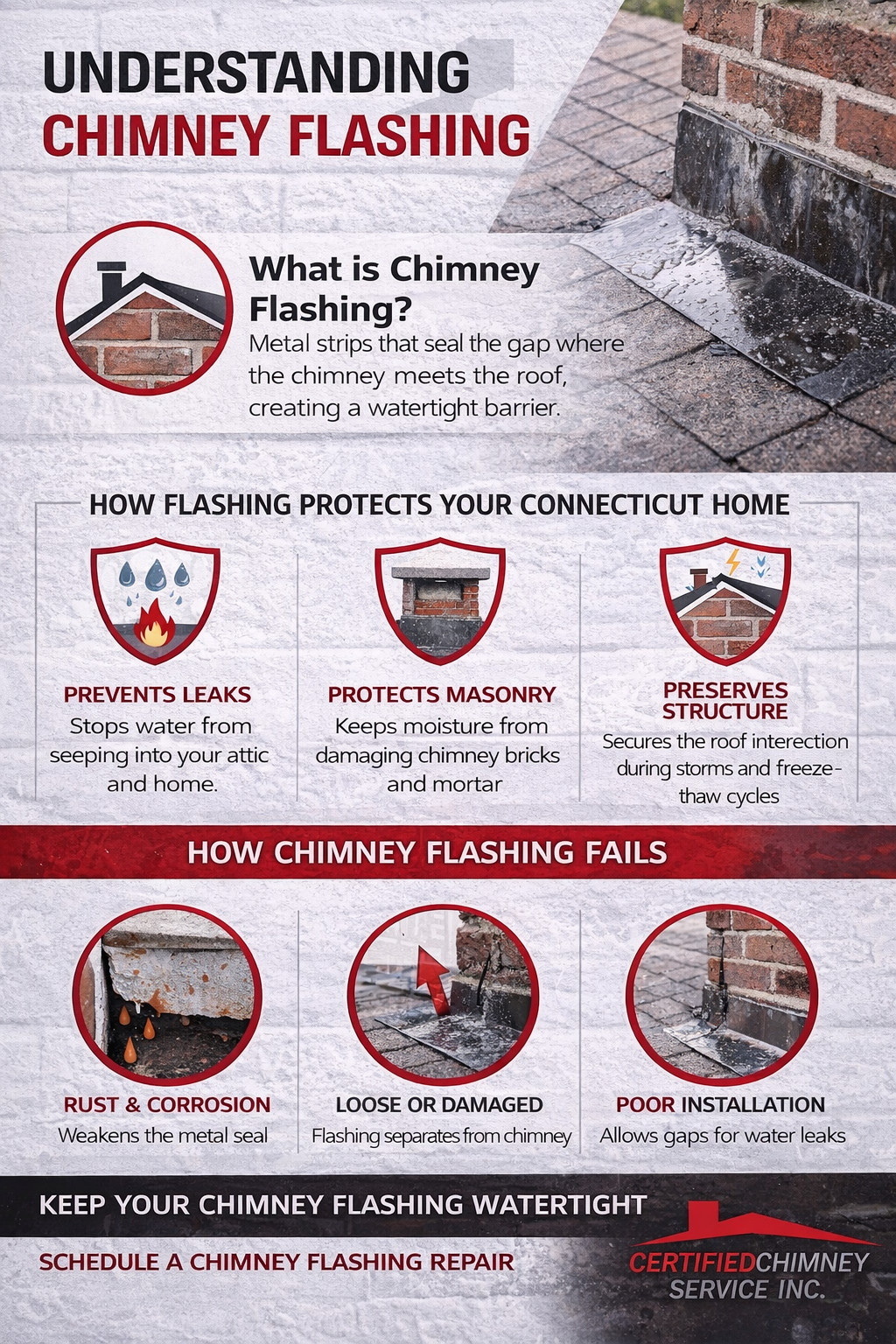
When preparing a home for sale in Connecticut, many homeowners focus on interior upgrades but overlook chimney flashing at the roofline. Flashing, usually aluminum, copper, or galvanized steel, seals the space where the chimney meets the roofing system and creates a watertight barrier. Without it, rain, heavy snow, and wind can force moisture into the roof deck and chimney masonry, leading to water damage, warped flashing, and deteriorating mortar joints. In Connecticut’s freeze-thaw climate, maintaining proper flashing is essential for protecting the fireplace system and ensuring chimney safety.
The flashing around a chimney acts as a barrier between exterior elements and vulnerable structural components of the house. When flashing fails, water leaks can travel through the roof deck and into the attic, where they create wet spots, rot fascia boards, and damage insulation. Moisture intrusion can also weaken exterior masonry, crack bricks, and deteriorate chimney crowns or chimney caps. During damaging storms or heavy snow events, poorly sealed flashing may allow water to seep into the chimney liner or surrounding masonry. These problems often remain hidden until a complete chimney inspection or home inspection uncovers attic damage or roof damage. Because the chimney intersects the roofing system at a critical point, flashing protects both the roof and the chimney structure simultaneously. Keeping it intact ensures the home remains structurally sound and prevents issues that could complicate the sales process in the real estate market.
Flashing issues usually develop gradually due to environmental stress and aging materials. In Connecticut, homes face heavy snow loads, temperature fluctuations, and strong winds that cause roofing materials to expand and contract throughout the year.
Over time, this movement can loosen flashing seams and create small gaps between the metal flashing and the chimney masonry. When these gaps form, the watertight seal that protects the roof deck becomes compromised.
Rust, corrosion, and warped flashing materials can also weaken the seal around the chimney. As flashing deteriorates, it becomes easier for water to enter the roofing system and surrounding structures.
In some situations, roof replacement projects or shingle removal can disturb existing flashing. If the flashing is not reinstalled correctly, it may remain partially exposed or improperly sealed.
Flashing problems are also common when the material was installed incorrectly during the original roof construction. This is especially true on metal roofs or tile roofs where the flashing must be carefully fitted to the chimney structure.
Once flashing fails, moisture can begin to enter the roof system. Water intrusion can spread into attic framing, exterior components, and chimney masonry. Over time, this moisture can weaken these areas. If left untreated, it can lead to larger structural issues.
Repairing flashing damage early helps restore the flashing to its original form. Professional chimney repair seals gaps and strengthens the area around the chimney. This prevents long-term structural instability.
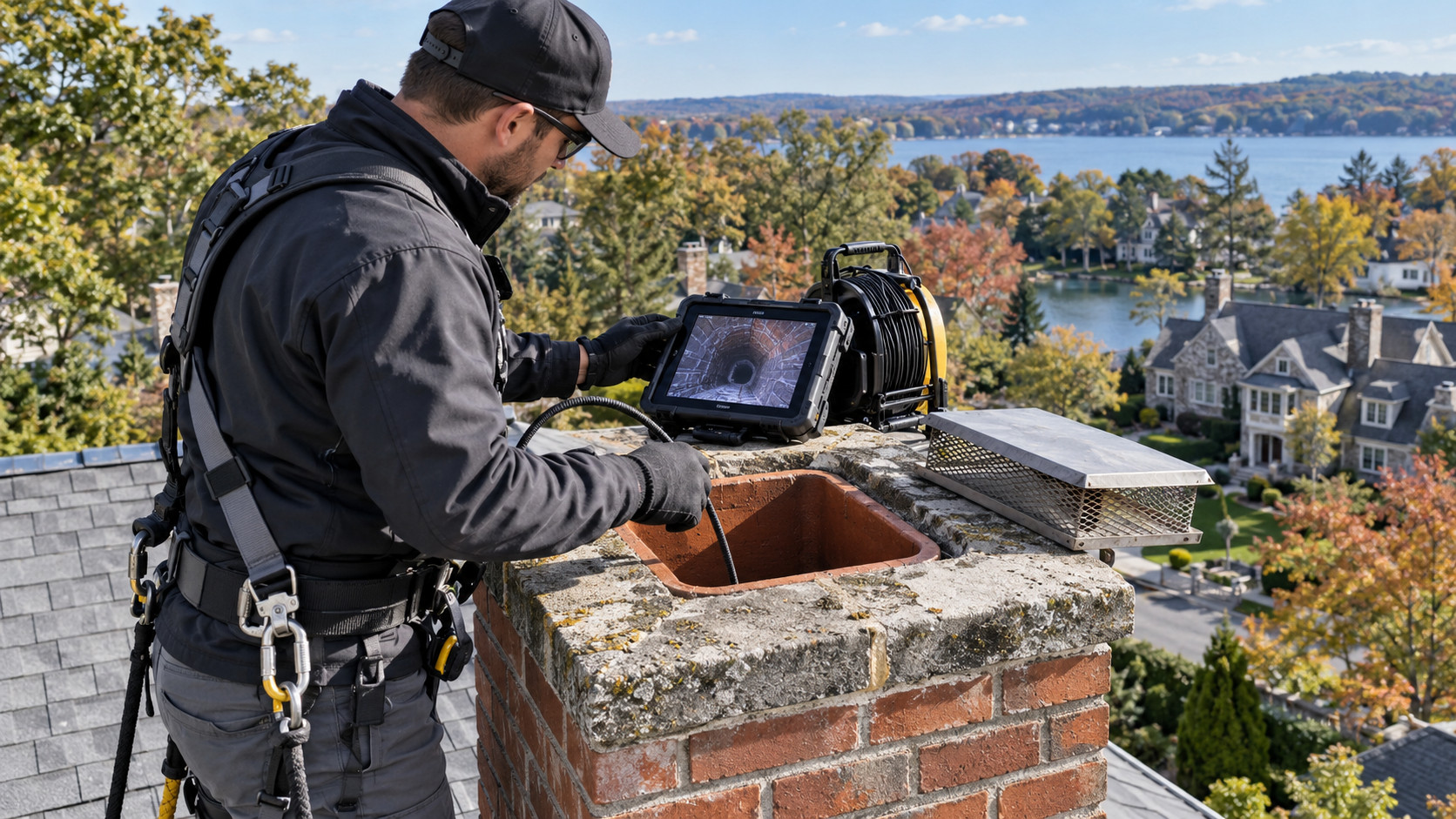
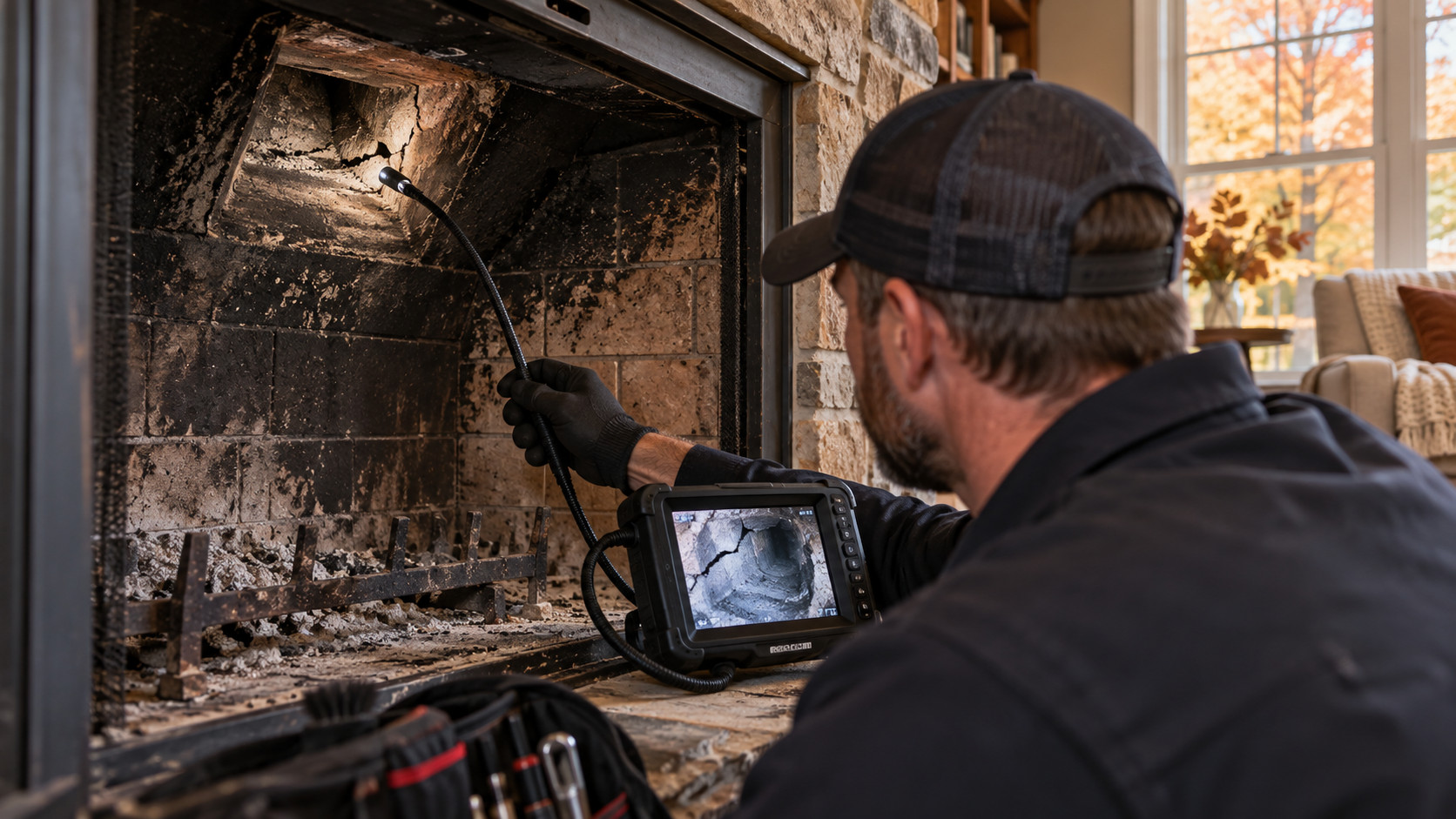
When a buyer submits an offer, the mortgage lender typically requires a thorough home inspection before finalizing the loan. Inspectors often pay close attention to roof penetrations like chimneys because they are common sources of water leaks. During a Level 2 inspection, chimney professionals closely examine the interior of the chimney system. The National Fire Protection Association recommends this type of inspection when a property is being sold or transferred. Inspectors often use specialized video equipment to check the chimney liner, look for creosote buildup, and evaluate the interior components of the fireplace system. If inspectors notice wet spots, loose materials, cracked bricks, or deteriorating chimney masonry near the flashing, they will document these concerns in the inspection report. Once these issues appear in the report, insurance companies or lenders may require repairs before approving the transaction. This is why many sellers schedule a chimney inspection ahead of listing their home, fixing flashing problems early can prevent delays during the closing process.
Repairing chimney flashing before listing your property can improve how buyers view the home. In the Connecticut real estate market, buyers value homes that show clear maintenance and structural reliability. Proper flashing protects the roofing system, chimney masonry, roof deck, and attic from water damage and costly repairs. Fixes may include replacing damaged flashing, sealing mortar joints, or adding protective materials against severe wind and snow. When these repairs appear in an inspection report, they reassure buyers the home has been well maintained and can help lead to stronger offers and smoother negotiations.
A professional chimney inspection examines every component of the chimney system, from the chimney cap down to the liner. During a complete chimney inspection, licensed chimney technicians look for cracked bricks, loose mortar joints, damaged chimney crowns, and signs of water leaks that could affect chimney safety.
They also evaluate the flashing connections where the chimney meets the roofing system. This intersection is one of the most vulnerable areas of a roof because it involves two different structures joining together. When flashing becomes loose, damaged, or improperly sealed, water can easily penetrate the gap between the chimney masonry and roofing materials. Because this area is a common point for water intrusion, inspectors check carefully to ensure the flashing maintains a proper watertight seal. They look for signs such as rust, lifted metal edges, loose materials, or small gaps that could allow moisture to enter. Proper flashing protects the roof deck, surrounding shingles, and nearby structural components from water damage. Ensuring the flashing is secure helps preserve the integrity of both the chimney and the roofing system.
Using specialized video equipment, chimney professionals can inspect the interior of the chimney liner. This allows them to detect creosote buildup, structural damage, or hidden issues that may not be visible during a basic visual inspection.
Inspectors also review the condition of the exterior masonry and nearby roofing materials. If they notice deterioration, they may recommend chimney repointing, chimney rebuilds, or partial rebuild repairs to restore the structure.
Because chimney flashing connects both the roof and chimney structures, this area receives special attention during the inspection. Identifying problems early allows expert masons and certified roofers to repair damage before it develops into larger structural issues.
Chimney repointing is a masonry repair process that restores deteriorating mortar joints between bricks. Over time, water intrusion from faulty flashing can weaken mortar joints and cause the exterior masonry to crumble or crack. When this occurs, repointing becomes necessary to restore the chimney’s structural integrity and prevent further moisture penetration. During chimney repointing, experienced masons remove damaged mortar and replace it with new mortar that matches the chimney’s original form. This process strengthens the masonry while helping the chimney maintain its watertight seal. Repointing is often performed alongside flashing repairs because both components work together to keep moisture out of the chimney structure. Repairing flashing and repointing masonry at the same time helps protect the chimney from continued water damage. These repairs seal gaps where moisture can enter the structure. As a result, the entire fireplace system stays safer and works properly.
For most homeowners, repairing chimney flashing before selling is a smart investment. A damaged flashing system can trigger inspection concerns, delay closing timelines, or reduce buyer confidence. Addressing flashing issues early helps protect the roofing system. It also prevents moisture from reaching the attic and causing damage. This early repair keeps the chimney structure stable, especially during the severe weather conditions common in Connecticut. Scheduling a professional chimney inspection helps certified experts evaluate the condition of the chimney. During the inspection, they can determine whether flashing repair is needed. They can also identify if chimney repointing or other chimney repair services are necessary. When sellers provide documentation showing these repairs were completed by experienced professionals, buyers feel more confident about the home’s structural condition. If you’re preparing to sell your home, contacting Certified Chimney Connecticut for a detailed inspection and flashing repair evaluation can help ensure the chimney system remains safe, watertight, and ready for the next homeowner.
Article details:
Share:
Continue learning:
Covers fireplaces, wood stoves, pellet stoves, and heating systems including gas and oil systems. Book now before the winter rush fills our schedule.