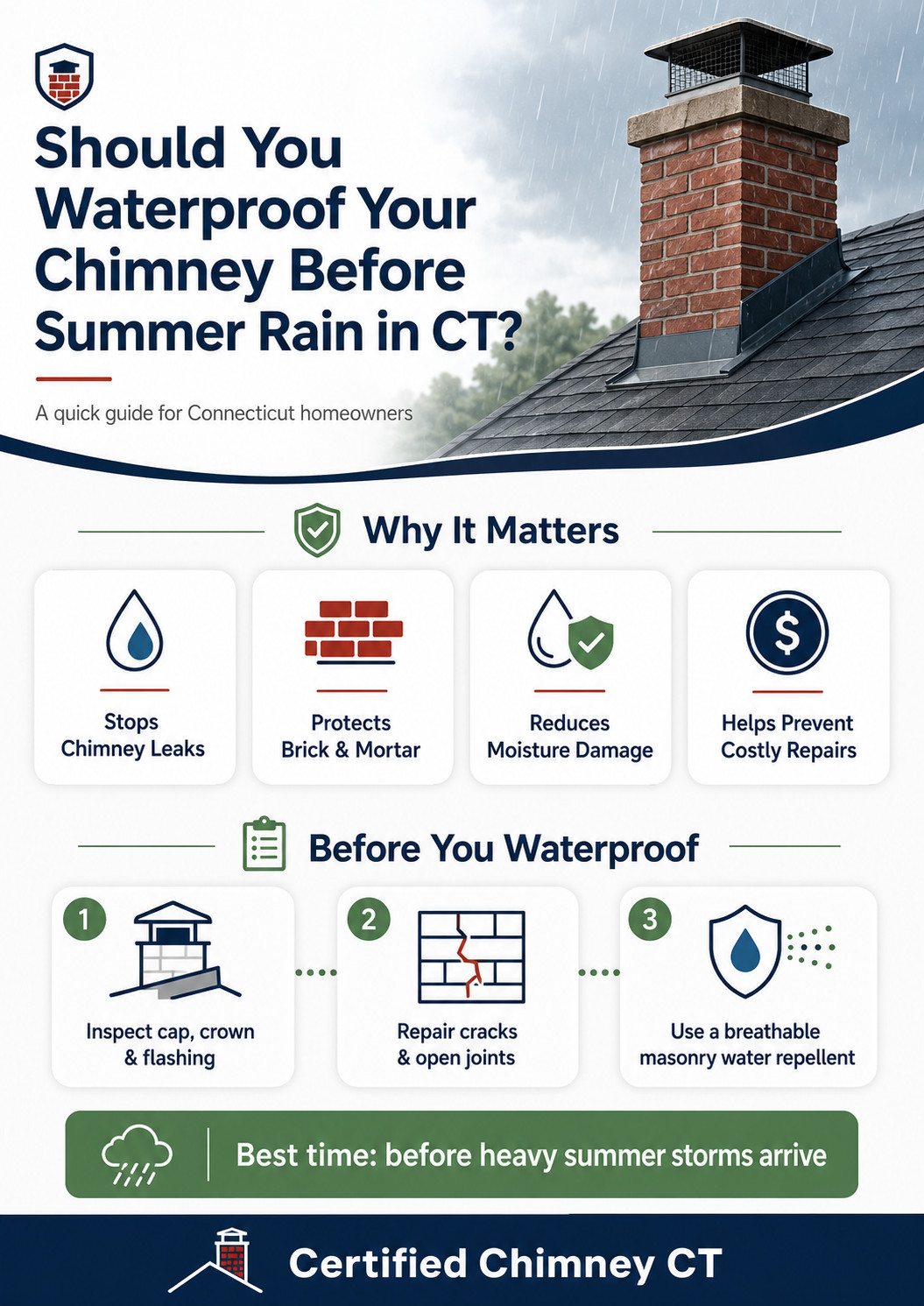
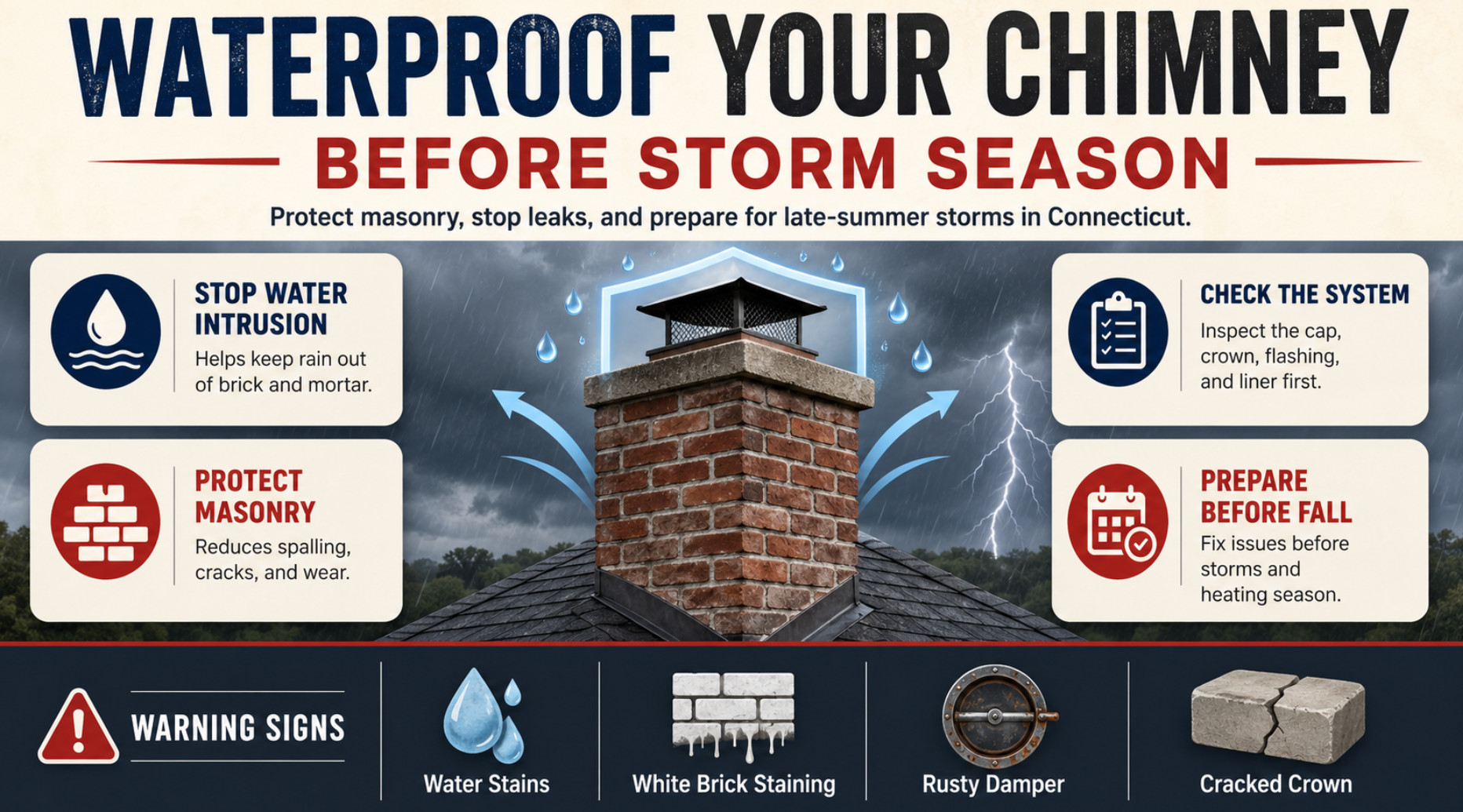
For most Connecticut homes with brick or stone chimneys, waterproofing is worth it, as long as the masonry is repaired first and the product is breathable. Connecticut averages roughly 50 inches of precipitation a year, and every freeze and thaw cycle pushes absorbed water deeper into brick and mortar.
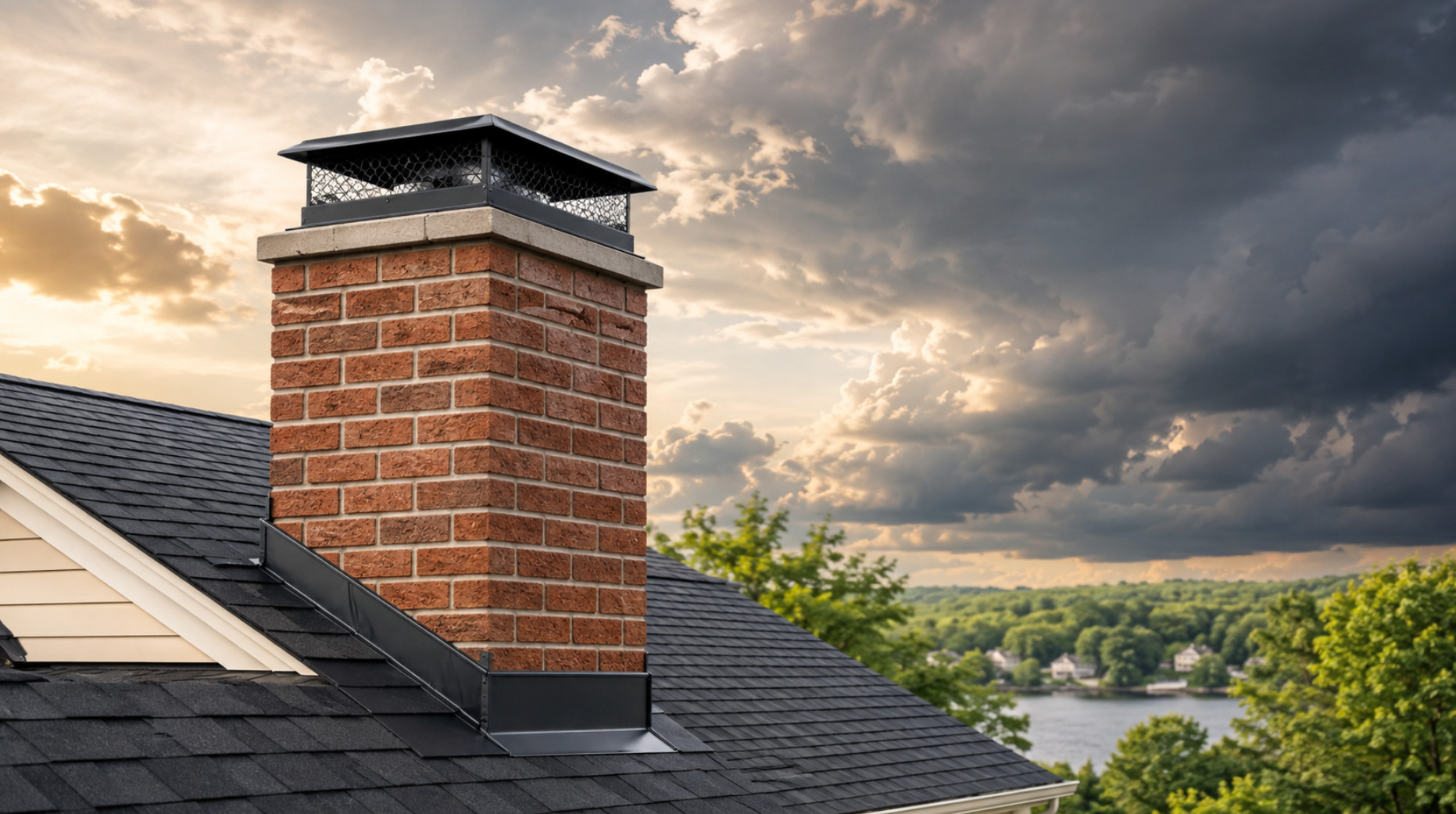
How Water Damages a Masonry Chimney
Brick and mortar are porous. Water soaks in, freezes, expands and spalls the face of the brick. Salts and acids carried by the water cause efflorescence, the white staining you see on older chimneys, and eventually loosen mortar joints from the inside.
What a Vapor-Permeable Sealer Does
- Repels liquid water so it beads off the brick
- Lets water vapor escape from inside the masonry
- Reduces freeze and thaw damage and efflorescence
- Typically lasts around ten years when applied correctly
When Waterproofing Is Not Enough
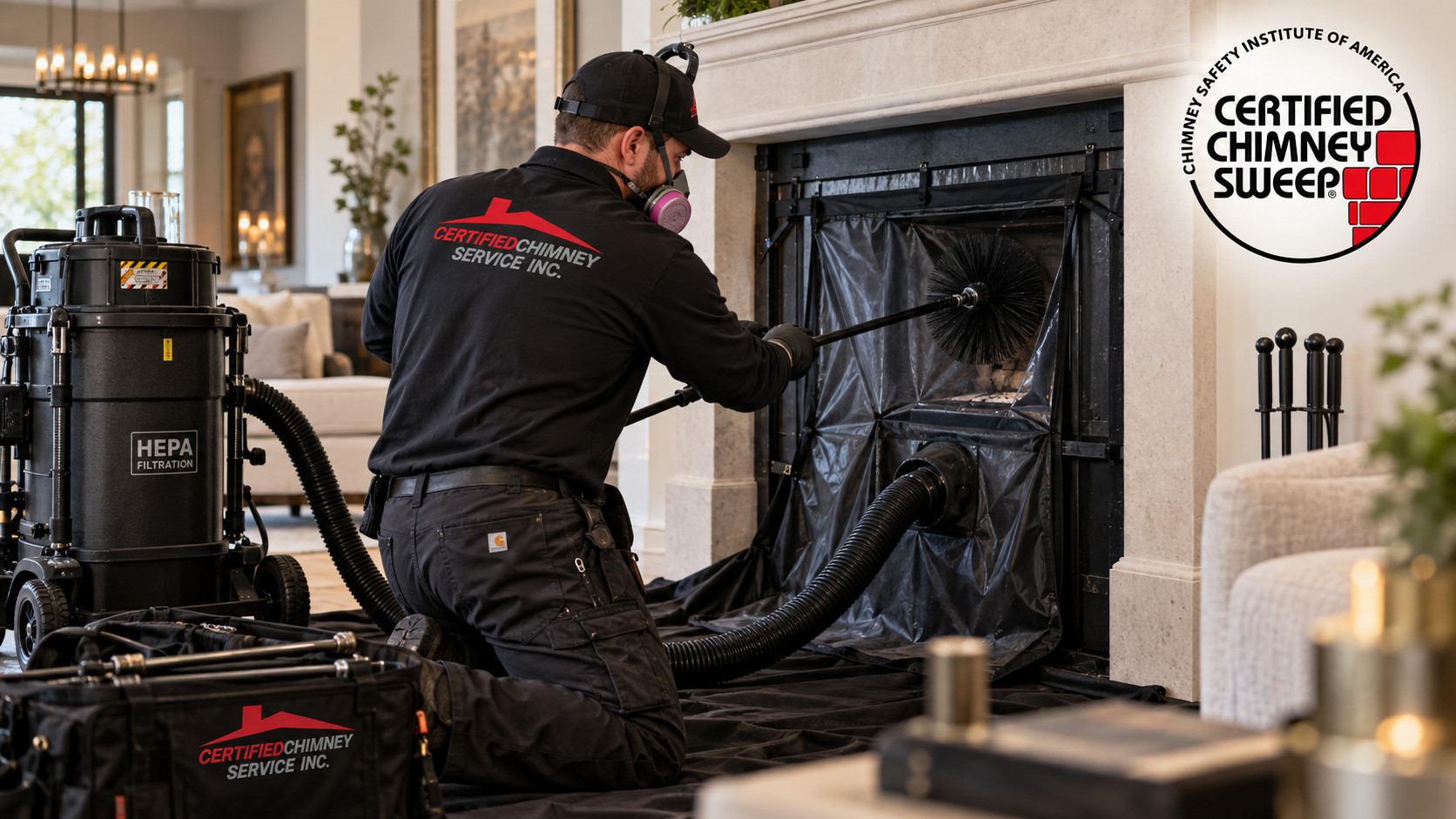
A sealer cannot close cracks wider than a hairline. Failed mortar joints, a cracked crown and loose flashing must be repaired first, otherwise the sealer traps water behind a repaired surface. A certified technician should inspect and repair the chimney before sealing.
What to Avoid
- Paint, tar and thick acrylic coatings that trap moisture
- Do-it-yourself sealers from big box stores that form a film
- Applying sealer in wet weather or on frozen masonry
Best Time to Waterproof in Connecticut
Late summer and early fall offer dry, mild days that let masonry dry fully and the product cure before winter. Shoreline homes in Fairfield County and New Haven County benefit most because salt air accelerates deterioration.
Ask for an inspection first. If your masonry is sound, waterproofing is an inexpensive way to extend its life by years.
Connecticut Climate and Your Masonry
Connecticut sees heavy rain, wet snow and many freeze and thaw cycles each winter. Shoreline towns such as Westport, Norwalk and Fairfield add salt air, which speeds brick and mortar deterioration. Inland towns such as Danbury and Shelton face colder snaps. All of them benefit from a water repellent, but the right product and timing matter.
Choosing a Sealer
- Siloxane or silane based sealers are vapor permeable and penetrate the brick
- Avoid acrylic film sealers, which can trap water
- Ask for a product with a written warranty and documented coverage rate
- Confirm the product is rated for chimney masonry
Application Steps
- Inspect and repair mortar, crown and flashing
- Clean the brick and let it dry
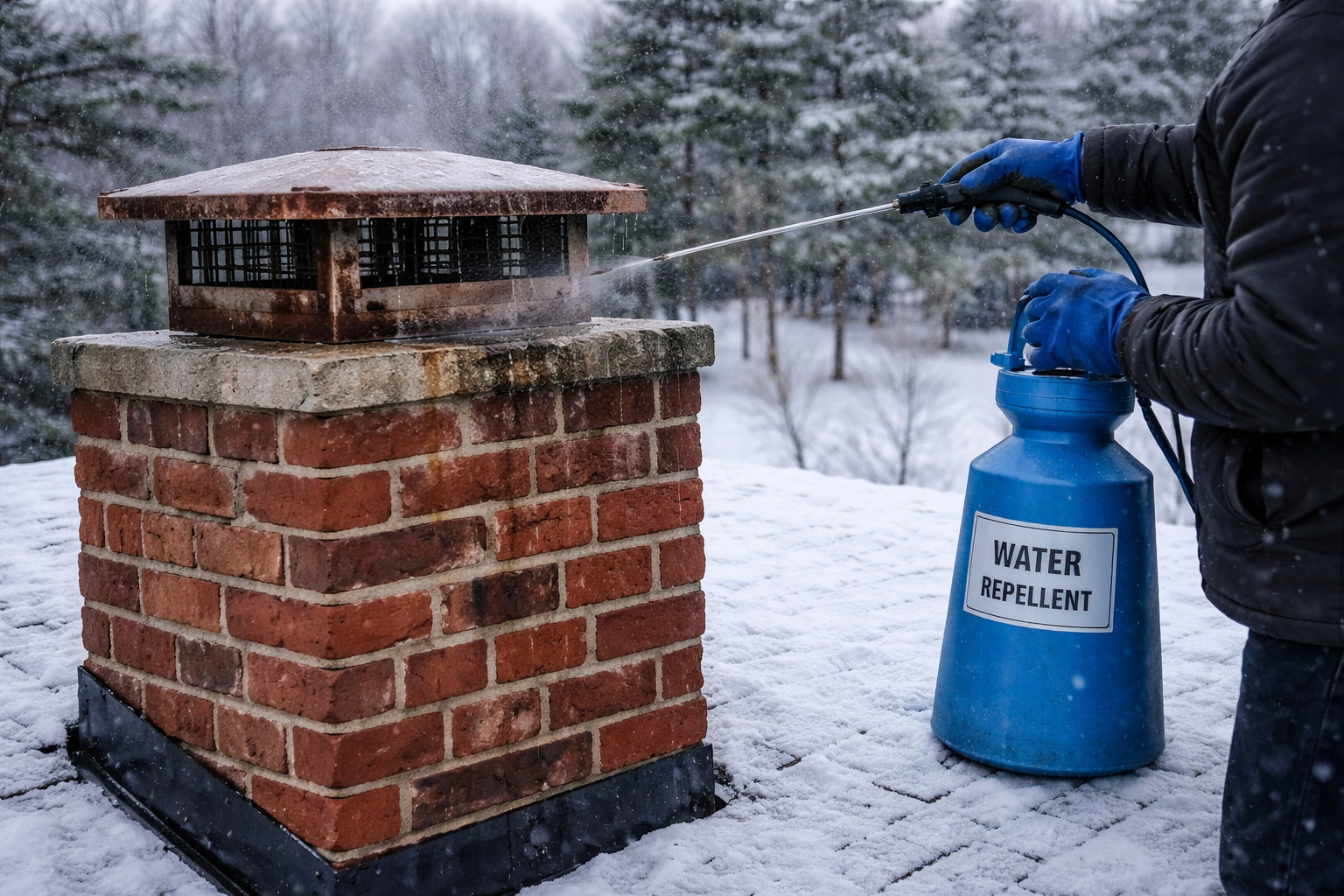
- Apply sealer with a low pressure sprayer from bottom to top
- Allow cure time before the next rain
Frequently Asked Questions
How long does a chimney sealer last
About ten years in most Connecticut conditions.
Will it change the look of the brick
A good penetrating sealer leaves the color unchanged.
Can I waterproof a cracked chimney
Repair cracks first.
Local Help and Related Reading
Our crews handle chimney sweeps in Stamford, chimney repair in Greenwich, chimney caps in Norwalk and chimney cleaning in Westport. Browse every town on our service areas page or our services.
More to read: Seasoned Firewood Guide for Connecticut Homeowners, Storm Damaged Chimney? How to Handle the Insurance Claim in Connecticut, Where to Put Carbon Monoxide Alarms Near a Fireplace.
For wider guidance, see the EPA Burn Wise program, the U.S. Department of Energy and CT DEEP.