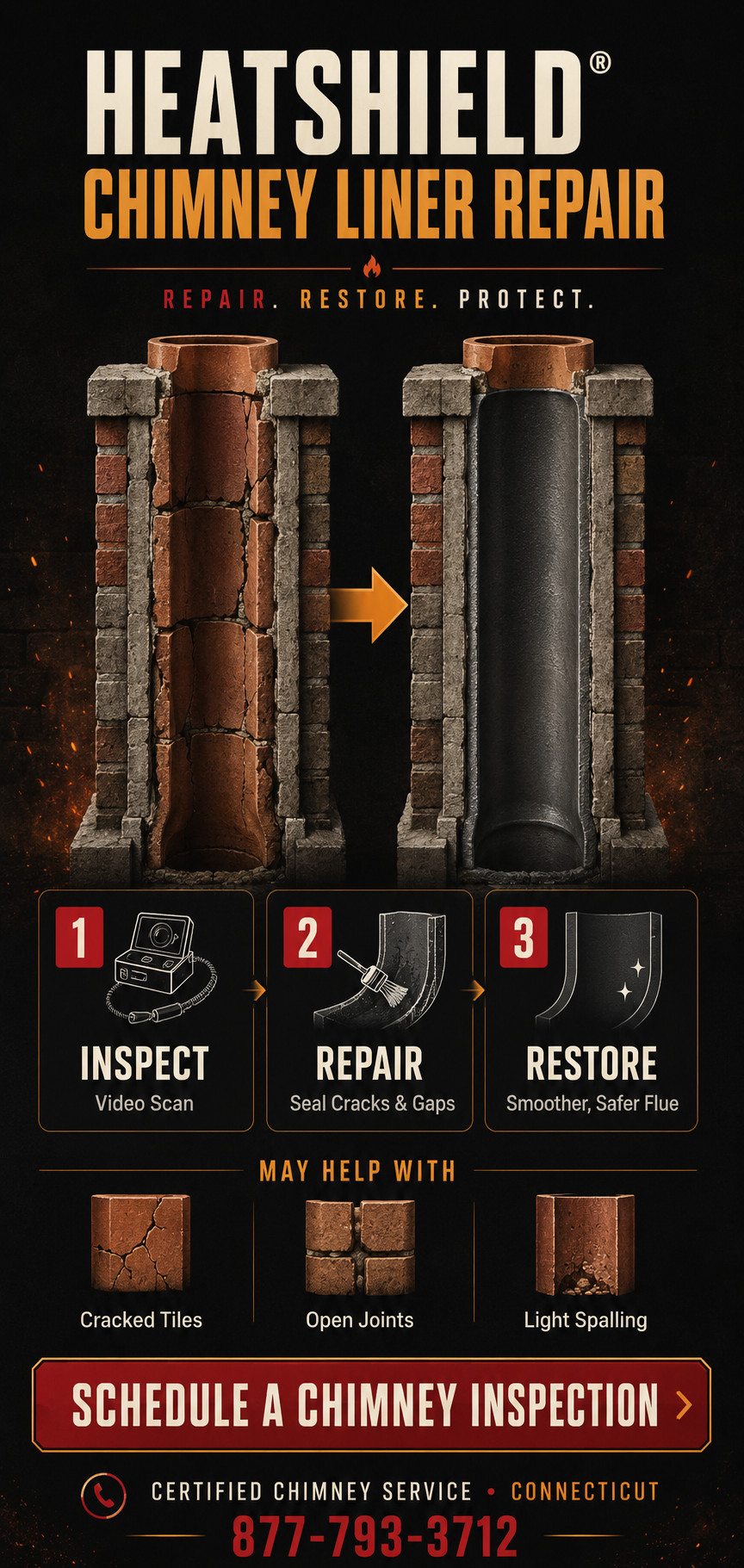
Chimney relining replaces a damaged or inadequate flue liner with a new, sealed stainless steel or cast-in-place system. In Connecticut it is most often needed after a camera inspection finds cracked clay tiles, after a furnace upgrade or when a wood stove insert is added.
When Relining Is Needed
- Cracked or missing clay tiles
- A new high efficiency furnace or boiler
- A wood stove or fireplace insert
- Oil to gas conversion
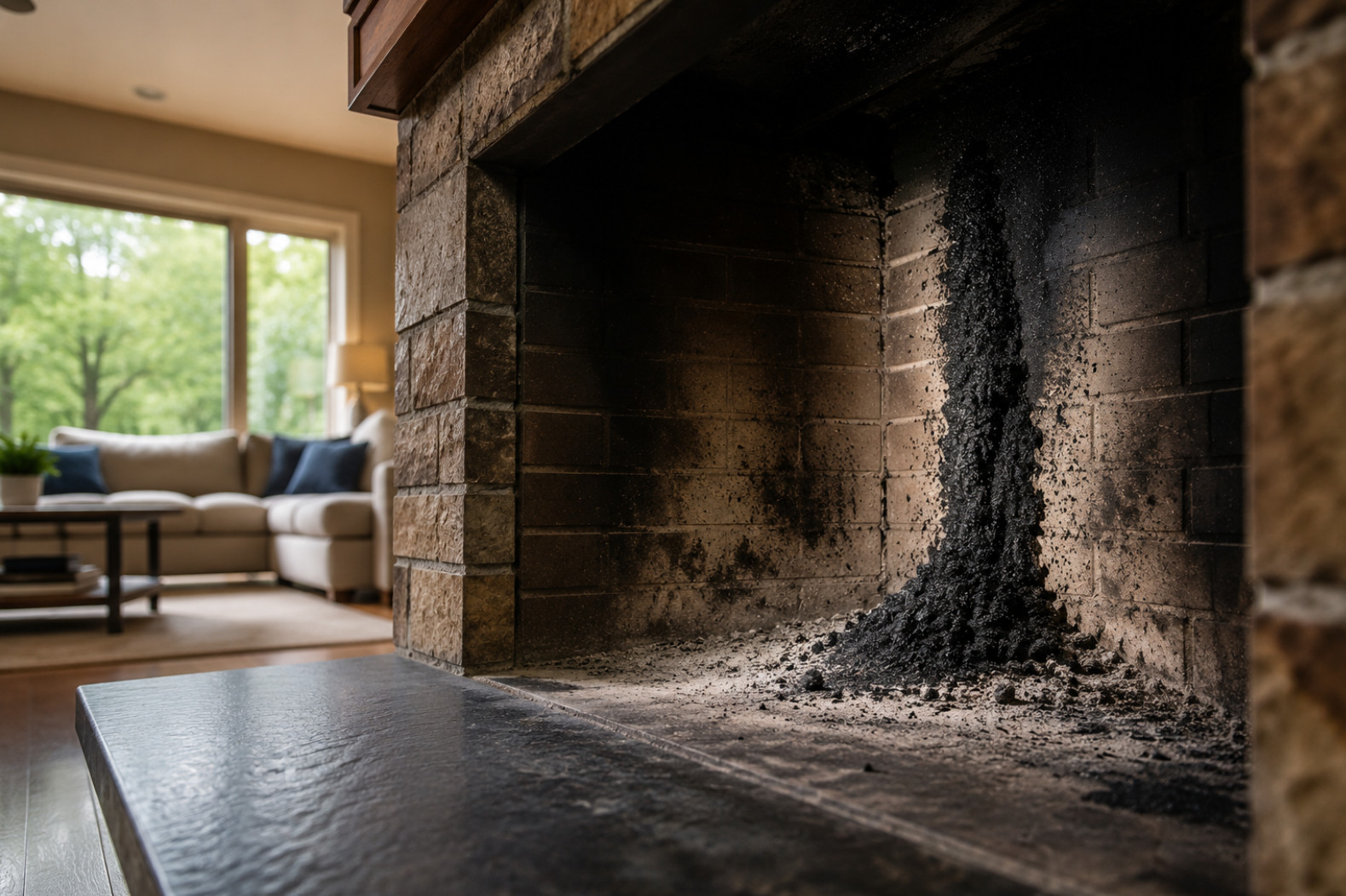
- Evidence of past chimney fire
Liner Options
Stainless Steel
The most common solution, with insulation and lifetime warranties available.
Cast-in-Place
A seamless poured liner for irregular or damaged flues.
Clay Tile
Used in new masonry builds and rebuilds.
Cost Factors
- Chimney height and flue shape
- Liner material and insulation
- Number of flues
- Access to the roof
Timeline
Most residential relines are finished in a single day once the camera inspection has confirmed size and length.
Understanding Liner Materials
Stainless steel liners come in different grades. Grade 304 is common for wood and 316 is recommended for gas and oil appliances. Insulated liners help maintain flue temperatures and reduce creosote. Always match the liner to the appliance manual.
Signs You Need a Liner
- A camera inspection shows cracked tiles
- A new stove or furnace was installed
- The flue is too large for the appliance
- There is smoke or odor entering the home
Frequently Asked Questions
How long does installation take
Usually one day.
Does relining improve draft
Often yes, because the flue is sized correctly.
Is it covered by insurance
Not usually, but a damaged liner after a fire may be.
Local Help and Related Reading
Our crews handle chimney sweeps in Greenwich, chimney repair in Stamford, chimney caps in Danbury and chimney cleaning in Shelton. Browse every town on our service areas page or our services.
More to read: Chimney Crown Repair in Connecticut, How to Choose a Chimney Sweep in Connecticut, Chimney Flashing Repair in Connecticut: Signs, Causes and Cost.
For wider guidance, see the EPA Burn Wise program, the U.S. Department of Energy and CT DEEP.