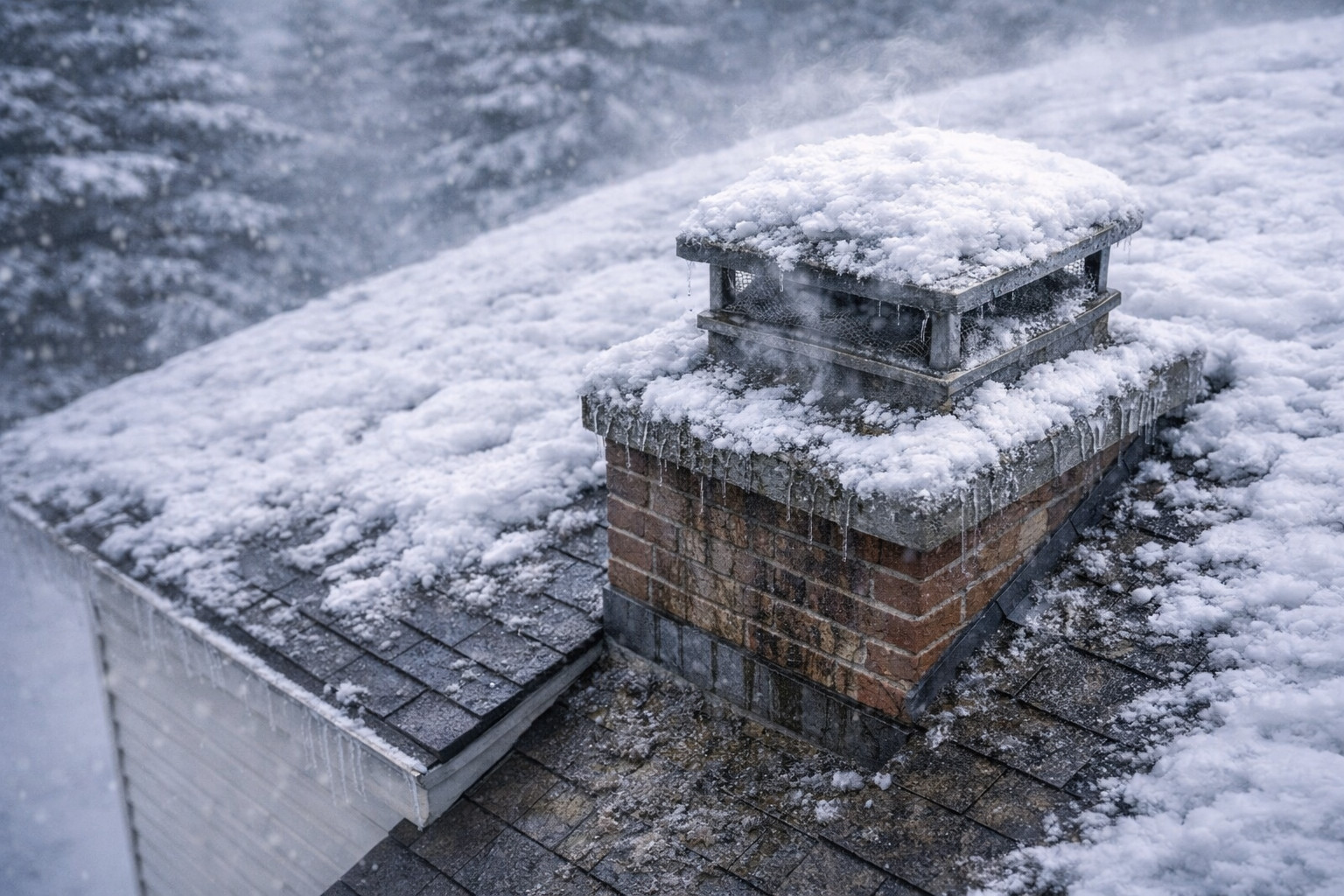
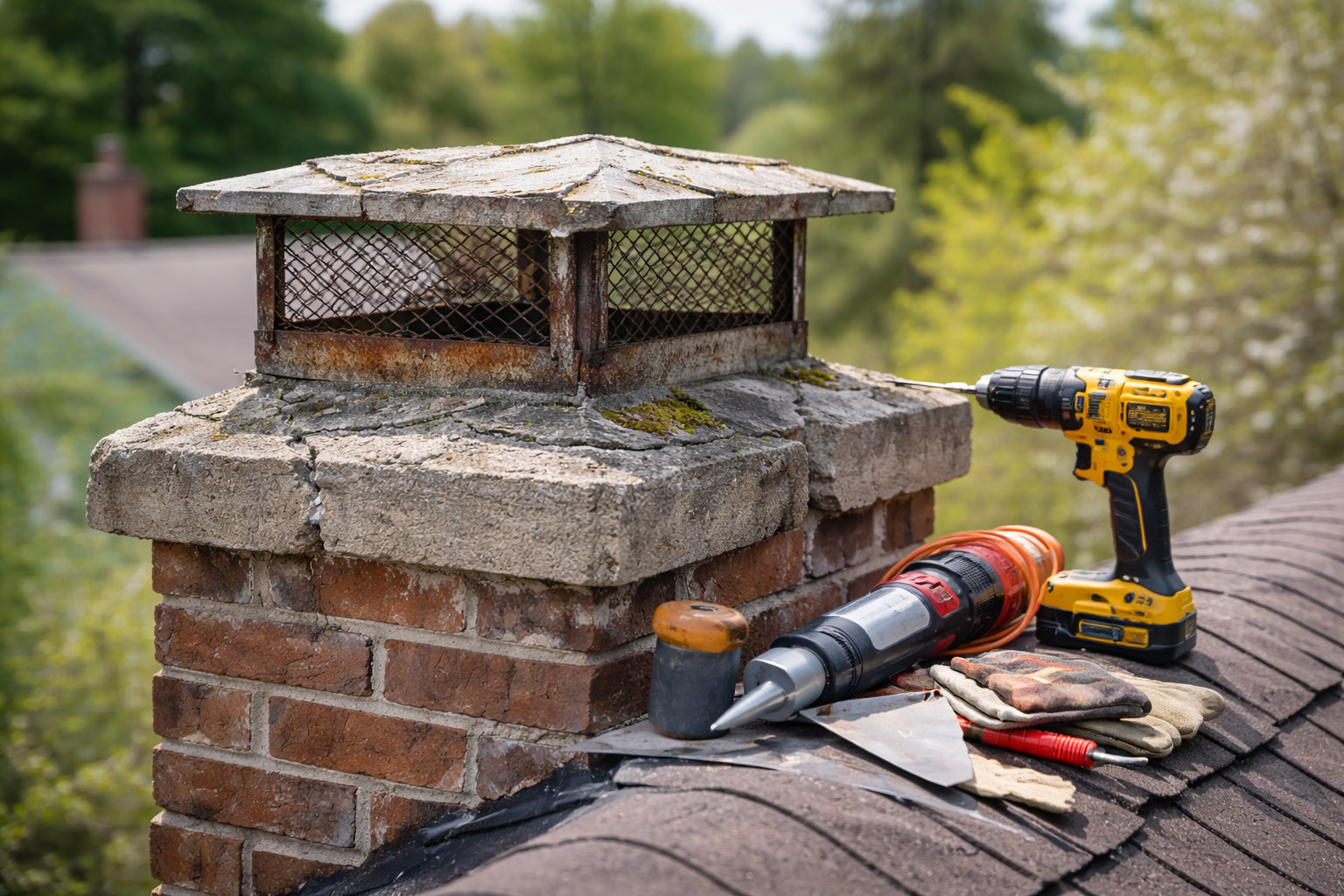
Most Connecticut homeowners only think about the chimney cap when something goes wrong: a nest in the flue, a rusty streak down the brick, water stains on the ceiling beside the fireplace. By then the cap has usually been failing for a while. Winter is when a weak cap finally gives out, because the season piles freezing rain, wet snow, wind and temperature swings onto one small piece of metal.
Think your cap may be damaged? Call 877-793-3712 and we will take a look before the next storm.
What the Cap Is Actually Protecting
The cap sits over the flue opening and does three jobs at once. It keeps rain and snow from running straight down the flue, it screens out leaves, twigs and animals, and it catches stray embers before they reach the roof or nearby trees. The Chimney Safety Institute of America treats a cap as a basic part of a safe chimney, not an optional upgrade.
When the cap fails, the flue becomes an open pipe. Water reaches the liner, the damper, the smoke shelf and the firebox, and the damage moves downward from there.
Why Connecticut Winters Are So Hard on Caps
Connecticut gives a chimney cap very little rest. Along the shoreline in Stamford, Norwalk, Fairfield and Bridgeport, salt in the air speeds up corrosion on any metal that is not built for it. Inland, the bigger problem is the swing between freezing nights and mild afternoons, which makes metal expand and contract again and again until fasteners loosen and seams open.
Heavy, wet snow adds weight, and ice sliding off a roof can hit a cap hard enough to dent or knock it crooked. Ice dams along the roofline can also push meltwater against the base of the chimney, where a weak cap and tired flashing let it in.
How Caps Fail, in the Order We Usually See It
- Corrosion. Galvanized steel rusts once its zinc coating is scratched, and coastal air speeds that up. Pinholes open within a few seasons.
- Loose or failed seals. The joint where the cap meets the flue or crown cracks as it moves with the temperature, giving water a direct path inside.
- Warping. Thin metal bends under repeated heating and cooling, and a warped cap stops shedding water away from the opening.
- Impact damage. Wind, falling branches and sliding ice dent the cap or tear it loose.
- Clogging. A screen packed with leaves, soot or a bird nest chokes the draft and can push smoke back into the room.
What Happens Below Once Water Gets In
A cap failure rarely stays at the top. Water soaks the mortar joints and then freezes, which cracks the joints and pops the faces off bricks. It collects on the crown and finds hairline cracks. It runs down the liner and corrodes metal parts. In bad cases it follows the outside of the stack into the roof framing and attic, leaving ceiling stains, damp insulation and eventually mold.
A white, powdery film on the brick is often the first outside clue. That residue is efflorescence, and it means water is moving through the masonry.
The Safety Side of a Bad Cap
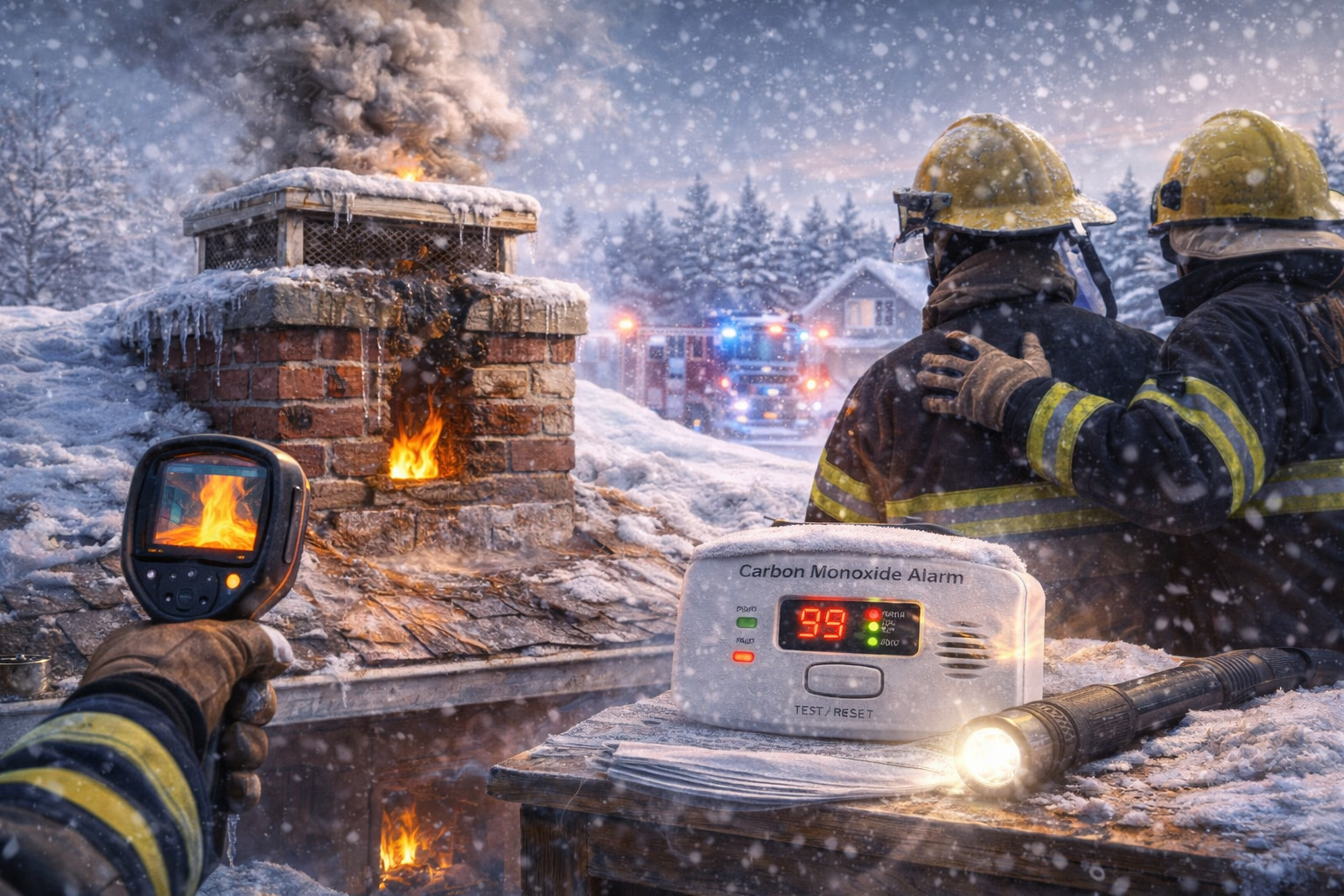
A blocked or half open flue is a carbon monoxide risk, because exhaust cannot leave the house properly. Moisture inside the flue also cools it and weakens the draft, which lets creosote build up faster. Creosote is the fuel behind most chimney fires. Birds and squirrels looking for winter shelter add nesting material that can ignite or block the flue completely.
Choosing a Cap That Lasts
| Material | How it holds up in Connecticut | Best fit |
|---|---|---|
| Stainless steel | Resists salt, moisture and temperature swings, and lasts for decades | Most homes, especially near the coast |
| Copper | Develops a protective patina and resists corrosion very well | Historic homes and visible, decorative chimneys |
| Galvanized steel | Rusts quickly once the coating is breached, often within a few years | A short term fix at best |
Factory built metal chimneys need a cap approved for that exact system. A masonry cap forced onto a metal flue can restrict airflow and cause problems with the unit itself.
The Parts Around the Cap Matter Too
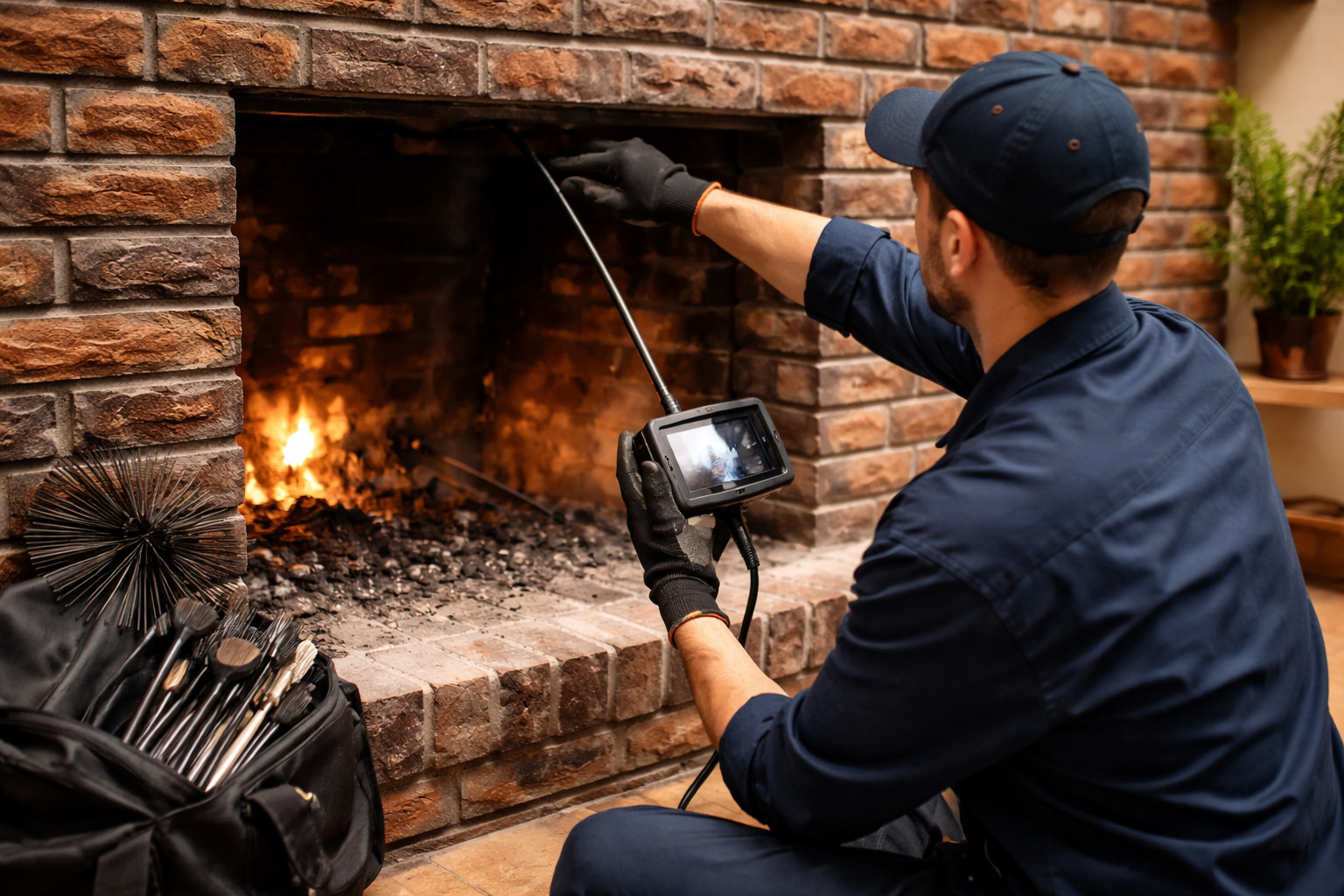
A new cap will not rescue a chimney with a cracked crown or loose flashing. The crown should slope to shed water, and the flashing where the chimney meets the roof should lie tight with no gaps. On wide chimneys, a cricket, which is a small peaked diverter behind the stack, keeps snow and meltwater from pooling. A top mounted damper seals the flue when it is not in use, cutting drafts and keeping moisture out. If you are not sure what is wrong, a professional chimney inspection will show whether the problem stops at the cap or runs deeper.
Repair or Replace?
A loose fastener or a small dent can often be fixed. Replacement is the better call when the metal is rusted through, the frame is warped, the mesh is torn, or the seal around the base has failed more than once. A crown that has cracked underneath the cap should be repaired at the same visit, since a fresh cap on a failing crown only moves the leak somewhere else.
Frequently Asked Questions
How can I tell from the ground that my cap has a problem?
Look for a crooked or missing cap, rust streaks running down the brick, white residue on the masonry, or birds going in and out of the flue. Binoculars help, and so does a photo taken with a zoom lens. Please do not climb onto a wet or icy roof to check.
Can a bad cap raise my heating bill?
Yes. A loose or missing cap, paired with a damper that does not seal, lets heated air escape through the chimney all winter.
When is the best time to have a cap checked?
Late summer or early fall, before the first hard freeze. Roof access is safer, and any repair is finished before winter weather arrives.
Local Resources on Chimney and Winter Home Safety (click to expand)
Catching a failing cap early is one of the least expensive ways to protect everything beneath it. Call Certified Chimney Service at 877-793-3712 to schedule an inspection, or request service online and we will follow up with a time that works.