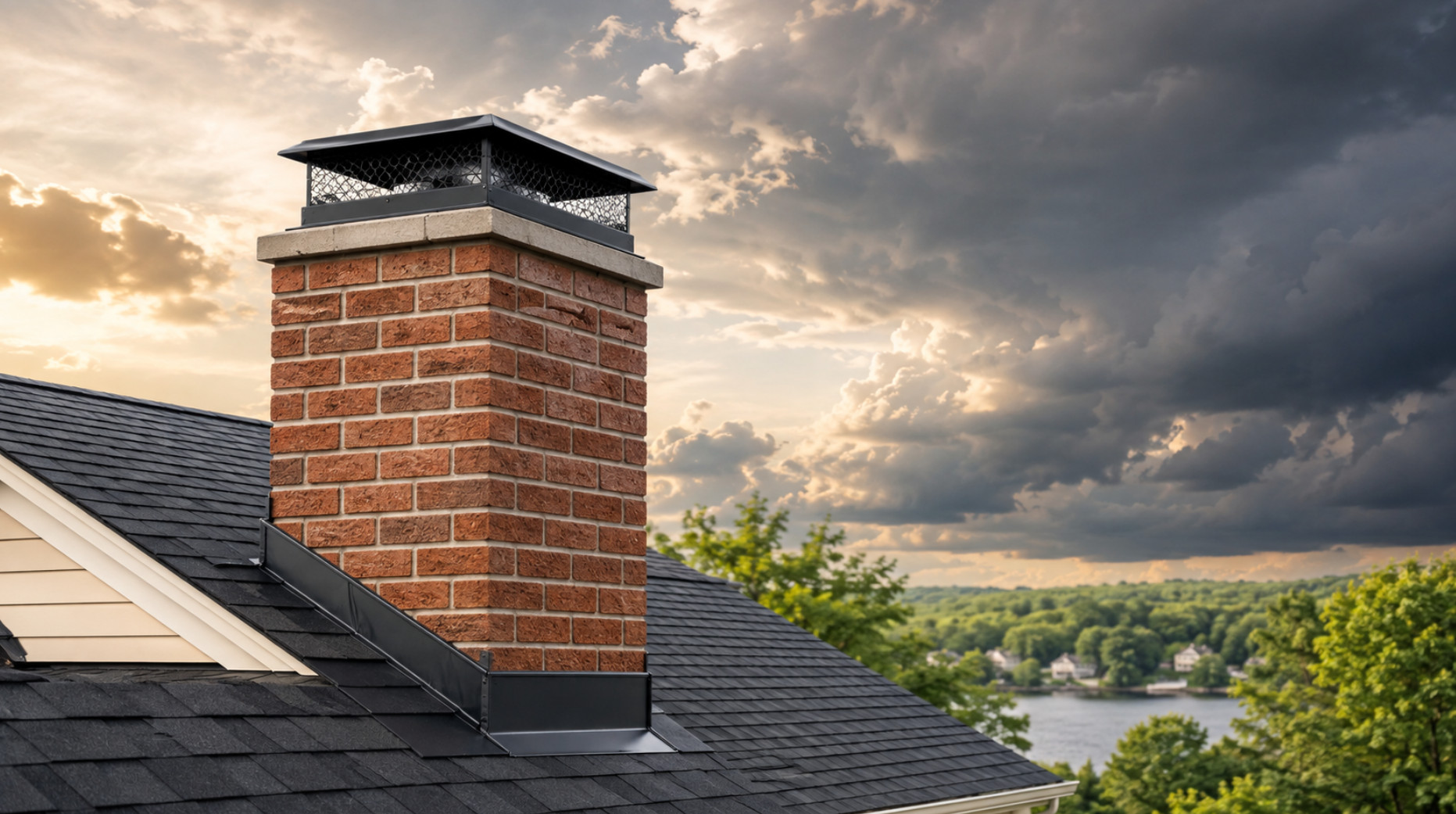
Common Causes of Roof Leaks
Damaged shingles and roof valleys
Your roof’s shingles serve as the primary barrier against rain, snow, and Connecticut’s unpredictable New England climate. Over time, constant exposure to sun, wind, and repeated freeze thaw cycles causes shingles to dry out, crack, curl, or loosen. Once that protective layer is compromised, water can work its way underneath and reach the roof deck. This type of water intrusion often remains hidden at first, slowly causing structural damage, rotting wood, and eventually visible water stains on ceilings or mold growth in attic spaces.
Roof valleys are particularly vulnerable. These are the areas where two sections of the roof meet, forming a natural channel that directs rainwater downward. Because valleys handle such a high volume of water, any weakness in the valley flashing or surrounding roofing materials can quickly turn into a leak. According to the International Association of Certified Home Inspectors roofing guide, damaged shingles are one of the most common sources of residential roof leaks. The Federal Emergency Management Agency home protection resource also explains that roof valleys experience some of the heaviest water runoff, making proper sealing and maintenance essential for preventing roof water damage.
Failed Roof Flashing and Roof Joints
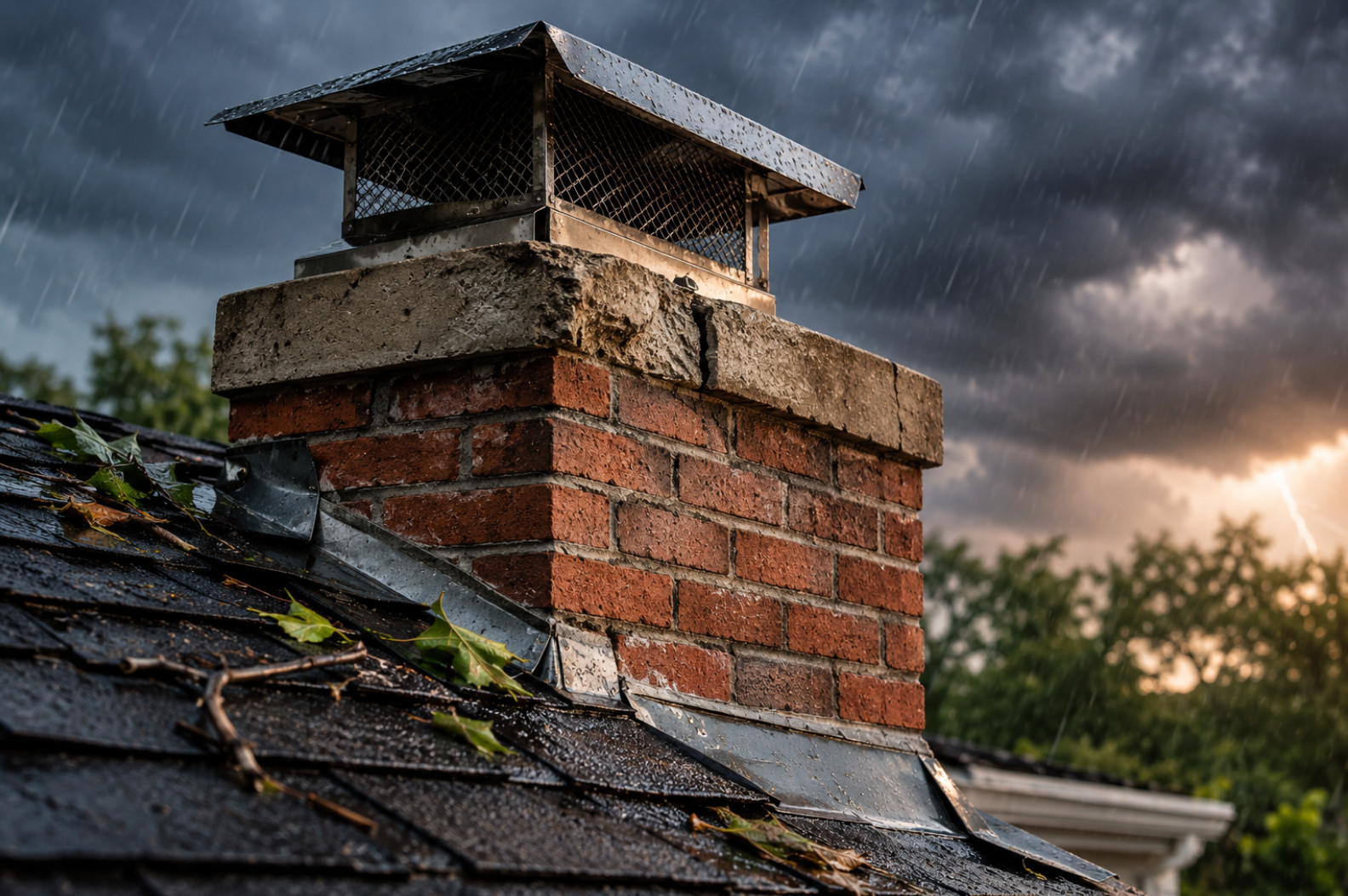
Roof flashing is installed at key transition points to prevent water from entering areas where roofing materials meet other surfaces. These vulnerable areas include skylights, vent pipes, valleys, and roof edges. Flashing is typically made from durable materials such as aluminum, copper, or galvanized steel and is designed to direct water safely off the roof.
The most common flashing locations include:
- Skylight flashing, which seals the edges around skylights
- Vent pipe flashing, which protects areas where pipes penetrate the roof
- Valley flashing, which reinforces high water flow areas
- Drip edge flashing, which directs water away from the roof edge
When flashing becomes loose, rusted, or improperly sealed, water can seep beneath the roof surface and spread quickly. This often leads to hidden water infiltration inside the roof structure and surrounding walls. In Connecticut homes, flashing failures are especially common after severe storms or winter weather, when expanding ice and shifting materials weaken these protective seals.
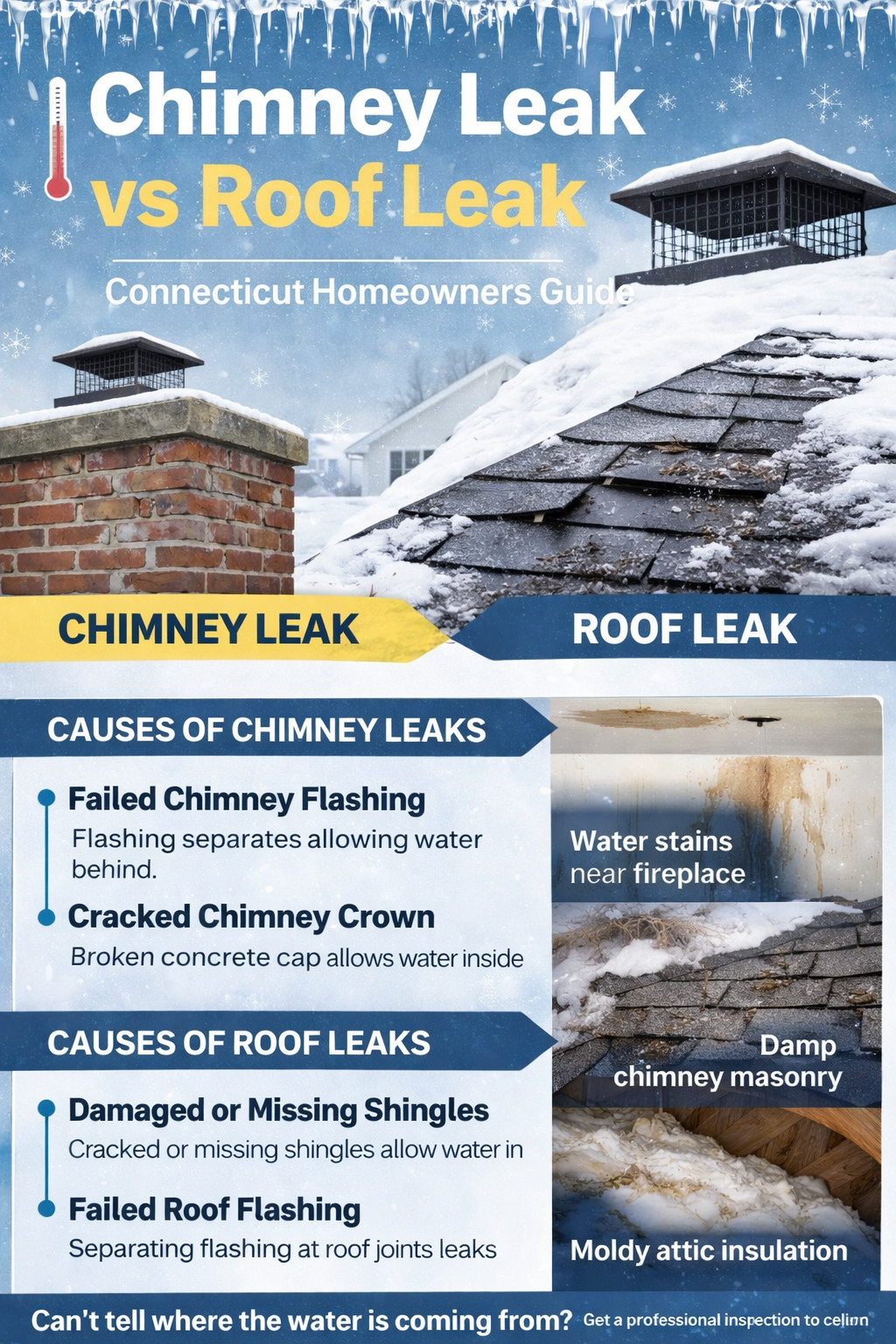
Signs You Have a Chimney Leak
Water stains near fireplace
One of the clearest indicators of a chimney problem is water stains around the fireplace.
Other signs include:
- Musty odors
- Damp walls near chimney
- White staining on bricks
This often indicates masonry cracks or crown failure.
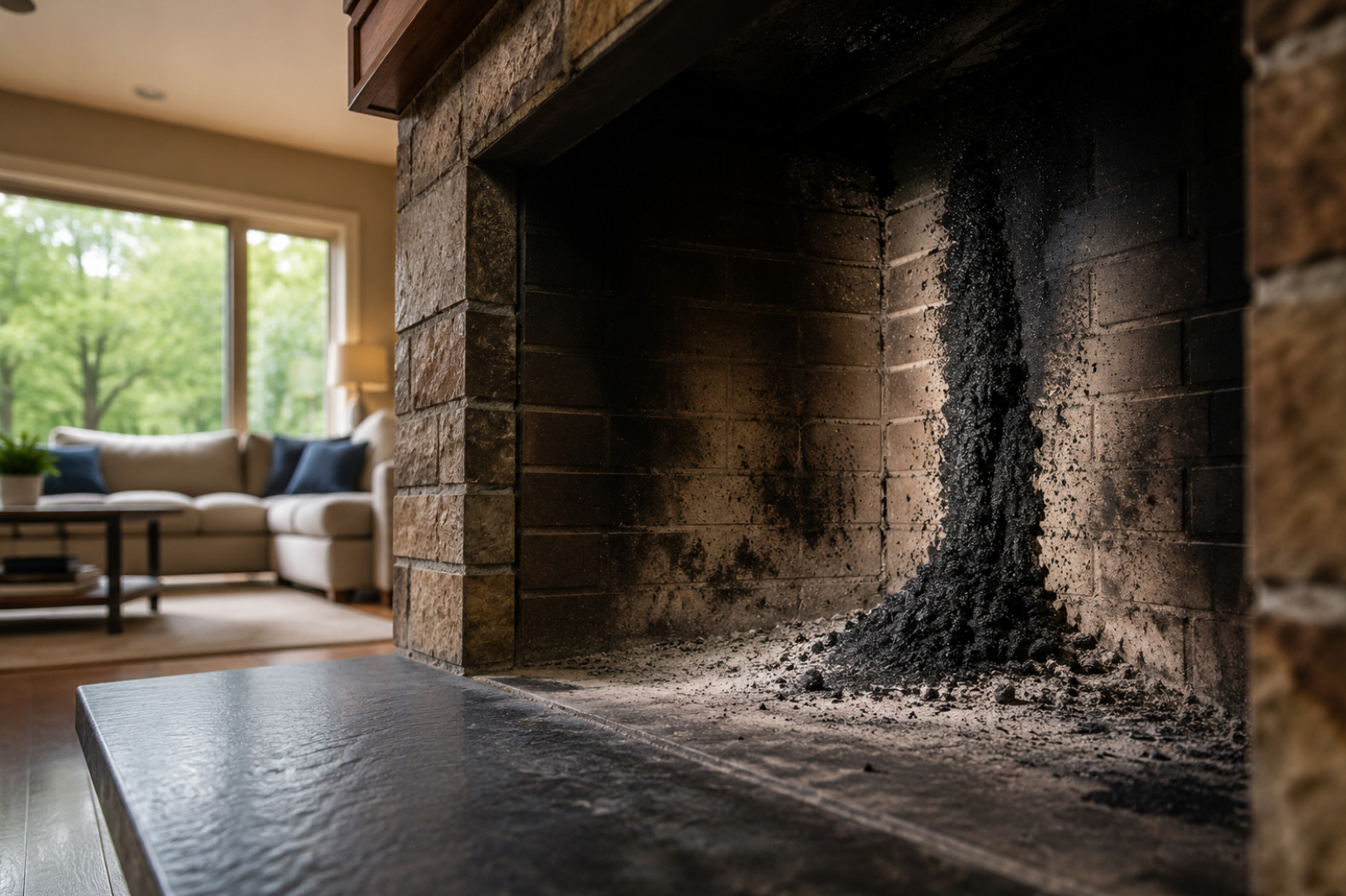
Creosote buildup and internal damage
Moisture entering the chimney mixes with creosote buildup, creating acidic compounds that damage the chimney liner.
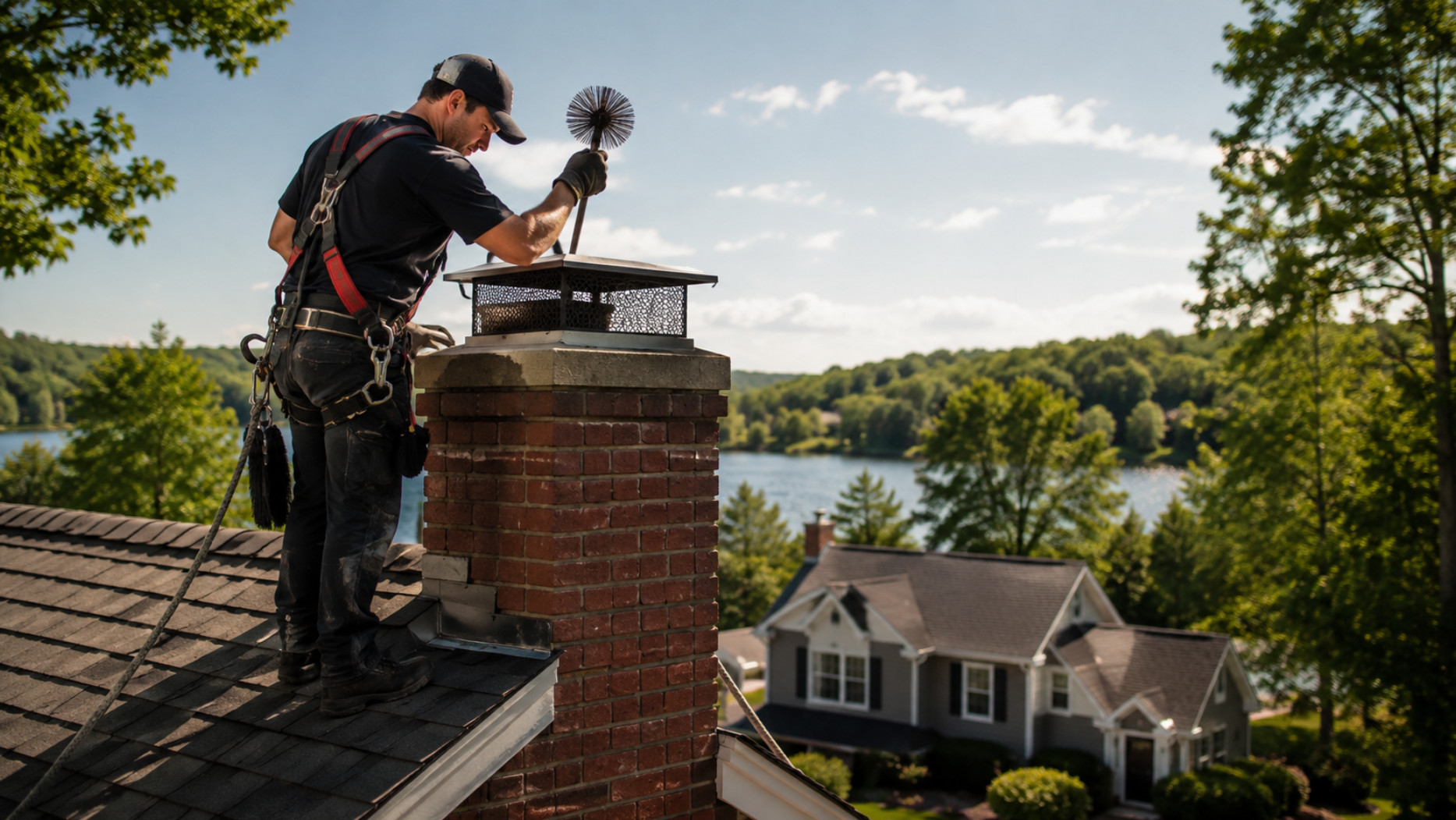
This is why annual inspections from certified professionals such as Certified Chimney Connecticut are critical.
The Chimney Safety Institute of America recommends yearly inspections by a CSIA Certified Chimney Sweep Technician.
Signs You Have a Roof Leak
Water stains on ceiling or attic
Roof leaks usually appear as:
- Ceiling discoloration
- Sagging drywall
- Peeling paint
These symptoms often occur far from the original leak source.
Mold growth in attic or insulation
When water enters through roofing materials, mold spreads quietly.
The longer it goes unnoticed, the worse the damage becomes.
Chimney Leak vs Roof Leak Comparison
|
Location | Around fireplace | Ceiling or attic |
Common cause | Damaged chimney flashing | Broken shingles |
Repair needed | Masonry work or flashing repair | Roofing repair |
Risk level | Structural chimney damage | Structural roof damage |
How Long Can a Roof Leak Go Unnoticed?
Roof leaks can go unnoticed for months.
Water travels through insulation and wood framing before visible signs appear.
By the time stains appear, significant damage may already exist.
Why Professional Inspection is the Best Solution
Certified inspections identify problems early before major damage occurs.
Certified Chimney Connecticut provides:
- Full chimney inspection
- Flashing inspection
- Masonry evaluation
- Waterproofing solutions
Professional repair ensures proper sealing using silicone based water sealants and proper flashing installation.
Conclusion
For Connecticut homeowners, knowing the difference between a chimney leak and roof leak can protect your home from serious water damage, costly repairs, and dangerous mold growth.
In New England climates, your chimney and roof work together as one system. When one fails, it affects the other.
Routine inspections, proper maintenance, and timely repairs from trusted certified professionals like Certified Chimney Connecticut help ensure your home stays safe, dry, and structurally sound for years to come.