Share:
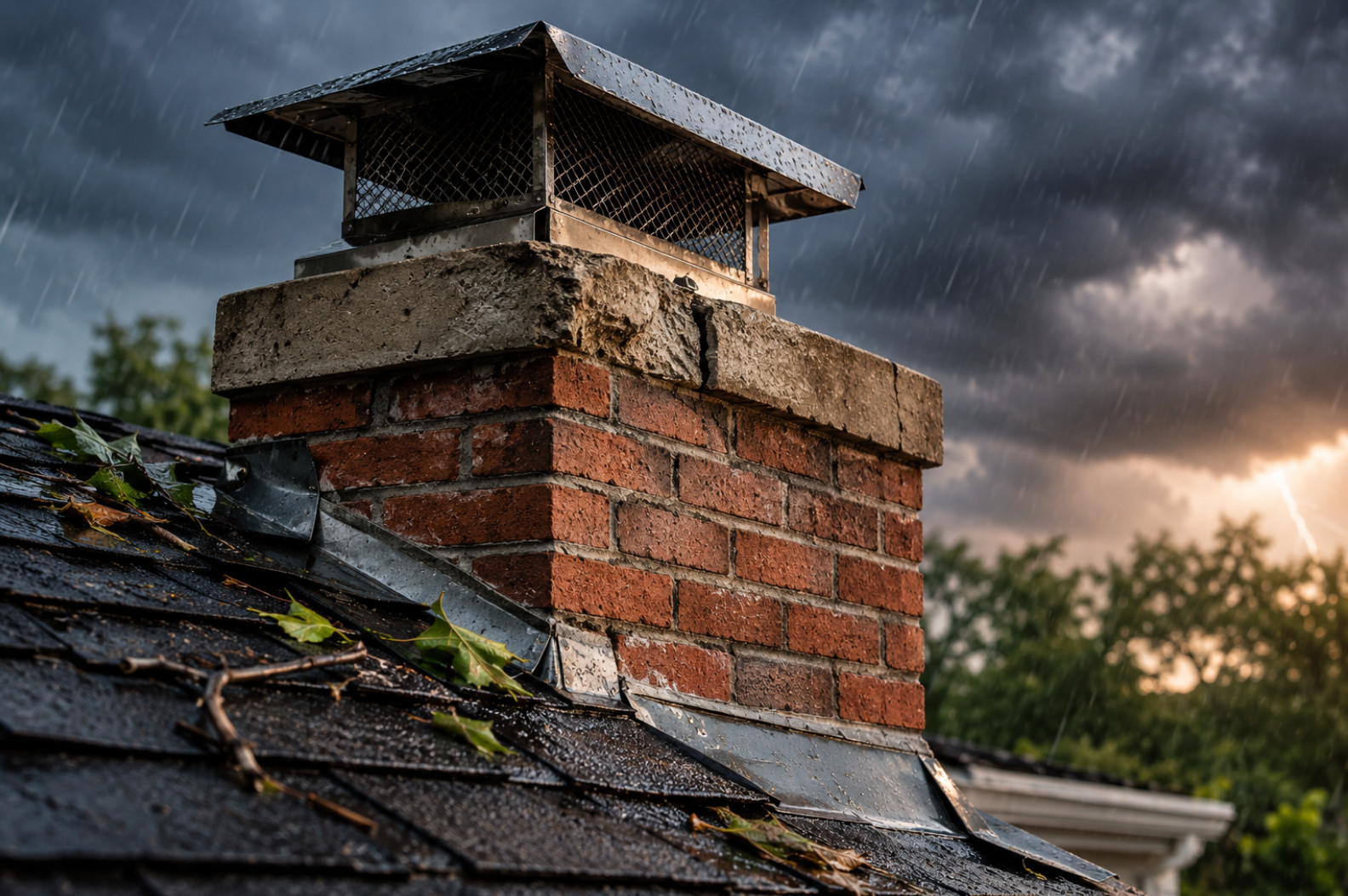
Winter in Connecticut has a way of exposing weaknesses that stay hidden the rest of the year. A homeowner in West Hartford once described it perfectly. His chimney looked fine in October. By February, small cracks had turned into crumbling mortar joints, and pieces were falling onto his roof. What happened was not sudden damage. It was the result of freeze-thaw cycles in Connecticut, a slow and destructive process that breaks down mortar joints from the inside out.
This cycle affects most masonry chimneys in Connecticut, especially in coastal areas like Stamford, Greenwich, and New Haven, where temperature changes and moisture cause faster deterioration. Understanding how freeze-thaw cycles cause frost damage and structural weakening is the first step in protecting your chimney and avoiding costly repairs.
Freeze-thaw cycles occur when water enters masonry materials such as mortar joints, freezes, expands, and then melts. This process repeats over and over throughout winter.
Water expands about 9 percent when it freezes, as explained by the U.S. Geological Survey. That expansion creates internal pressure inside mortar joints and concrete samples, weakening the bond that holds masonry together.
This pressure is known as hydrostatic pressure, and over time, it leads to permanent structural damage.
Connecticut’s climate makes mortar joints particularly susceptible because of:
What makes Connecticut even more challenging is the consistency of these winter conditions year after year. When snow melts during a mild afternoon and then refreezes overnight, moisture inside mortar joints expands and contracts repeatedly. This creates internal stress that slowly weakens the structure. The Connecticut Department of Energy and Environmental Protection climate resources explain that winter storms and frequent temperature changes put buildings across the state at greater risk of freeze thaw damage.

Homes near the coast, such as those in Stamford and Greenwich, face an additional risk because humid air carries more moisture into masonry materials. Inland areas like Hartford and Danbury are not immune either. Snow accumulation combined with freezing nights creates ideal conditions for freeze thaw cycles to attack mortar joints from within.
Each freeze thaw cycle adds stress, even when damage is not immediately visible. The mortar may still look intact on the surface while microscopic cracking and internal weakening continue to progress beneath it.
Mortar joints naturally absorb internal moisture through their pore structure, even when the surface appears solid. These pores vary in size and function. Some are considered harmless pores because they allow minimal moisture movement without causing stress, while others are multi-harmful pores that trap water and increase the risk of frost damage. When temperatures drop below freezing, the trapped water expands and creates frost heaving pressure inside the mortar.
This pressure forces the material apart at a microscopic level, gradually weakening its mechanical properties. The mortar loses its ability to bond bricks together effectively, and its dynamic compressive strength begins to decline. Over time, the internal damage variable increases, which is a scientific way of describing the accumulation of structural deterioration inside the material.
The water–cement ratio used when the mortar was originally mixed also plays a major role. Mortar with a higher water content tends to develop larger pore sizes, allowing more moisture to enter and freeze. This is why proper base preparation and correct mortar composition are critical for chimneys in cold climates like Connecticut.
Over time, this leads to:
These changes often begin invisibly, long before homeowners notice visible deterioration.
As freeze thaw damage progresses, the mortar joints undergo measurable changes in surface roughness and surface topography. What was once a dense and smooth surface becomes uneven and brittle as internal fractures expand outward.
This transformation is directly linked to changes in the pore structure. As internal cracks form, they connect smaller pores into larger pathways, increasing NMR porosity levels and allowing more moisture infiltration. Scientists measure this progression using techniques that analyze fractal dimension, which helps quantify how complex and damaged the internal structure has become.
According to research from the National Institute of Standards and Technology on freeze thaw durability of cement based materials, increased surface roughness and internal pore expansion are key indicators of advanced frost damage and declining structural performance.
As the mortar surface becomes more porous and uneven, it loses its ability to resist water penetration. This creates a self accelerating cycle:
Eventually, the mortar can no longer perform its structural role. At this stage, professional repair becomes necessary to restore stability and prevent further chimney deterioration.
Mortar contains tiny pores that trap water.
These pores are classified into different categories based on pore diameter:
|
Pore Type |
Effect on Freeze-Thaw Resistance |
|---|---|
|
Harmless pores |
Allow pressure relief and improve frost resistance |
|
Multi-harmful pores |
Trap water and increase frost damage risk |
The pore size distribution directly affects how mortar responds to freeze-thaw cycles.
Research from Nature Scientific Reports shows that larger and connected pores increase freeze-thaw damage because they allow more water accumulation.
Dynamic compressive strength measures how well mortar joints withstand pressure, weight, and environmental stress over time. In Connecticut, repeated freeze thaw cycles gradually reduce this strength, weakening the bond that keeps chimney masonry stable. While the damage may begin at a microscopic level, its effects compound each winter as internal moisture freezes and expands within the pore structure.
Studies using controlled concrete samples have shown that freeze thaw exposure leads to a measurable decline in mechanical properties, especially when mortar contains a higher water–cement ratio or an unfavorable pore size distribution. As moisture repeatedly freezes, the internal structure becomes less dense, and the mortar loses its ability to resist compression forces.
One of the most reliable ways researchers track this deterioration is through RDME, or relative dynamic modulus of elasticity. RDME reflects how well a material maintains its stiffness and structural integrity after freeze thaw exposure. When RDME values drop, it confirms that the mortar is becoming more fragile and less capable of supporting structural loads.
According to the National Institute of Standards and Technology research on freeze thaw resistance of cement materials, freeze thaw cycles directly reduce the elastic performance and durability of cement based materials, increasing their vulnerability to cracking and failure.
As dynamic compressive strength declines, mortar joints become more vulnerable to:
This weakening process is gradual, which is why early inspection and maintenance are so important in Connecticut’s climate.
Fractal dimension analysis is a scientific method used to evaluate internal cracking and structural breakdown within mortar joints. While homeowners see cracks on the surface, the real damage begins much deeper within the material’s pore structure.
As freeze thaw cycles progress, the internal network of pores expands and becomes more interconnected. This increases the fractal dimension, which indicates a more complex and damaged internal structure. Higher fractal dimension values correlate with increased NMR porosity levels and reduced frost resistance.
This structural breakdown affects how mortar responds to stress and moisture. Multi harmful pores grow larger, allowing more water infiltration, while the mortar loses density and cohesion. Over time, this leads to visible deterioration.
Research published by the National Science Foundation on durability of cement and masonry materials in freezing environments explains that repeated freeze thaw exposure accelerates internal cracking and reduces the long term reliability of structural masonry.
This confirms what homeowners in Connecticut often notice first:
These visible warning signs are the result of deeper internal damage that has already compromised the chimney’s structural integrity. Professional evaluation can identify these issues early and prevent more extensive and costly repairs later.
The water–cement ratio plays a major role in determining frost resistance.
Mortar mixes with too much water create larger pore sizes and weaker bonds.
This allows more moisture penetration and faster freeze-thaw damage.
Professional chimney specialists, like Certified Chimney Connecticut, use optimized mortar mixes designed for Connecticut’s climate.
This improves durability and reduces long term damage.
Freeze thaw damage does not happen all at once. It develops gradually as internal moisture affects the pore structure of the mortar joints. Each cycle increases the damage variable, which reflects the level of internal deterioration. Even when the chimney looks normal from the outside, changes in mechanical properties and internal strength may already be underway.
In the early stage, freeze thaw cycles begin affecting the smallest areas inside the mortar. Moisture enters through harmless pores and freezes, creating slight internal expansion. This starts to change the surface topography, making the mortar feel rougher and more brittle. At this point, the dynamic compressive strength remains mostly intact, but the internal structure is beginning to weaken.
As freeze thaw exposure continues, the pore size and pore size distribution begin to change. Small pores connect and form larger pathways, allowing more water to enter. NMR porosity increases, showing that the mortar is holding more internal moisture. This accelerates frost damage and reduces the mortar’s ability to maintain its bond. The fractal dimension of the material increases, meaning the internal cracking pattern becomes more complex and widespread.
Homeowners often notice visible warning signs at this stage, especially after winter.
In the advanced stage, the mortar has lost significant mechanical strength. The water–cement ratio and years of moisture exposure contribute to severe internal deterioration. Dynamic compressive strength declines, and the chimney may begin shifting as mortar joints fail.
At this point, the damage is no longer just cosmetic. The structural integrity of the chimney is compromised, and professional repairs are necessary to restore safety and stability.
Understanding freeze thaw damage is not based on guesswork. Researchers use controlled testing to measure exactly how mortar joints and concrete samples respond to freezing conditions. These scientific methods help explain why chimneys in Connecticut deteriorate over time and how internal damage progresses long before it becomes visible.
Researchers study freeze thaw damage using controlled concrete samples designed to simulate real world masonry conditions. These samples are exposed to repeated freeze thaw cycles while scientists monitor how their mechanical properties change.
The goal is to understand how internal moisture affects durability, strength, and long term performance.
During testing, researchers measure:
These tests consistently show that freeze thaw damage is cumulative. Each cycle weakens the internal structure, even if the surface appears stable. Over time, the dynamic compressive strength decreases, making mortar joints more vulnerable to cracking and failure.
Modern technology allows researchers to examine damage at a microscopic level. These advanced methods help measure internal moisture movement, pore size changes, and surface deterioration.
Common techniques include:
Together, these methods provide clear evidence that freeze thaw cycles weaken mortar from the inside out. By the time cracks appear on the surface, the internal structure has often already lost significant strength.
This scientific understanding is why professional inspection and maintenance are essential for protecting chimney systems in cold climates like Connecticut.
Repairing mortar joints prevents further water intrusion.
Professional repair restores structural strength and improves frost resistance.
Certified Chimney Connecticut uses materials designed for cold climates and proper base preparation to ensure long term durability.
Certified Chimney Connecticut understands the specific challenges posed by freeze-thaw cycles in Connecticut.
Their support team evaluates mortar joints, internal moisture levels, and structural condition to identify early signs of damage.
Their repair methods improve frost resistance and extend chimney lifespan.
Costs depend on damage severity.Early repairs are significantly less expensive than structural rebuilds.
Freeze-thaw cycles act like slow internal erosion.
Each cycle weakens mortar joints until failure occurs.
Ignoring early signs leads to expensive repairs and potential safety risks.
Homeowners in Connecticut should monitor their chimneys closely, especially after winter.
Professional inspection and maintenance from Certified Chimney Connecticut ensures long term protection.
Freeze thaw cycles are one of the most damaging forces affecting mortar joints in Connecticut, and the process often begins long before homeowners notice visible cracks. As internal moisture freezes and expands, it slowly weakens the pore structure, reduces dynamic compressive strength, and increases the overall damage variable within the chimney. What starts as minor surface roughness can eventually lead to loose bricks, structural instability, and costly repairs. The key to preventing serious frost damage is early detection and proper maintenance. Regular inspections and timely repairs from experienced professionals like Certified Chimney Connecticut can restore mortar integrity, improve frost resistance, and protect your chimney from further deterioration. In a climate where freeze thaw cycles are unavoidable, proactive care is the best way to preserve both the safety and lifespan of your masonry chimney.
Article details:
Share:
Continue learning: