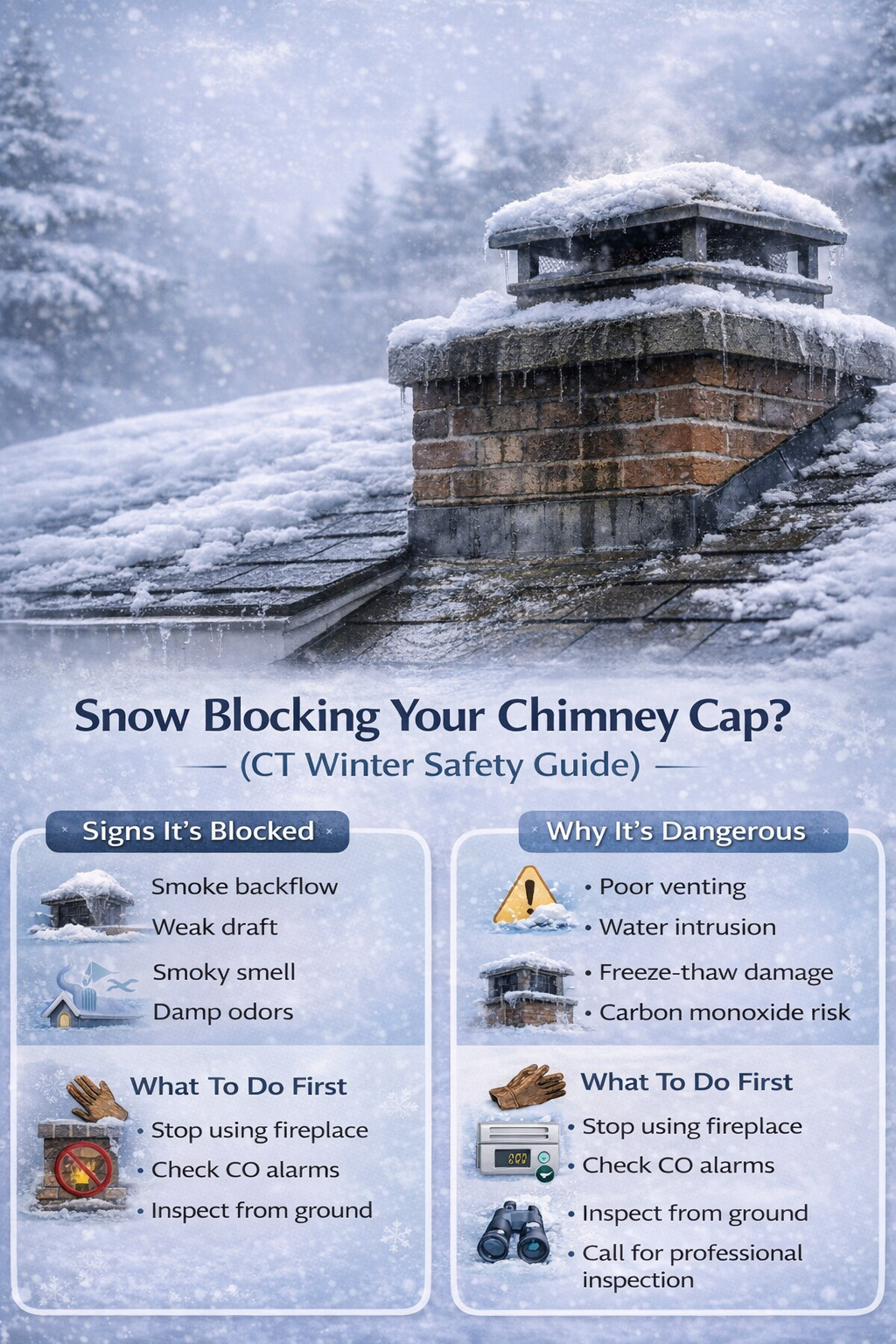
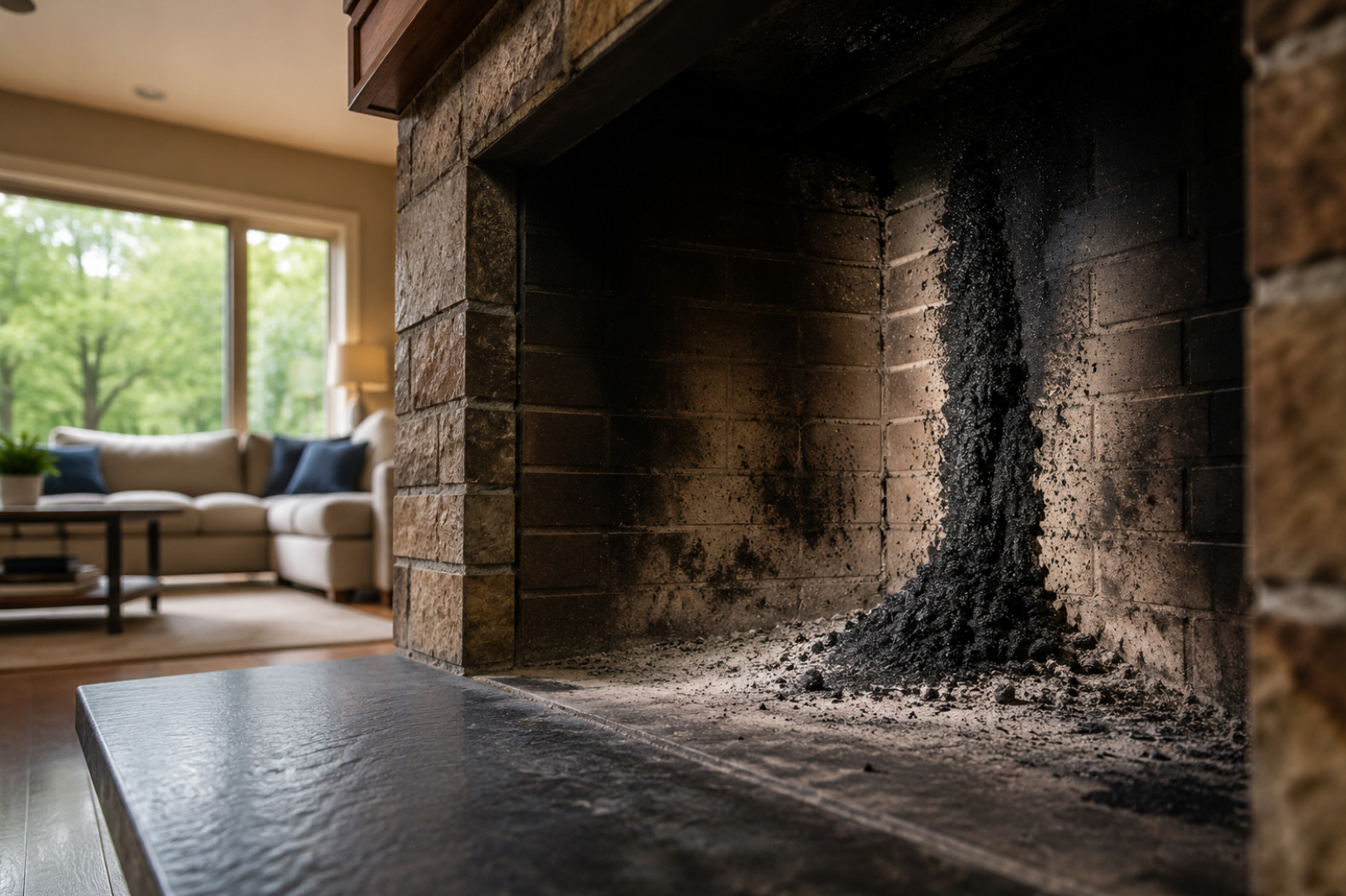
Here are the most common symptoms we hear about in CT homes:
Smoke Backflow or Draft Problems
- Smoke pushes into the room when you light a fire
- Your fireplace struggles to “pull” air upward
- The fire burns weak or keeps going out
Fireplace Odors You Can’t Explain
- Smoky smell even when no fire is burning
- Damp, musty odors after snow or rain
- Strong soot smell near the hearth
Moisture Signals
- Rust stains on the firebox or damper area
- Moisture buildup in the flue area
- Dripping or water infiltration during melt cycles
These can be signs of water penetration, a cap issue, or problems higher up in the chimney structure.
What Happens When Snow and Ice Damage Your Chimney System
A blocked cap is the immediate issue, but winter weather can also cause long-term damage if it keeps happening.
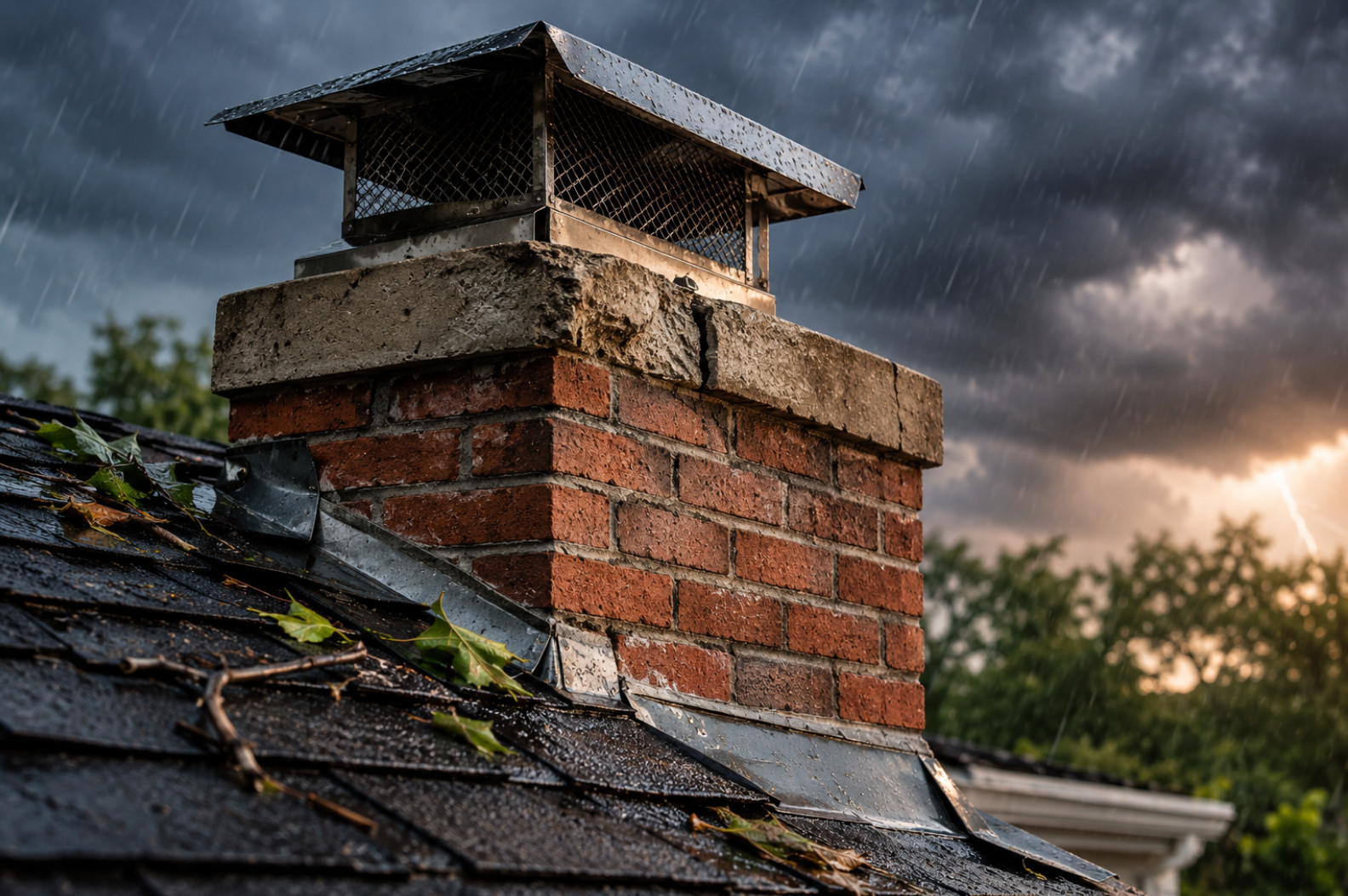
Water Intrusion Leads to Freeze–Thaw Deterioration
Once water gets into a masonry chimney, freeze-thaw cycling can cause:
- Mortar joint damage
- Spalling bricks (surface flaking and breakdown)
- Chimney crown cracks
- Structural deterioration over time
This is exactly how small winter problems turn into costly repair bills by spring.
Chimney Crowns, Flue Liners, and the Hidden Damage
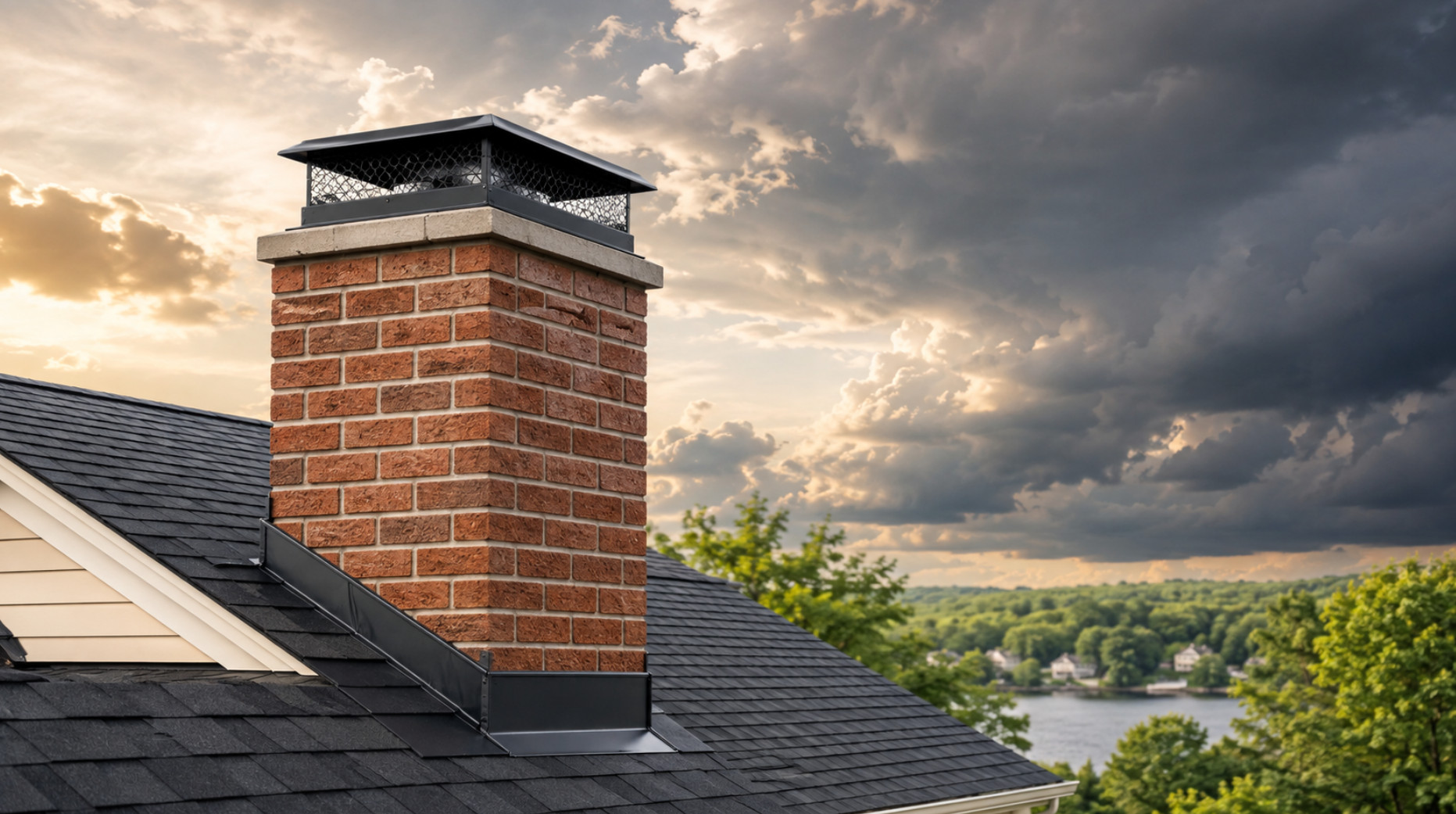
Your chimney crown is like the “top lid” that protects the structure. If it cracks, water can seep down into the masonry. Your flue liner (clay tile or metal chimney liner) can also be affected by moisture and temperature swings.
The Chimney Safety Institute of America explains chimney inspection basics and why liners matter through their homeowner education resources at CSIA.org.
What CT Homeowners Should Do First (Safe Steps That Make Sense)
Let’s keep this practical. If you suspect snow is blocking your chimney cap, here is what you can do right away without turning it into a risky DIY mission.
Step 1: Stop Using the Fireplace Until You Confirm It’s Clear
If you are getting smoke backflow, odd smells, or weak draft, do not keep burning “just to test it.” You can make the problem worse fast.
Step 2: Check Your Carbon Monoxide Alarms
Every CT home should have functioning CO alarms. If you are not sure where to place them, the National Fire Protection Association has helpful guidance on carbon monoxide alarms at NFPA.org.
Step 3: Look for Signs From the Ground
You can often spot a problem without climbing up:
- Heavy snow packed around the chimney top
- Bent or missing chimney cap
- Visible animal nests or debris above the flue
If you have binoculars, this is the time to use them.
The 3-2-10 Rule (And Why It Matters for Draft in Snowy Weather)
Homeowners hear about the 3-2-10 rule and assume it is just a code thing, but it also connects to draft performance.
In simple terms, the rule means:
- Your chimney should be at least 3 feet above where it exits the roof
- And at least 2 feet higher than anything within 10 feet horizontally
If a chimney is too short or surrounded by rooflines, wind and snow patterns can make draft worse during storms.
You can read more about the 3-2-10 rule explanation here: What is the 3-2-10 Rule for Chimneys?
FAQ: Quick Answers for CT Homeowners
How much does it cost to unblock a chimney?
It depends on whether it is a simple cap clearing, a chimney sweep, or an emergency service call. If there is ice damage, animal nests, or a blocked flue liner, the cost goes up.
What are the signs of a bad flue cap?
Common signs include rust, loose cap fittings, bent mesh screens, frequent downdrafts, animal entry, and moisture stains inside the fireplace.
Can snow damage the chimney structure?
Yes. Snow damage often leads to water infiltration, then freeze-thaw deterioration. That is how you end up with spalling bricks, mortar joint damage, and crown cracking.
What should I do if my chimney smells after a snowstorm?
Stop using the fireplace, check CO alarms, and schedule an inspection. Odors often point to moisture buildup, draft problems, or debris in the chimney flue.
Final Thoughts: A Blocked Chimney Cap Is Small, But the Problems It Causes Aren’t
A chimney cap seems like a small piece of metal, but it protects your whole chimney system. When snow blocks it, you can get smoke backflow, moisture issues, and potential carbon monoxide risks. And when moisture gets into masonry chimneys in Connecticut, the freeze-thaw cycle does what it always does: it turns small cracks into expensive repairs.
If you are dealing with snow buildup, ice, draft problems, or you want a more weather-resistant chimney cap installation, Certified Chimney CT is the kind of chimney professional you want inspecting it before the damage spreads.