Share:
Connecticut homeowners rely heavily on their fireplace and heating system during long winters, which makes regular chimney inspection essential for safety and performance. Over time, creosote buildup, moisture damage, and debris blocking the flue can create serious problems. These issues increase the risk of a chimney fire or allow carbon monoxide and other toxic gases to enter the home. According to the National Fire Protection Association chimney safety recommendation, chimneys should be inspected at least once per year. Routine inspections help protect your home, maintain proper venting, and prevent costly chimney repair.
Most Connecticut homes should schedule a chimney inspection at least once every year. This applies to wood stoves, gas fireplaces, and pellet systems. Even if you rarely use your fireplace, moisture and water intrusion can still damage masonry and liner materials. Annual inspections allow a certified chimney sweep to identify problems early before they affect structural integrity. Homes in coastal areas or older neighborhoods in Fairfield County and New Haven County may require more frequent inspections because exposure to moisture increases the risk of chimney liner damage and structural weaknesses.
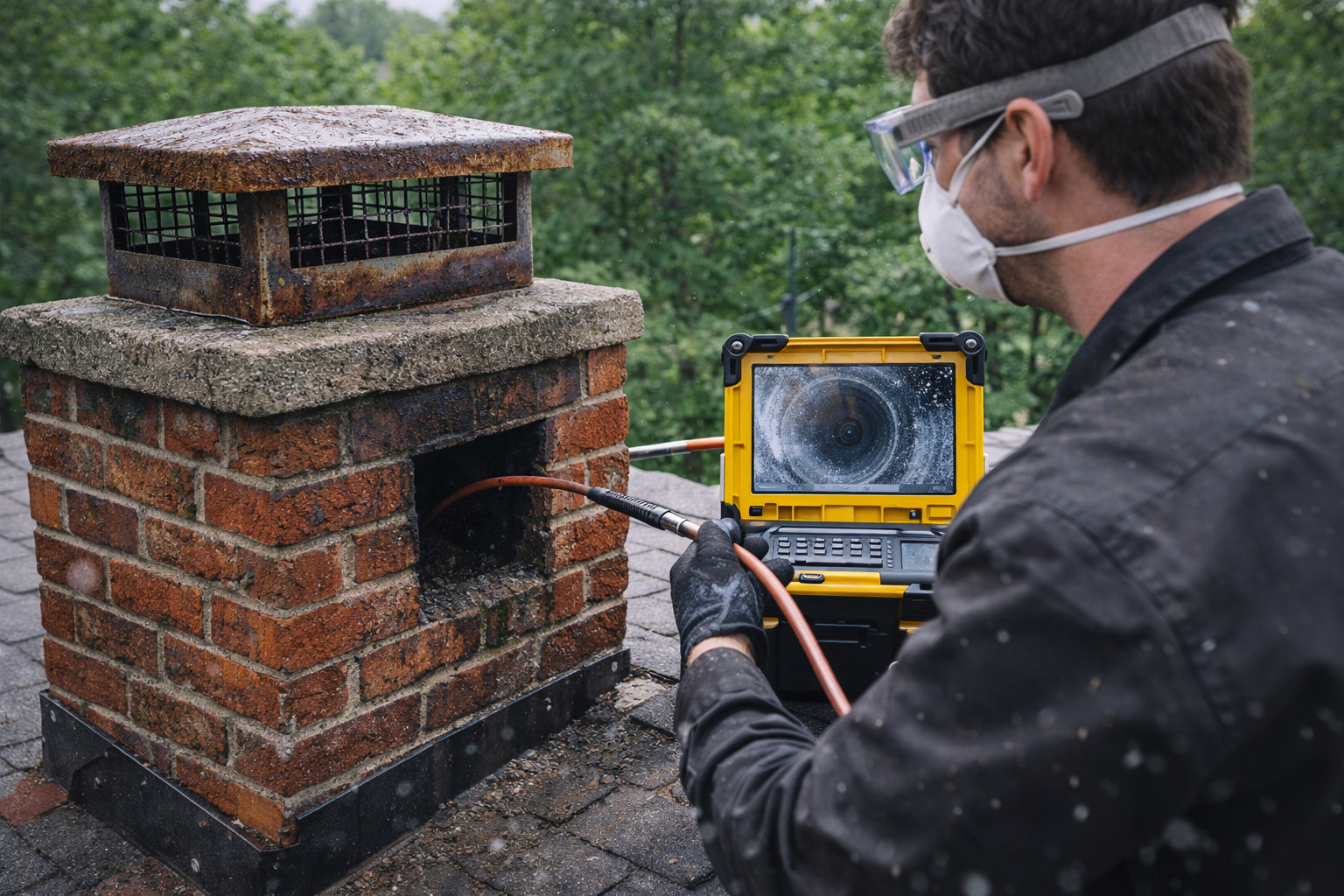
During a professional chimney inspection, a trained chimney technician evaluates the entire chimney system. This includes the chimney liner, flue liners, smoke chamber, chimney crown, and chimney cap. The technician looks for creosote deposits, damaged mortar joints, and signs of water penetration. Modern inspections often use video camera inspection equipment, which allows technicians to see inside the chimney flue liner and identify hidden structural damage. This process helps ensure proper fireplace performance and safe operation of the venting system.
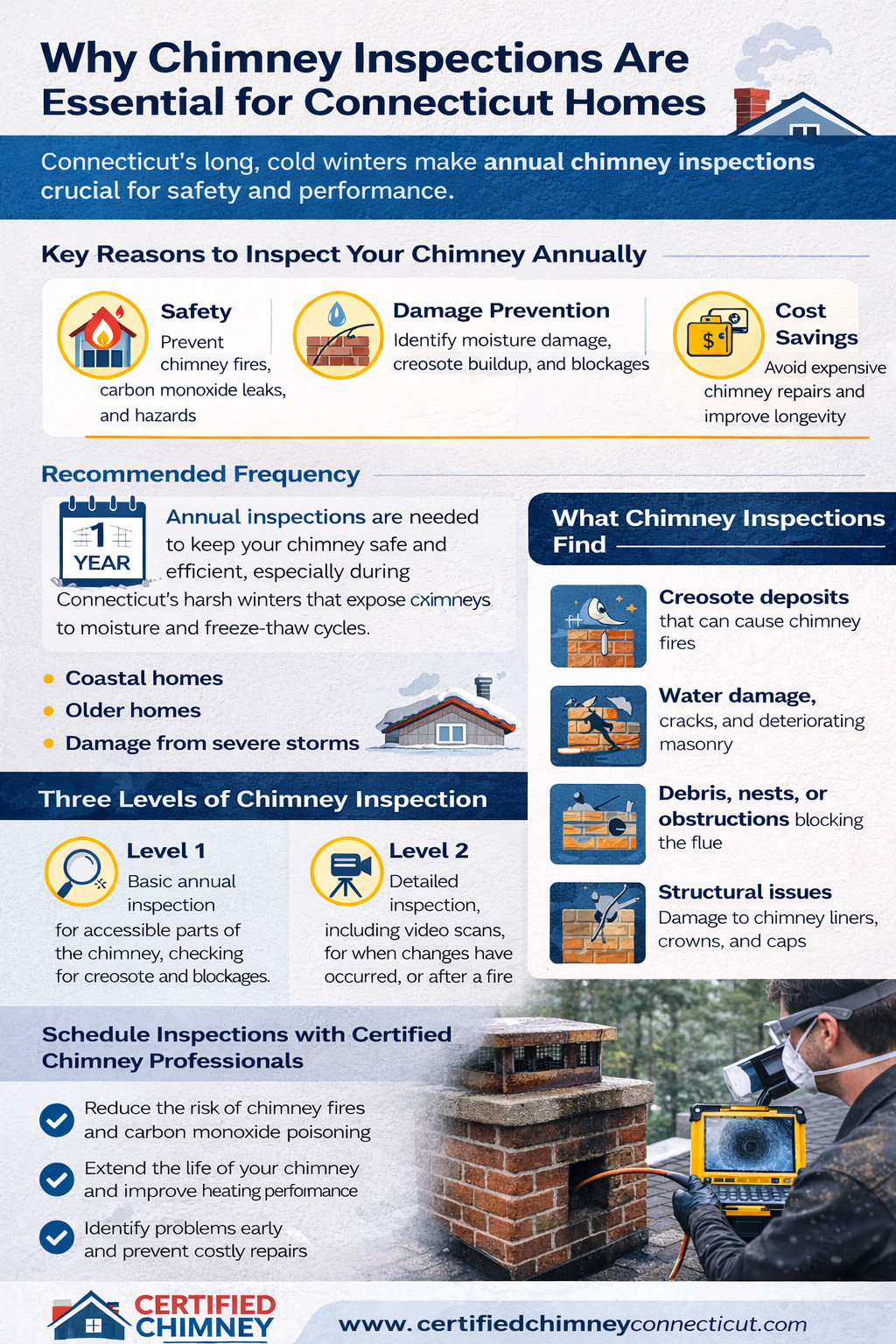
The Chimney Safety Institute of America inspection levels explanation outlines three types of inspections based on chimney condition and usage.
A Level 1 inspection is the most common and is recommended annually. It includes a visual inspection of accessible chimney components to ensure proper operation and safety. This type of inspection is suitable when there are no major changes to the heating system.
A Level 2 inspection is required when buying or selling a home, after a chimney fire, or after structural changes. This inspection includes camera inspections to evaluate internal flue liner condition.
A Level 3 inspection is needed when serious structural damage is suspected. This inspection may require opening parts of the chimney structure to assess safety risks.
One of the most dangerous chimney problems is creosote buildup. Creosote is a flammable substance that forms inside the chimney during fireplace use. Over time, creosote deposits increase the risk of chimney fires, especially when exposed to high temperatures. Regular chimney sweeping and flue cleaning remove creosote buildup and reduce fire hazard risk. Inspections also ensure that flue liners and venting systems remain clear and safe for use. Without proper maintenance, creosote buildup can damage liner materials and reduce chimney efficiency.
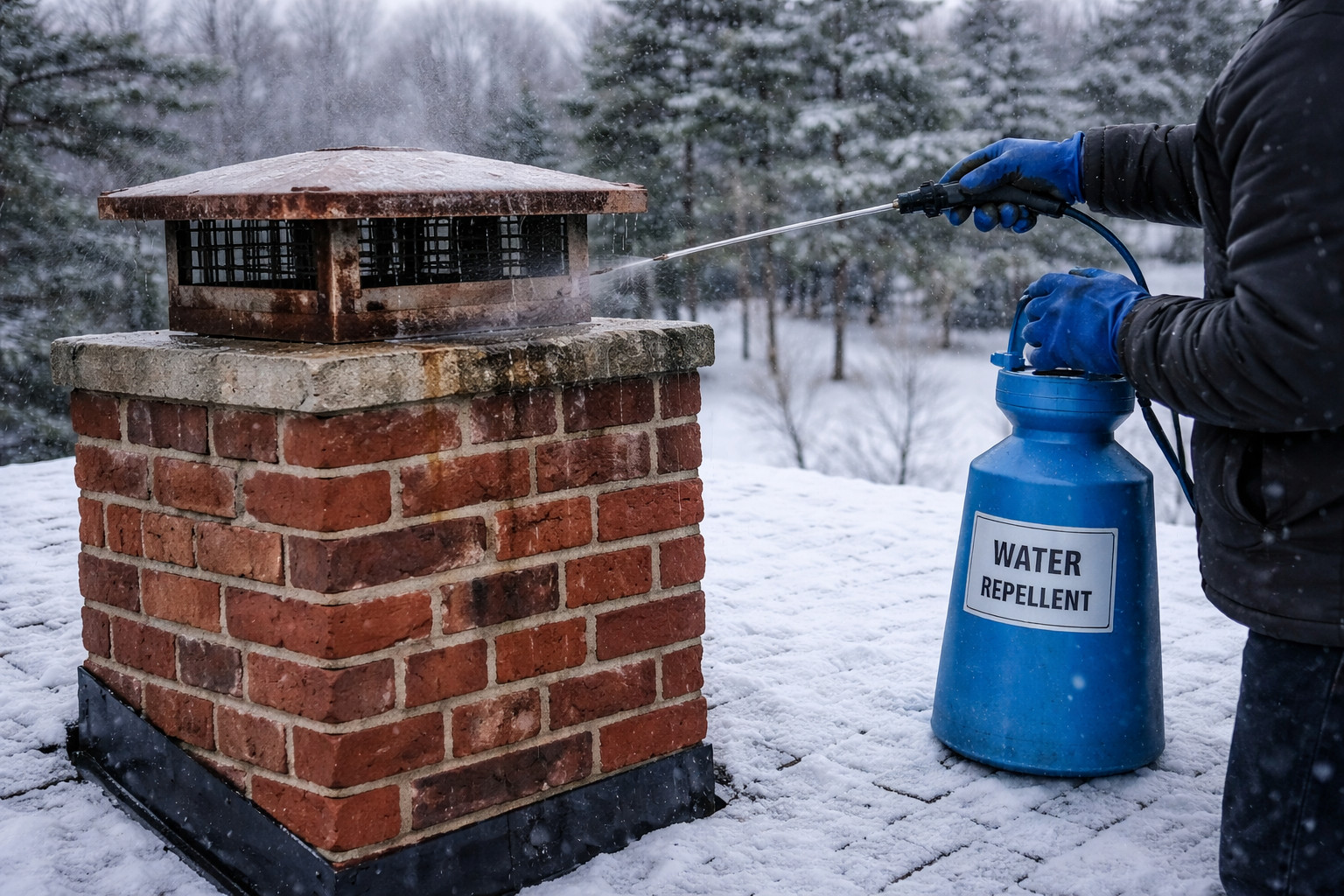
Moisture damage is one of the most common problems affecting Connecticut chimneys. Rain, snow, and freeze thaw cycles allow water to enter through damaged mortar joints or cracked chimney crowns. This leads to structural damage, liner deterioration, and masonry cracks. The National Park Service masonry preservation resource explains how freeze thaw cycles cause masonry deterioration over time. Regular chimney inspection helps identify moisture problems early before major repairs are needed. Waterproofing and chimney cap inspections also help prevent water penetration.
The best time to schedule a chimney inspection in Connecticut is before the start of the heating season. Late summer and early fall are ideal because technicians can identify and fix problems before winter. However, inspections can be performed at any time if warning signs appear.
Common warning signs include:
If you notice any of these issues, schedule a professional inspection immediately.
Routine maintenance and inspections help ensure chimney safety and performance. Certified Chimney Connecticut provides professional chimney inspection, chimney cleaning services, and chimney repair throughout Fairfield County and New Haven County. Their certified chimney sweep technicians use modern inspection tools and follow national safety standards.
Scheduling a professional chimney inspection with Certified Chimney Connecticut helps protect your home from chimney fires, carbon monoxide exposure, and structural chimney damage.
Regular inspections help extend chimney lifespan and ensure safe operation for years to come.
Most homeowners should schedule a chimney inspection at least once per year, especially before the winter season when your fireplace is used more frequently.
Skipping inspections can lead to creosote buildup, chimney fires, carbon monoxide exposure, and costly structural damage that could have been prevented early.
Yes. Even gas fireplaces can develop venting issues, blockages, and liner damage, which makes regular inspections important for safety and performance.
Level 1 is a basic annual inspection, while Level 2 includes a camera scan and is required after home sales, chimney fires, or system changes.
Article details:
Share:
Continue learning: