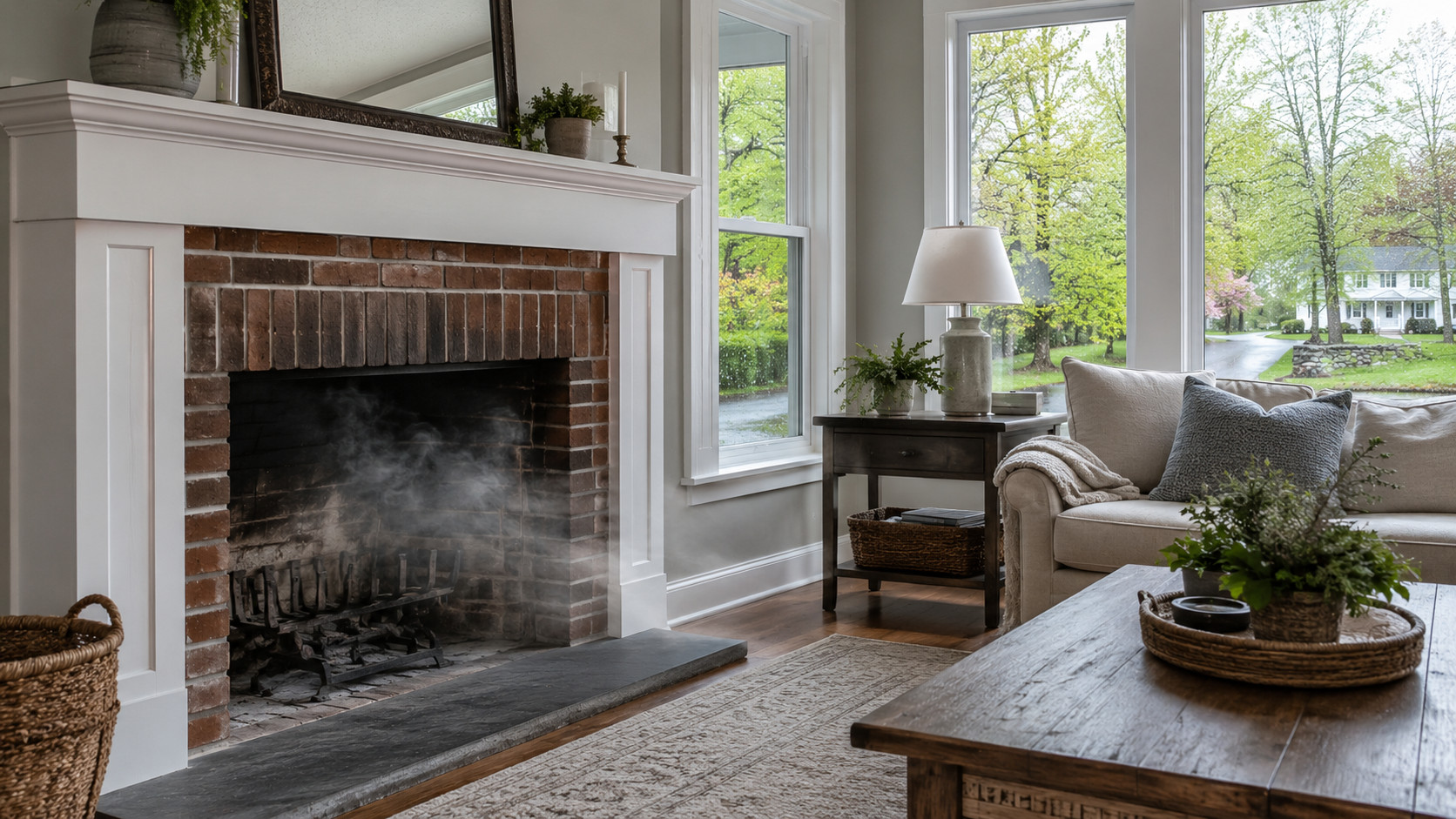
The fireplace damper opens to let smoke out and closes to keep heated air in. A rusted, warped or stuck damper causes smoky fires, drafts and wasted energy, and replacing it is one of the most effective upgrades for a Connecticut fireplace.

Signs of a Failing Damper
- Handle is stuck or hard to move
- Visible rust or warping
- Smoke enters the room even with the damper open
- Cold air drafts when the fireplace is not in use
- Water pooling on the damper plate
Throat Damper vs Top Sealing Damper
Throat dampers sit just above the firebox and tend to leak air even when closed. A top sealing damper mounts at the chimney crown, seals tightly with a gasket and works as a cap at the same time.
Benefits of Replacement
- Lower heating bills
- Fewer drafts and odors
- Protection from rain and animals when the damper is closed
- Easier operation with a long cable handle
Replacement is a quick service when done alongside a sweep.
Damper Types
- Throat dampers sit in the fireplace throat and can rust
- Top sealing dampers attach at the flue top with a gasket
- Chimney balloons are temporary and not for use during fires
Energy Savings
An open damper can lose a large share of heated air in winter. A tight seal reduces drafts, keeps conditioned air in and blocks outdoor humidity.
Frequently Asked Questions
Can I replace a damper myself
It requires roof access and proper sizing.
Does a top sealing damper replace the cap
It includes a cap function.
How long do dampers last
Many last 15 to 25 years.
Throat Damper Anatomy and Problems
A throat damper is a metal plate hinged at the top of the firebox. Over time, heat, moisture and creosote warp it. The plate can stick open, stick closed or fail to seal. A broken handle or missing pieces are common, especially in older homes.
Top Sealing Damper Benefits
- Gasket seal that keeps conditioned air in
- Acts as a cap that keeps out rain, leaves and animals
- Cable operated from the fireplace
- Reduces drafts through the chimney in winter and humid air in summer
Installation Notes
The technician measures the flue, installs the damper at the top, runs a cable to the firebox and tests operation. Some models need a spring or a latch to hold them open. It is important to open the damper fully before every fire.
Energy Savings
A tight chimney seal helps keep heated air from leaving through the flue. Savings vary by house, but it often shows up as a noticeable reduction in drafts around the fireplace.
Frequently Asked Questions
Is a damper required
A damper or similar closure is common and strongly recommended for wood fireplaces.
Can I add a damper to a gas fireplace
Gas log sets have their own rules. A clamp or a vent may be required.
How long does installation take
Usually under an hour.
Local Help and Related Reading
Our crews handle chimney sweeps in Fairfield, chimney repair in Greenwich, chimney caps in Norwalk and chimney cleaning in New Canaan. Browse every town on our service areas page or our services.
More to read: Chimney Relining in Connecticut: Options, Costs and Timing, Why Does My Chimney Smell in Connecticut: Causes and Fixes, Chimney Rebuild vs Repair in Connecticut: How to Decide.
For wider guidance, see the EPA Burn Wise program, the U.S. Department of Energy and CT DEEP.