If you are installing a wood stove into an existing fireplace opening, the answer is almost always yes. A liner is not an upgrade. It is the part that keeps the stove safe and working.
Why a stove needs its own liner
A wood stove burns hotter and smokes less than an open fireplace, and it connects to a much smaller flue. If that stove vents into a wide, unlined masonry chimney, smoke cools quickly, drops creosote on the walls and drafts poorly. A properly sized liner keeps the exhaust hot and moving.
What a liner does
- Keeps exhaust gases and heat inside the flue instead of the masonry
- Improves draft so the stove burns cleanly
- Reduces creosote buildup
- Protects old mortar joints from acidic condensation
Choosing a liner
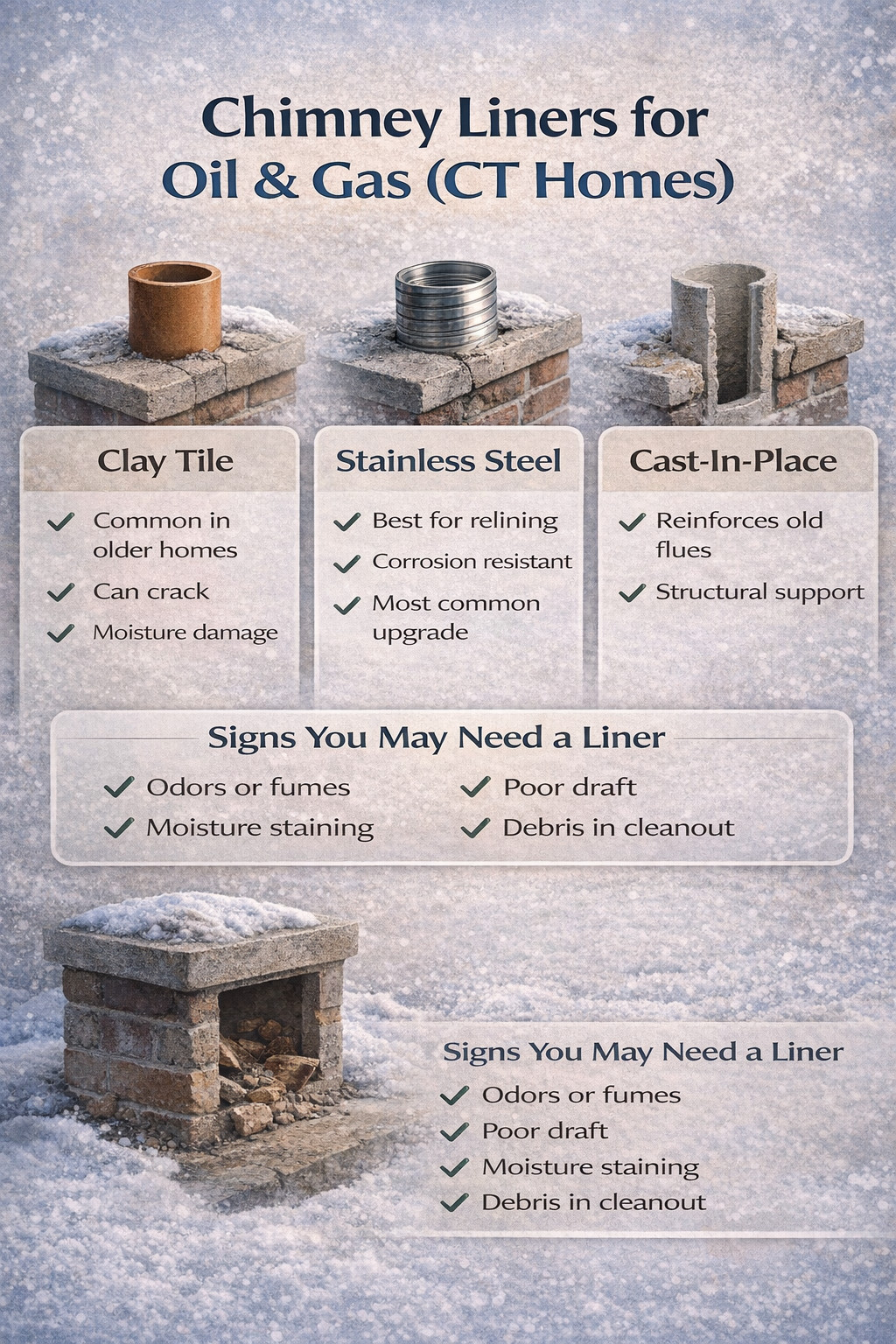
| Type | Best for |
|---|---|
| Stainless steel flexible | Wood stoves and inserts in standard chimneys |
| Cast in place | Damaged or irregular flues needing structural help |
| Clay tile | Open fireplaces only, not stoves |
| Insulated stainless | Exterior chimneys and cold climates |
What the installation involves
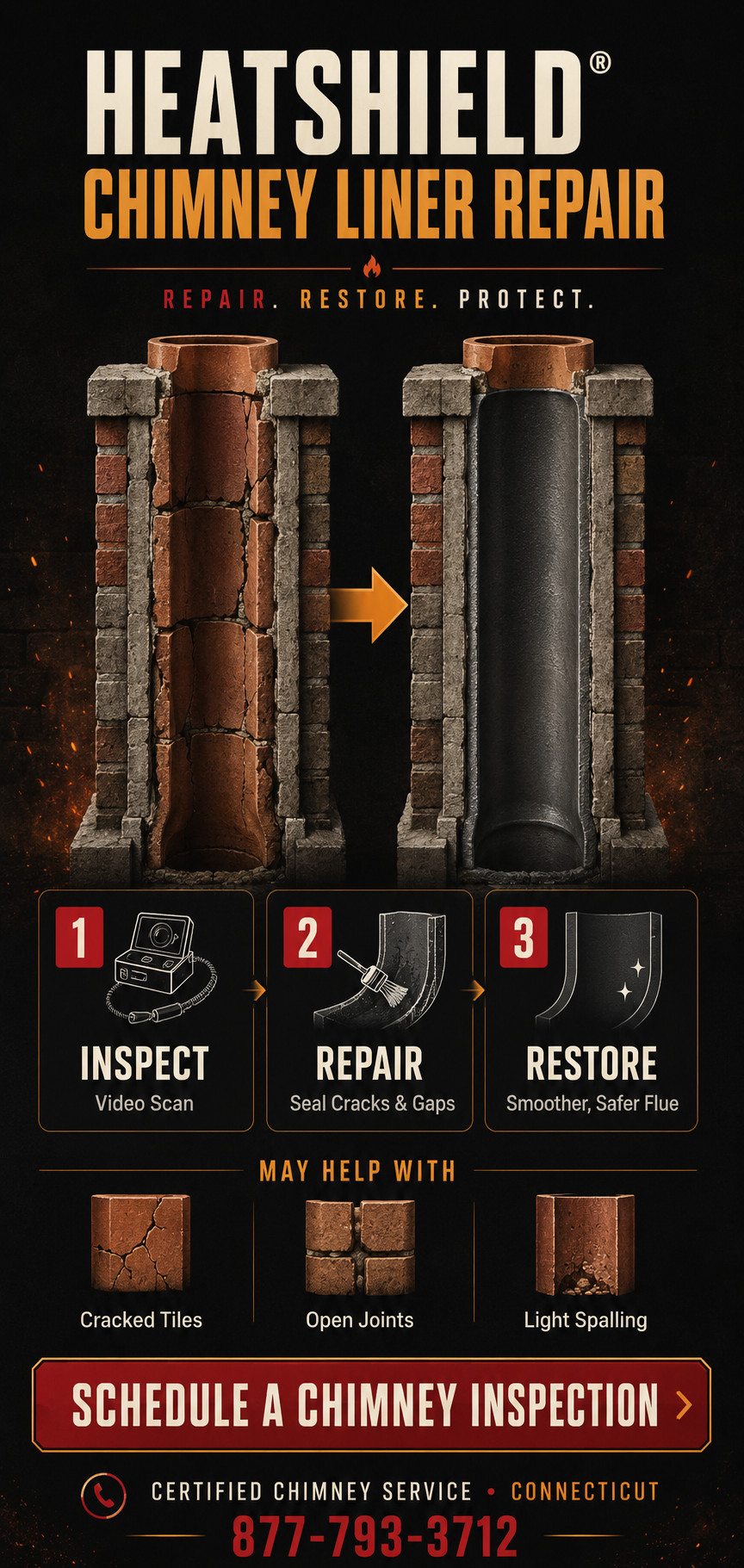
- Inspect the existing flue with a camera.
- Choose the liner size from the stove manufacturer specifications.
- Lower the liner from the top, connect it to the stove adapter and seal the top plate.
- Add a cap and test the draft.
The EPA Burn Wise program also lists certified stoves that burn cleaner, which pairs well with a new liner. Our liner installation team sizes everything to your exact stove.
Common questions
How long does a stainless liner last? Many carry lifetime warranties when installed properly.
Do I need a permit? Often yes in Connecticut. Your installer can confirm with your town.
Local Help and Related Reading
Our crews handle chimney sweeps in Danbury, chimney repair in Westport, chimney caps in Greenwich and chimney cleaning in Norwalk. Browse every town on our service areas page or our services.
More to read: Fall Chimney Inspection Checklist for Connecticut Homeowners, What to Do After a Chimney Fire in Connecticut.
For wider guidance, see the EPA Burn Wise program, the U.S. Department of Energy and CT DEEP.