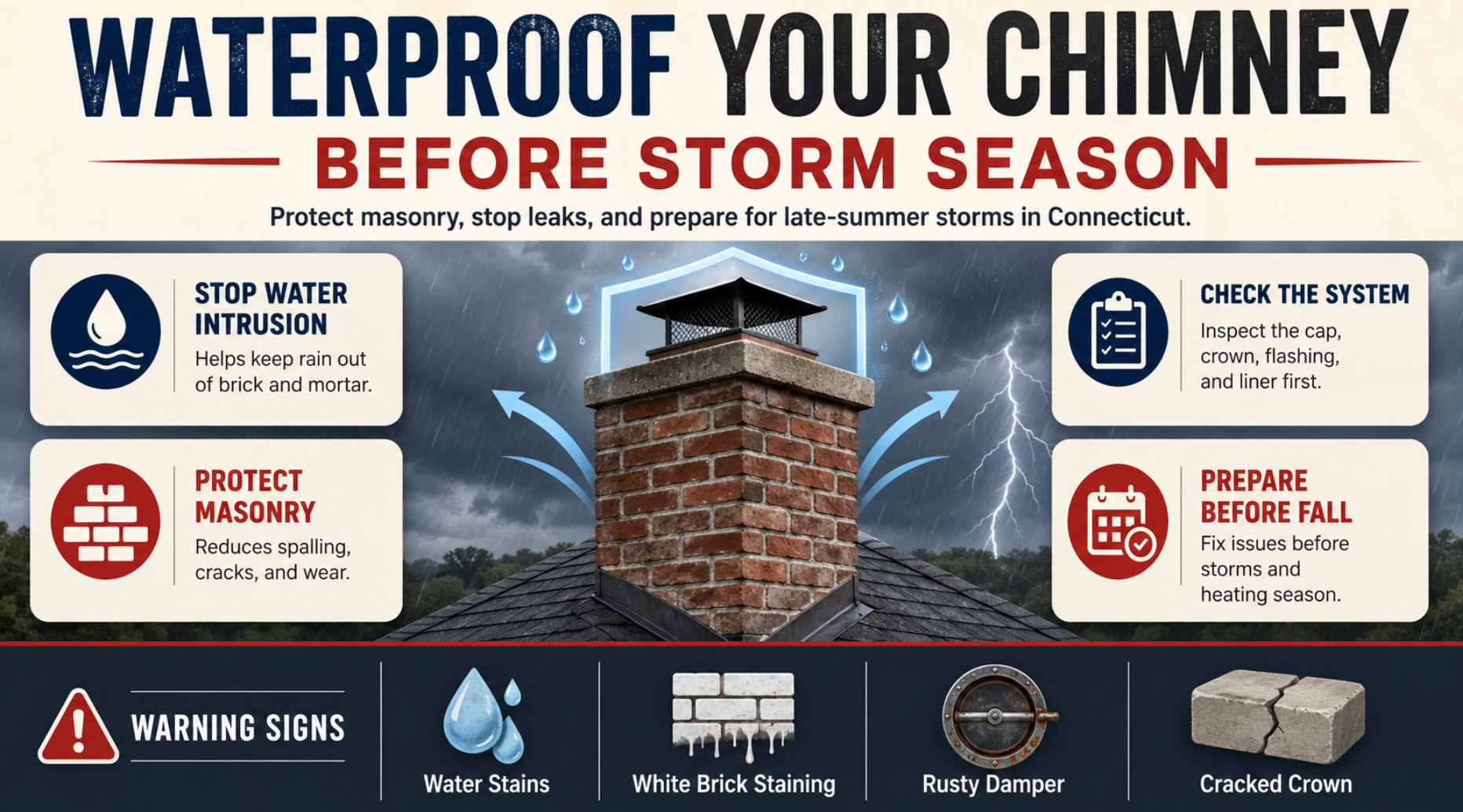
Common Signs of Moisture Intrusion
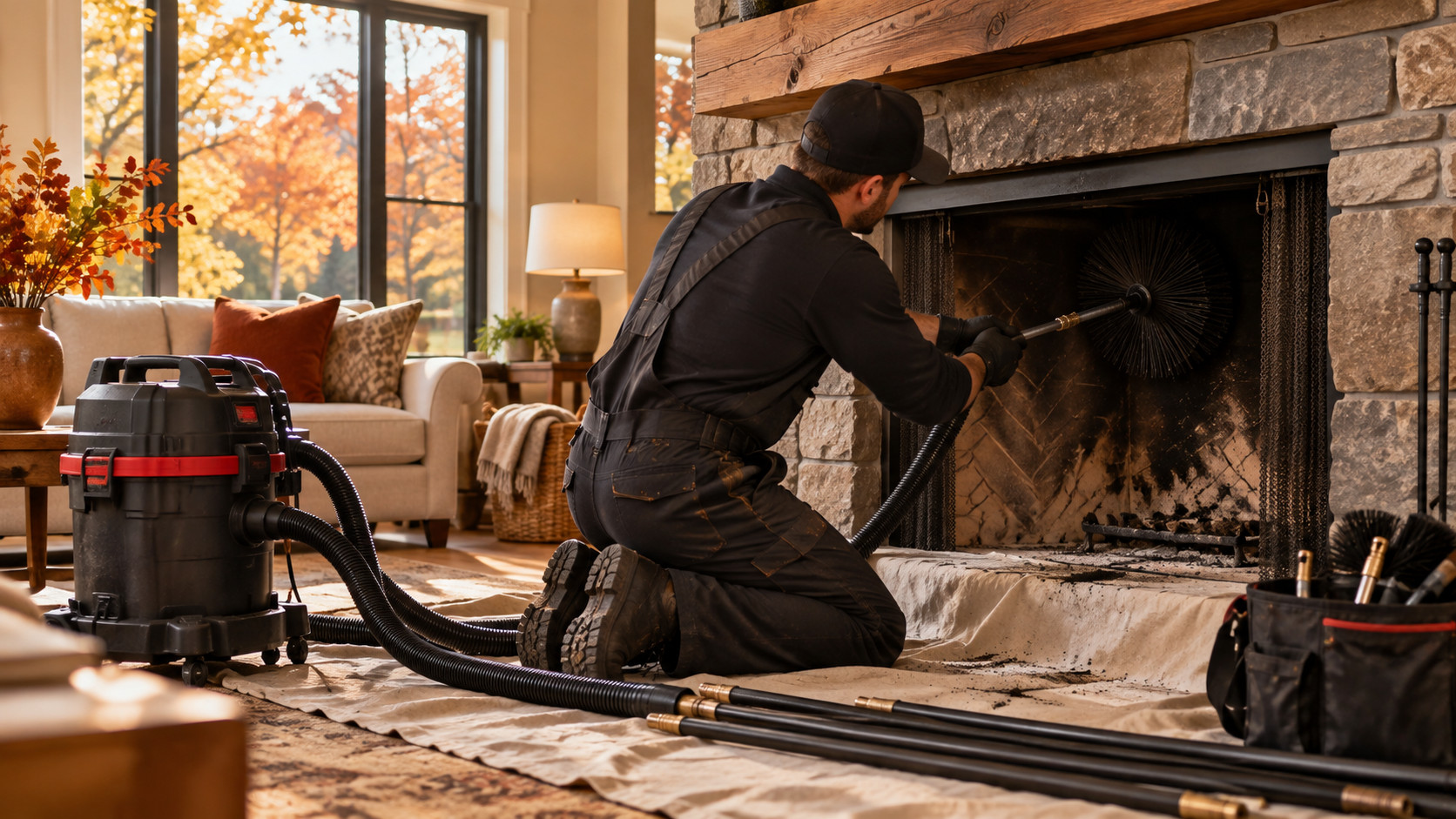
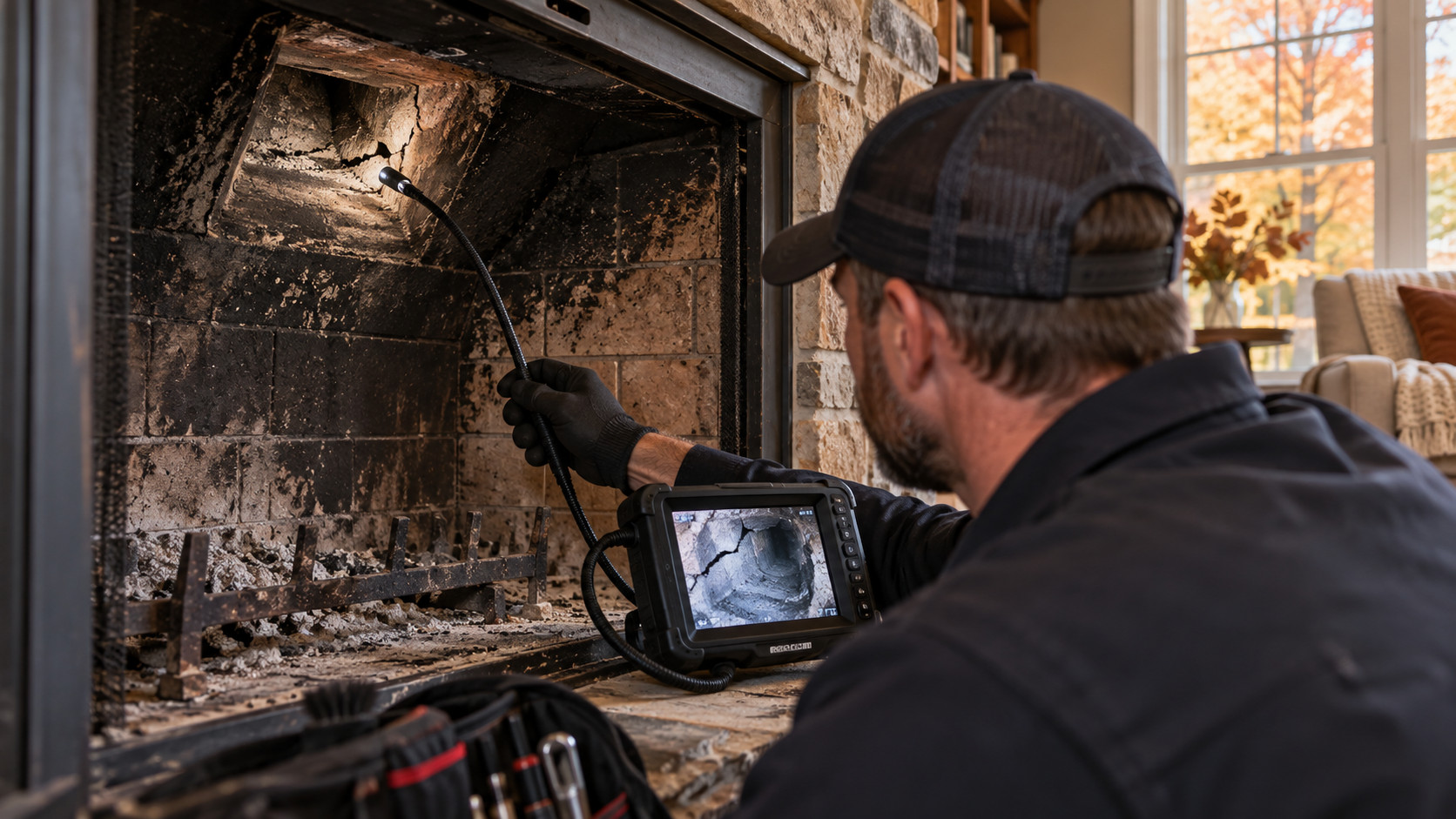
Your chimney may need inspection if you notice water stains near the fireplace, musty odors, white staining on exterior brick, rust on the fireplace damper, mold and mildew, damaged bricks, cracked crowns, peeling paint, or water seeping into the firebox. A chimney sweep may also find creosote buildup, liner damage, or hidden storm-related damage during service. These signs should be checked before late-summer storms continue and before the heating season begins.
How Chimney Waterproofing Works
Professional-grade waterproofing uses a vapor-permeable sealant designed for masonry. The goal is to repel water while allowing trapped vapor to escape. A good chimney waterproofing treatment works like a breathable raincoat. It helps reduce water penetration without sealing moisture inside the brick. Vapor permeability matters because non-breathable coatings can trap moisture and make damage worse. Professional water repellents are different from some DIY waterproofing products, which may not be suitable for chimney masonry.
Why Repairs Come Before Waterproofing
A chimney should be repaired before waterproofing if it has open mortar joints, a broken chimney crown, missing rain cover, loose flashing, cracked liner, or damaged cap. Waterproofing is not a substitute for masonry work. If the crown is cracked, chimney crown rebuilding may be needed. If flashing is loose, flashing repair or chimney flashing replacement may be required. If the flue liner is damaged, chimney liner repair may be needed for chimney safety. Waterproofing works best after the chimney is structurally sound.
Chimney Caps, Crowns, and Flashing
A chimney cap helps keep rain, animals, debris, and downdrafts out of the flue. A chimney crown sheds water away from the top of the masonry. Chimney flashing seals the joint where the chimney meets the roof. If any of these parts fail, water leaks can appear during summer weather and late-season storms. Chimney cap repair, chimney crown repair, chimney flashing repair, and waterproofing treatment often work together to reduce weather-related damage.
Can You Waterproof a Chimney Yourself?
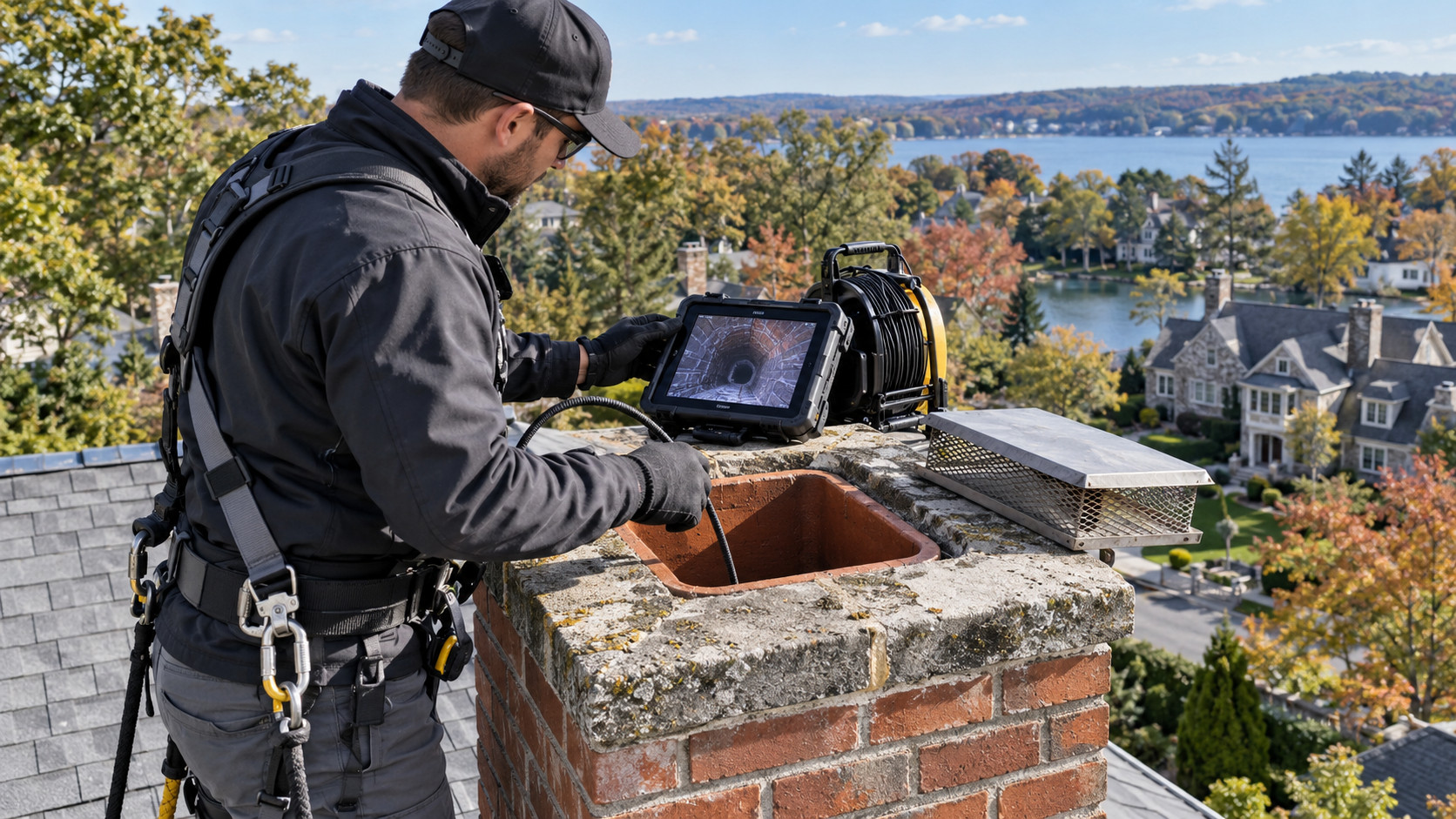
DIY waterproofing products may seem simple, but chimney masonry needs the right prep, repairs, and material. Using the wrong sealant can trap moisture, reduce vapor permeability, or hide damage that needs repair. A CSIA-certified technician can inspect the chimney system, check the crown, cap, flashing, masonry, damper assemblies, ventilation system, roof vents, and liner before applying the correct treatment. Connecticut DCP also notes that chimney repair businesses must be registered as home improvement contractors in Connecticut.
Schedule Chimney Waterproofing in Connecticut
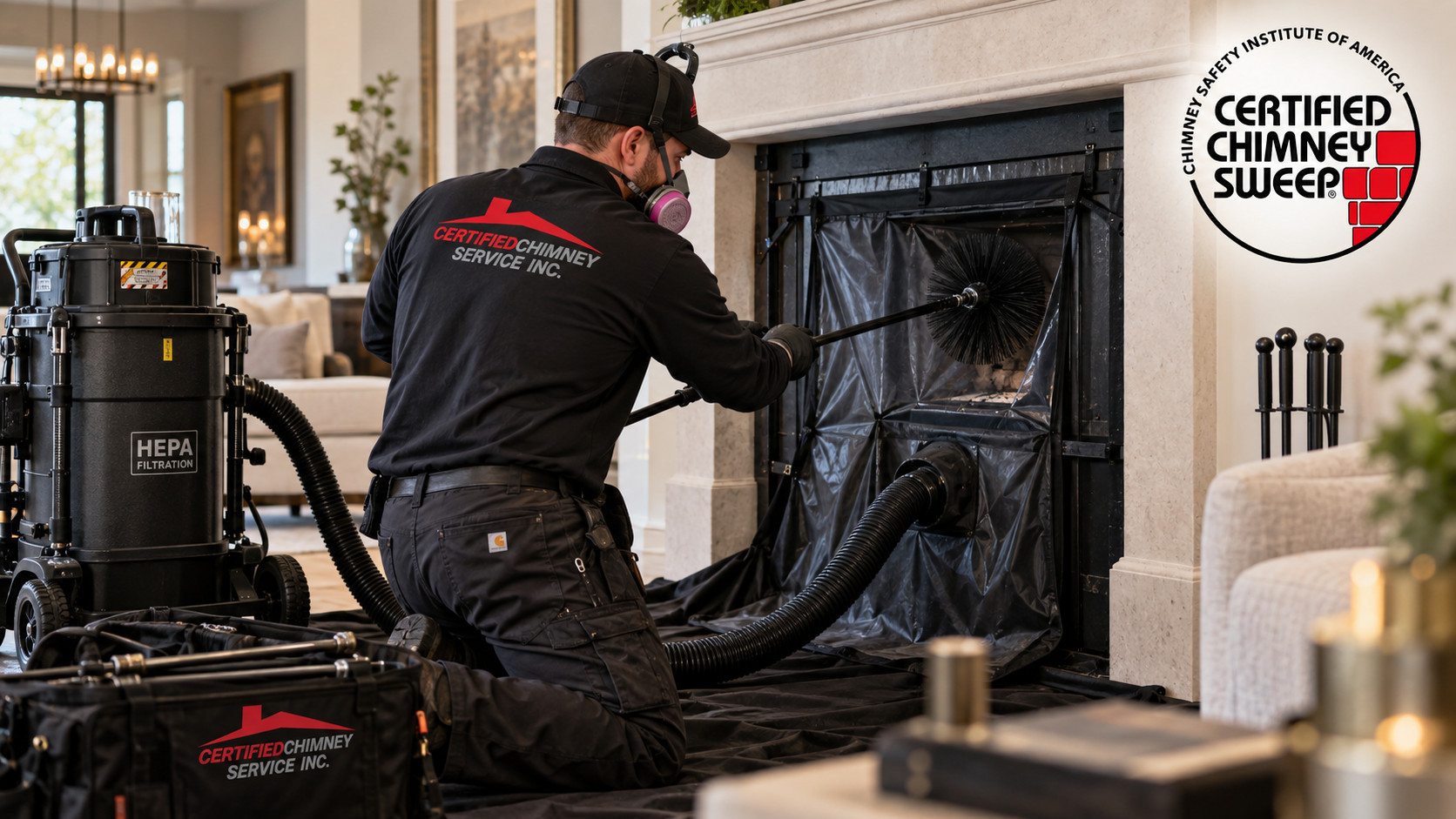
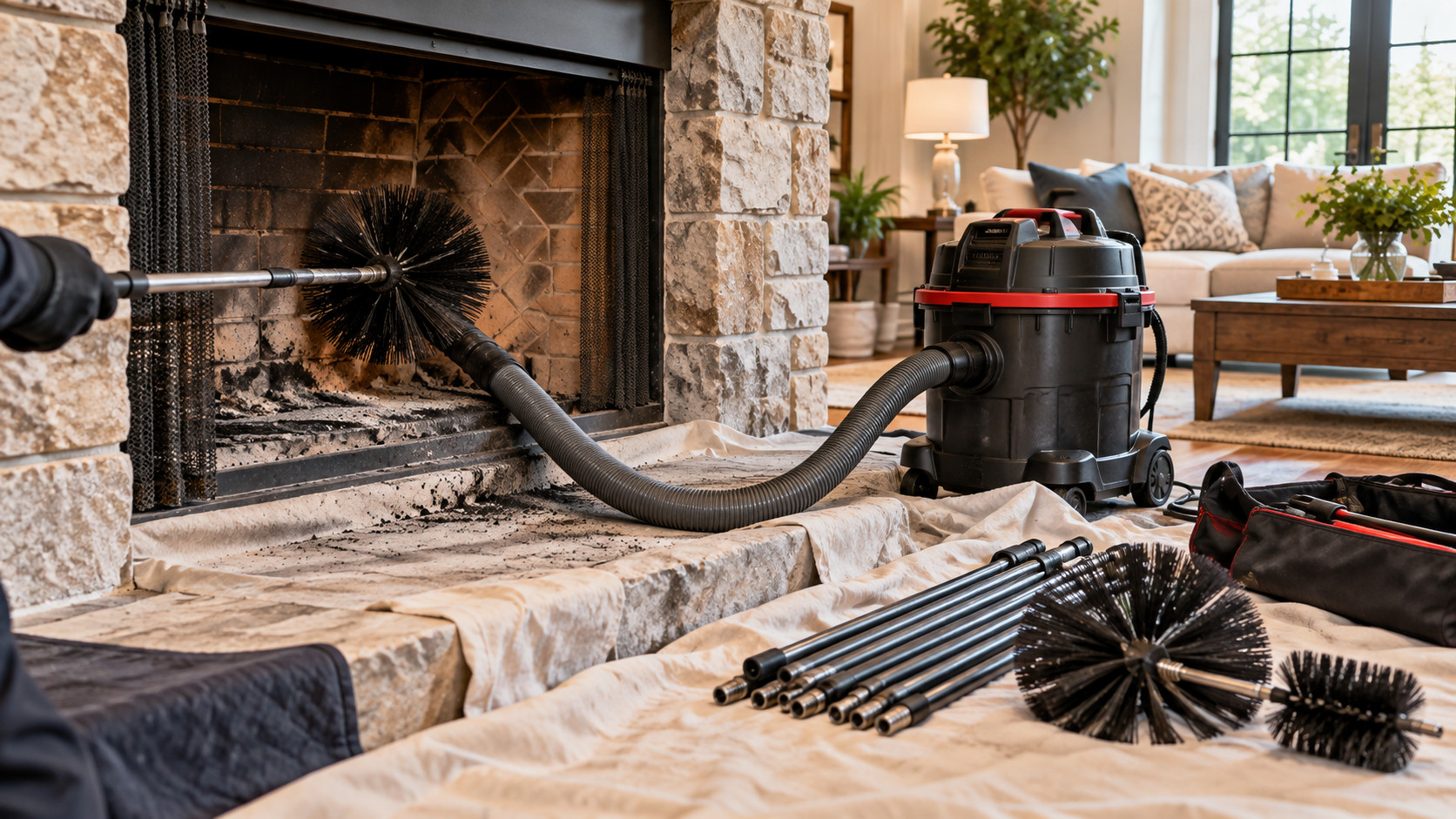
Certified Chimney provides chimney inspection, chimney sweep services, chimney repair, chimney waterproofing, flashing repair, chimney cap repair, chimney crown rebuilding, chimney liner repair, masonry work, and storm-prep services throughout Connecticut. Waterproofing before late-summer storms can help reduce moisture damage, mold growth, freeze-thaw cycles, carbon monoxide concerns, and future emergency repairs. Request a free consultation from Certified Chimney Connecticut to protect your chimney before the next storm system arrives.