Connecticut’s first hard freeze can reveal more about your chimney’s condition than you might expect. That sudden overnight drop in temperature pushes moisture deep into bricks, crowns, and mortar joints, where it expands and creates hidden damage. Even small cracks or early water intrusion can worsen as freeze–thaw cycles continue throughout the winter. Understanding what to look for now will help you prevent structural issues, chimney fires, and costly repairs later in the season.
Share:
When the first freeze hits Connecticut, you can almost feel your home tighten. Brick, mortar, flashing, and roofing materials all contract at different rates during the freeze–thaw cycle, and your chimney is one of the first exterior structures to show signs of stress. Homeowners in New England often assume real chimney damage only happens after major winter storms, but in reality, small cracks, moisture intrusion, and early-stage water damage start with that first overnight freeze. Learning what to look for can help you catch problems before they turn into costly repairs.
Cold weather exposes weaknesses in masonry chimneys, chimney crowns, mortar joints, and chimney flashing. When water seeps into tiny pores or surface cracks and freezes, it expands and forces the materials apart. The National Weather Service explains that freeze warnings indicate conditions where this type of expansion and contraction can intensify structural damage over repeated cycles. Once water intrusion begins, it can lead to leaking chimney issues, peeling paint, mold and mildew growth, and even hidden flue damage inside the chimney liner. Early detection keeps small issues from becoming fire hazards or carbon monoxide risks when you start using your fireplace more heavily.
Connecticut winters are known for rapid temperature swings, and masonry reacts quickly. Walk around your property and visually inspect your chimney from the ground. Some of the earliest warning signs include discoloration, flaking, or moisture stains.
If you see a white, chalky residue on your chimney bricks, this is efflorescence. It is usually caused by moisture intrusion pushing salts to the surface. Water stains along the chimney breast, attic walls, or ceiling seams near the roofline may also show that melting frost has entered the masonry system. According to guidance from the Environmental Protection Agency, early moisture issues can lead to long-term indoor air quality problems if mold develops behind walls or inside chimney chases.
Metal flashing, spark arrestors, and chimney caps often reveal early freeze damage. Rust spots or corrosion patches indicate that melting frost may have pooled or seeped under metal flashing. Once metal flashing deteriorates, structural damage and water penetration accelerate during periods of snow and ice.
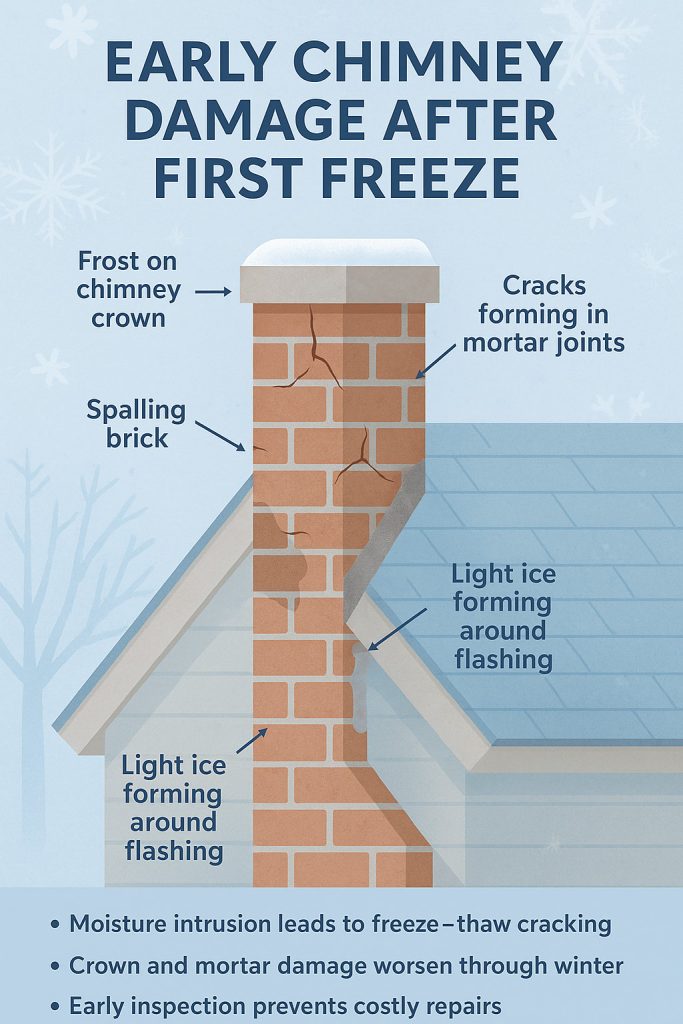
Mortar joint damage is one of the most common early signs of freeze–thaw deterioration. As moisture freezes inside the joints, the mortar begins to crumble or separate. You may also see spalling bricks, where the outer layer of masonry flakes off. The chimney crown is particularly vulnerable; even small cracks in the crown can expand dramatically after repeated freezes, allowing more water to enter and cause deeper structural decay.
Water infiltration after the first freeze is not always visible. Melting frost can travel downward into the chimney system, affecting areas such as the flue liner, masonry tiles, and lower joints. The Chimney water damage process often starts as microscopic cracks that widen with each freeze–thaw cycle, ultimately compromising chimney liner integrity.
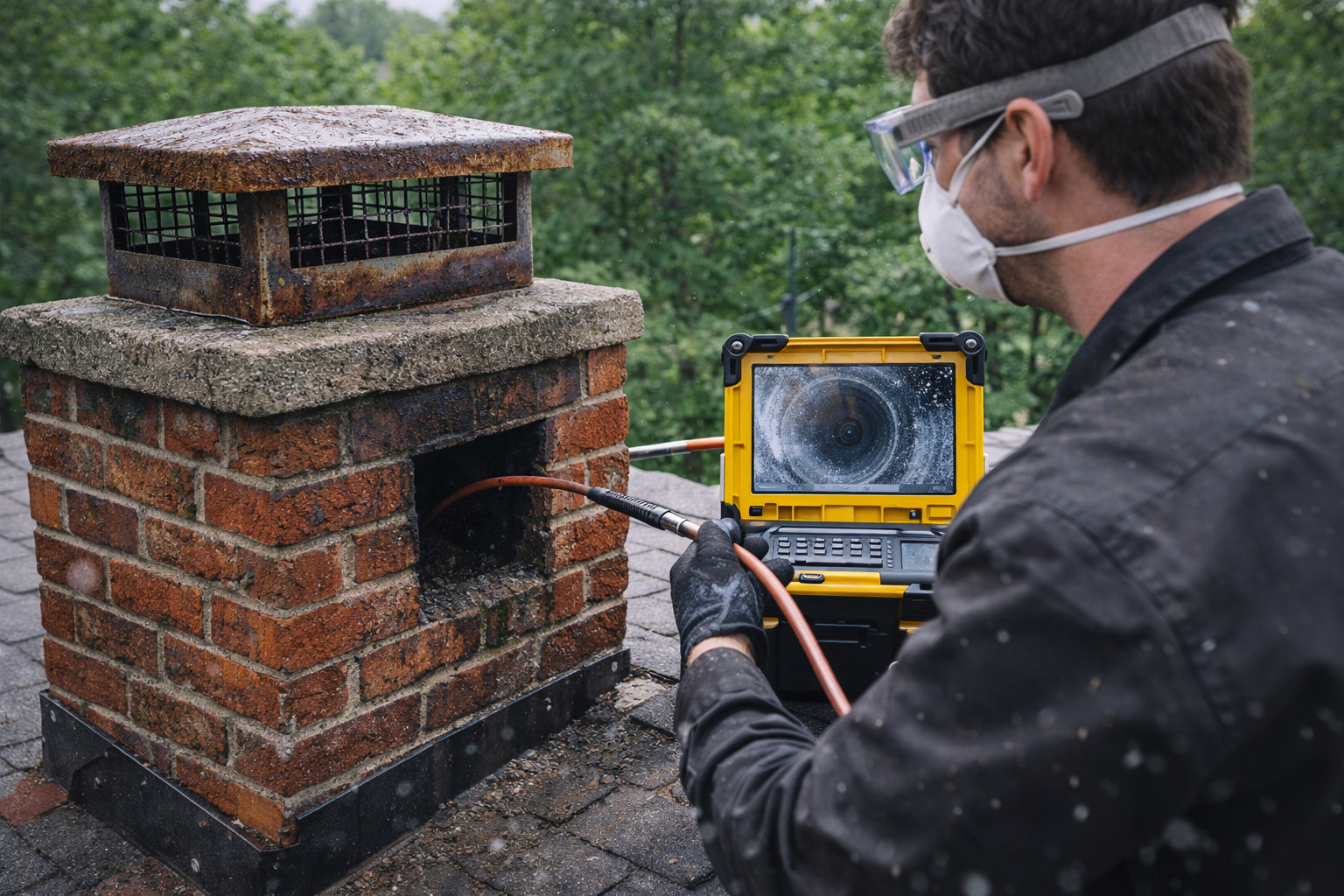
Some damage is difficult to identify without specialized tools. Chimney professionals use camera inspections, video scan tools, and high-efficiency vacuums to safely assess interior components. A Chimney Inspection can reveal:
According to NFPA 211, homeowners should schedule annual inspections for all chimney systems, including gas fireplaces and wood-burning units, to avoid hidden fire hazards or ventilation problems.
Moisture intrusion does not stop at the surface. Over time, freeze–thaw cycles weaken internal masonry tiles, break down waterproof barriers, and compromise the bond between bricks. Once internal masonry deteriorates, you may notice indoor signs such as fireplace odors, peeling paint, or temperature fluctuations caused by a compromised flue.
Flashing failures are extremely common after the first freeze. Step flashing and cricket flashing can lift, warp, or crack as the roofline contracts. These small gaps allow roof water damage to begin. If snow or ice melts and leaks into the attic, you may see water stains, soggy insulation, or warped wood around the attic access door. The Insurance Institute for Business & Home Safety offers guidance on attic moisture and ice dam prevention, reinforcing the importance of early inspections.
After the first freeze, turn on your gas fireplace or wood-burning system and pay attention to performance. Trouble drafting, unusual fireplace odors, persistent smoke, or slow ignition may indicate flue obstructions, liner damage, or moisture-soaked creosote buildup. A carbon monoxide detector should always be installed near sleeping areas and living spaces to alert you to CO risks caused by venting problems.
DIY chimney repair is not recommended when structural decay or flue damage is suspected. Climbing onto icy roofs without proper safety harnesses is dangerous, and Connecticut building codes require specific installation standards for chimney liners, crown repairs, and waterproofing sealants. Certified chimney technicians can safely identify early chimney damage and recommend repairs such as Chimney Repair, chimney liner replacement, or waterproofing treatments. Professional chimney services also include chimney sweeping to remove creosote buildup and reduce fire hazard risks.
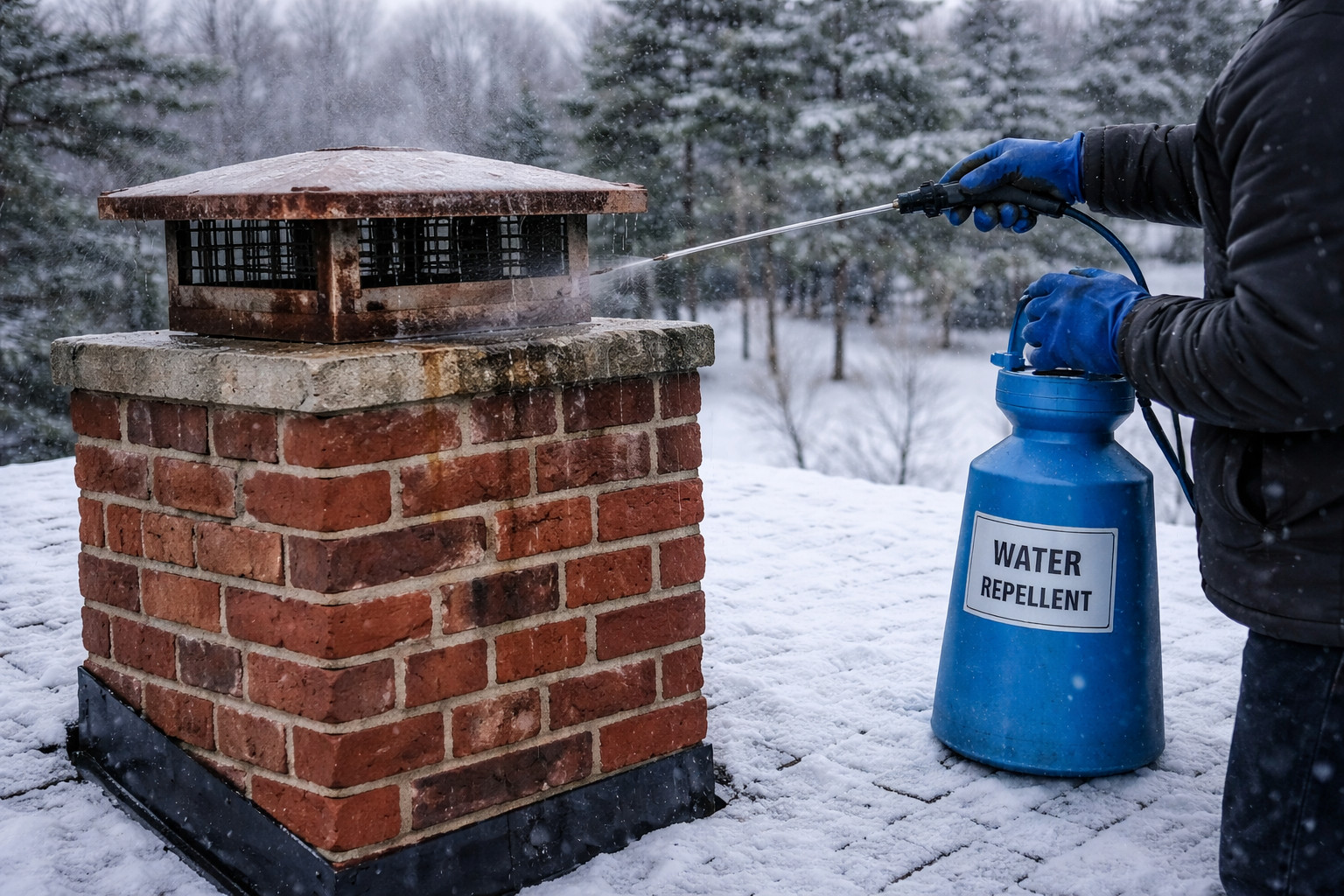
Waterproofing sealants designed for masonry help block moisture without trapping vapor. These breathable coatings prevent water intrusion that leads to cracking, Ice or Snow Intrusion, and long-term structural decay. A properly sized chimney cap, intact spark arrestor, and well-sealed metal flashing will dramatically reduce the risk of leaking chimney problems during the harshest New England winter months.
The first freeze is your home’s way of telling you to pay attention. Water intrusion, spalling bricks, mortar joint damage, and crown cracks can progress quickly once Connecticut winter weather settles in. Staying alert to early warning signs, scheduling professional inspections, and reinforcing waterproof barriers will protect your chimney and home from the costly consequences of structural damage or chimney fire risks. By taking action early, you safeguard your chimney system and ensure safe, efficient heating throughout the entire winter season.
Article details:
Share:
Continue learning: