What Chimney Cleaning Includes
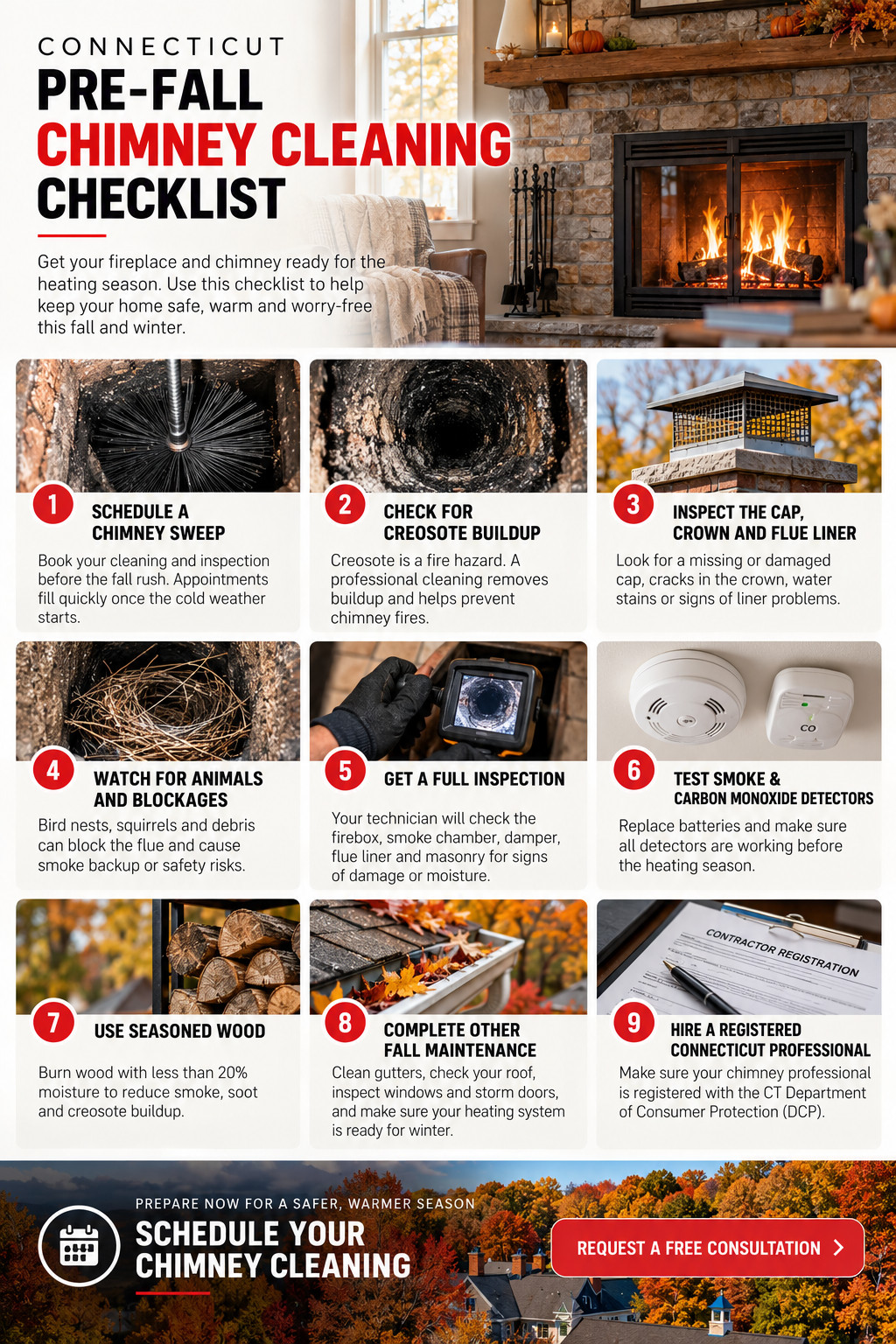
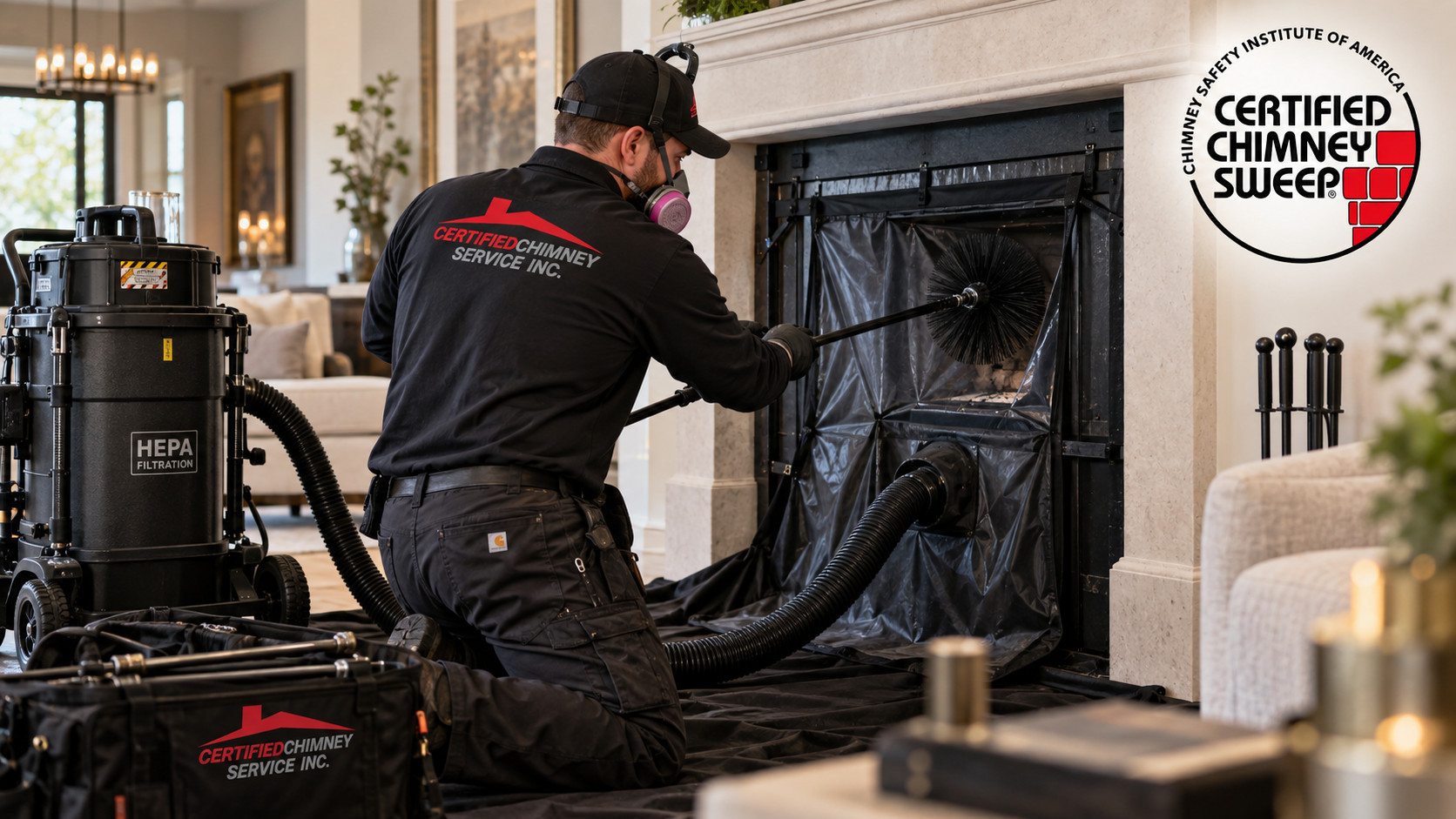
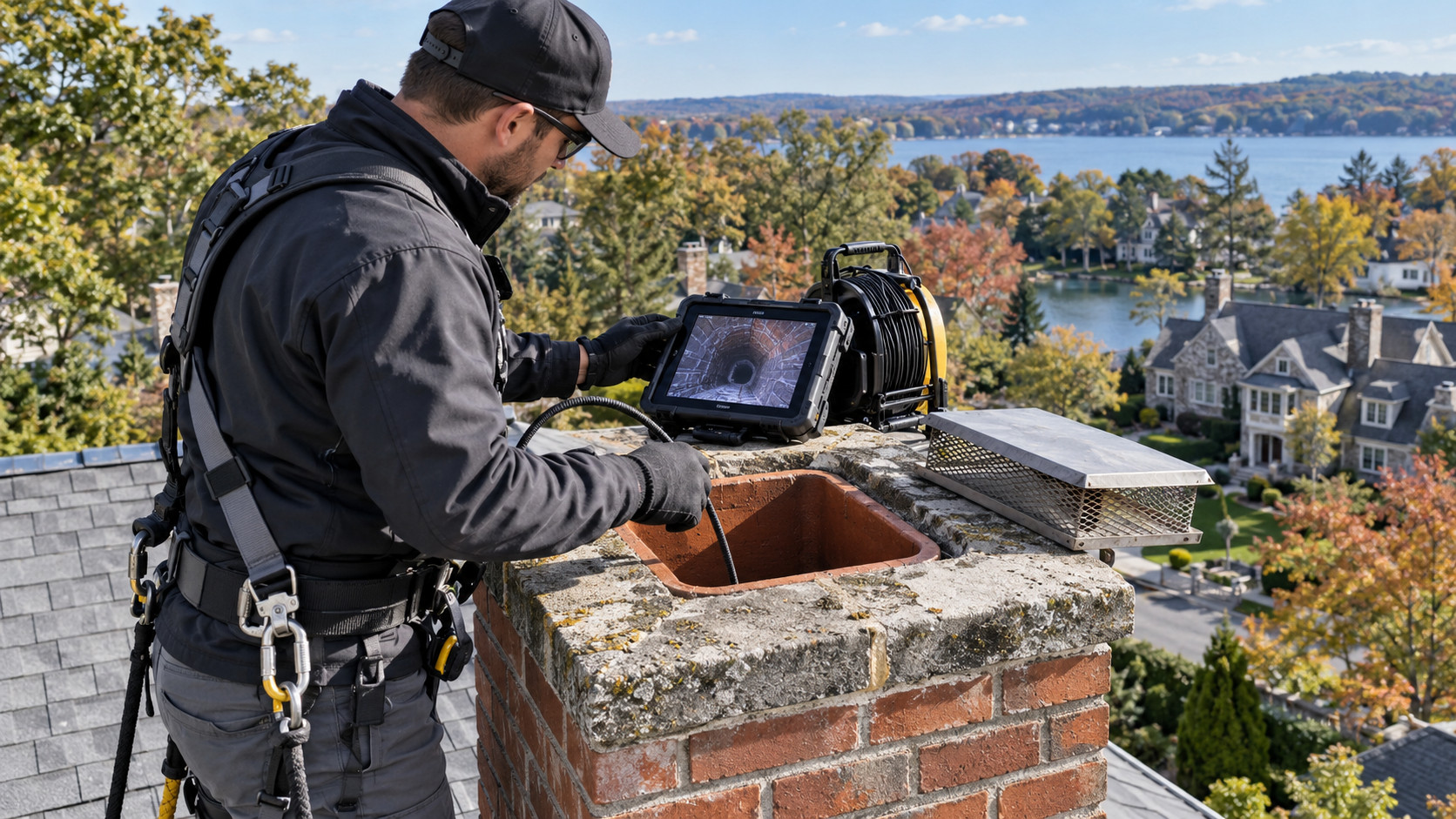
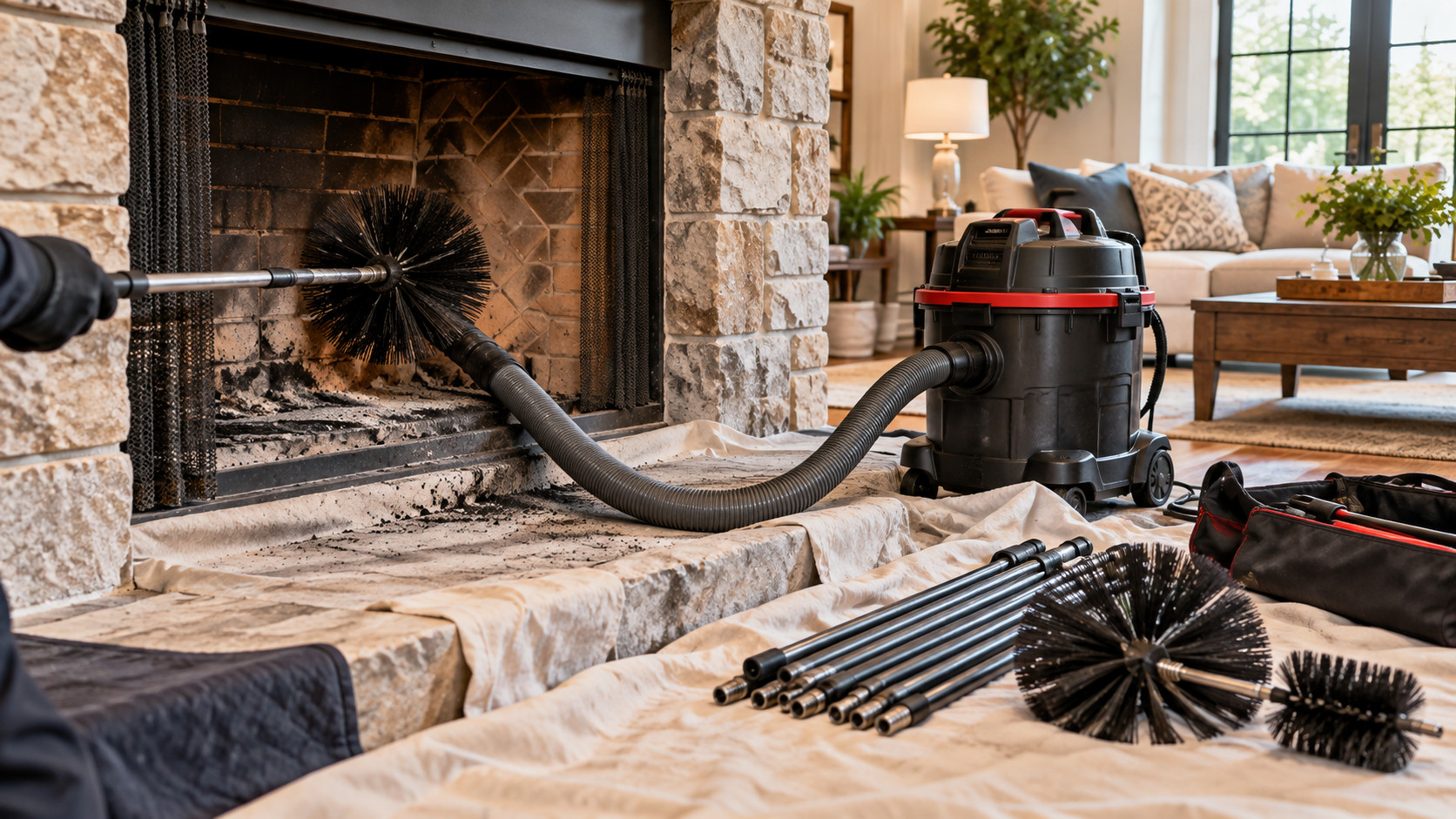
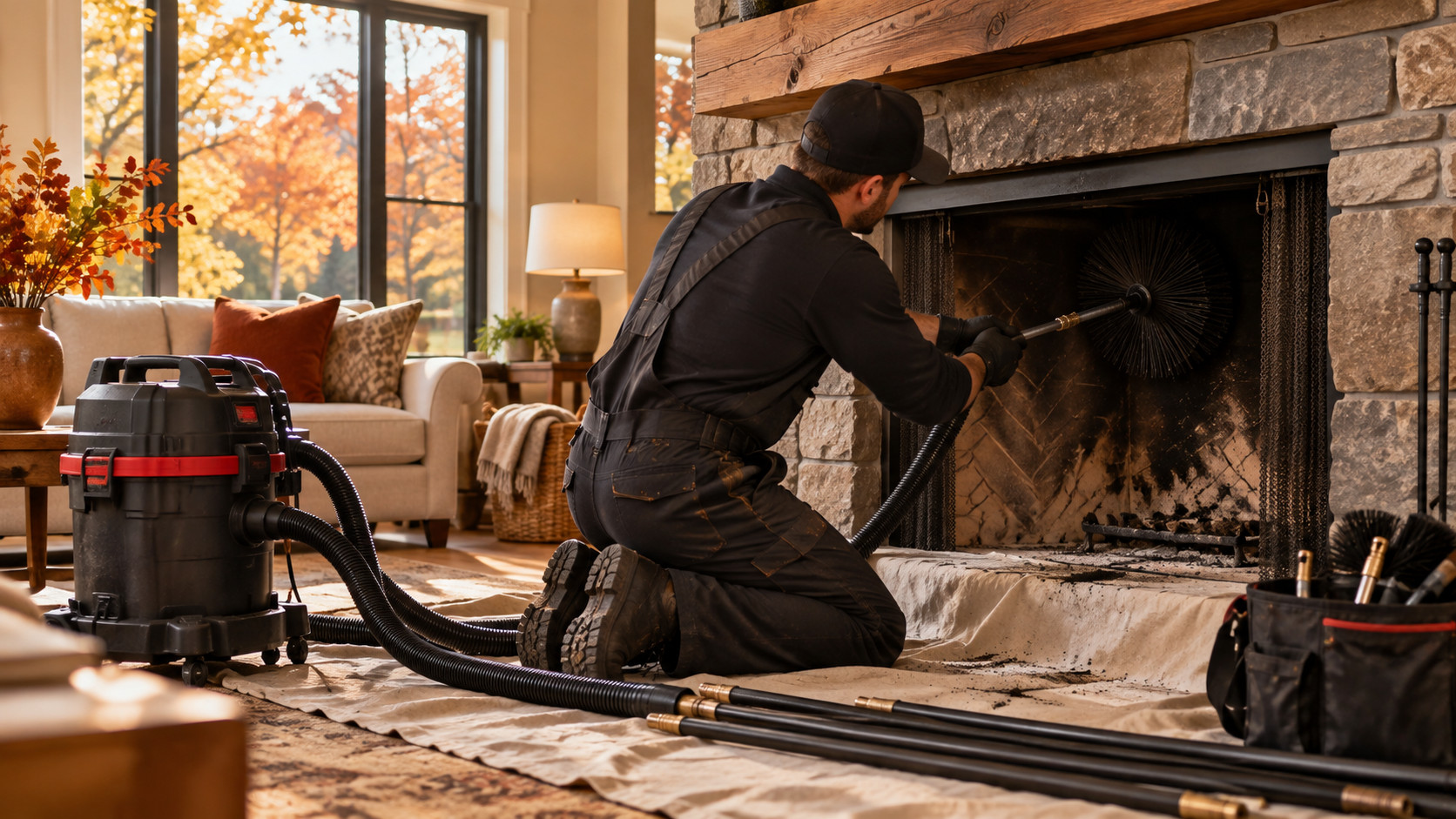
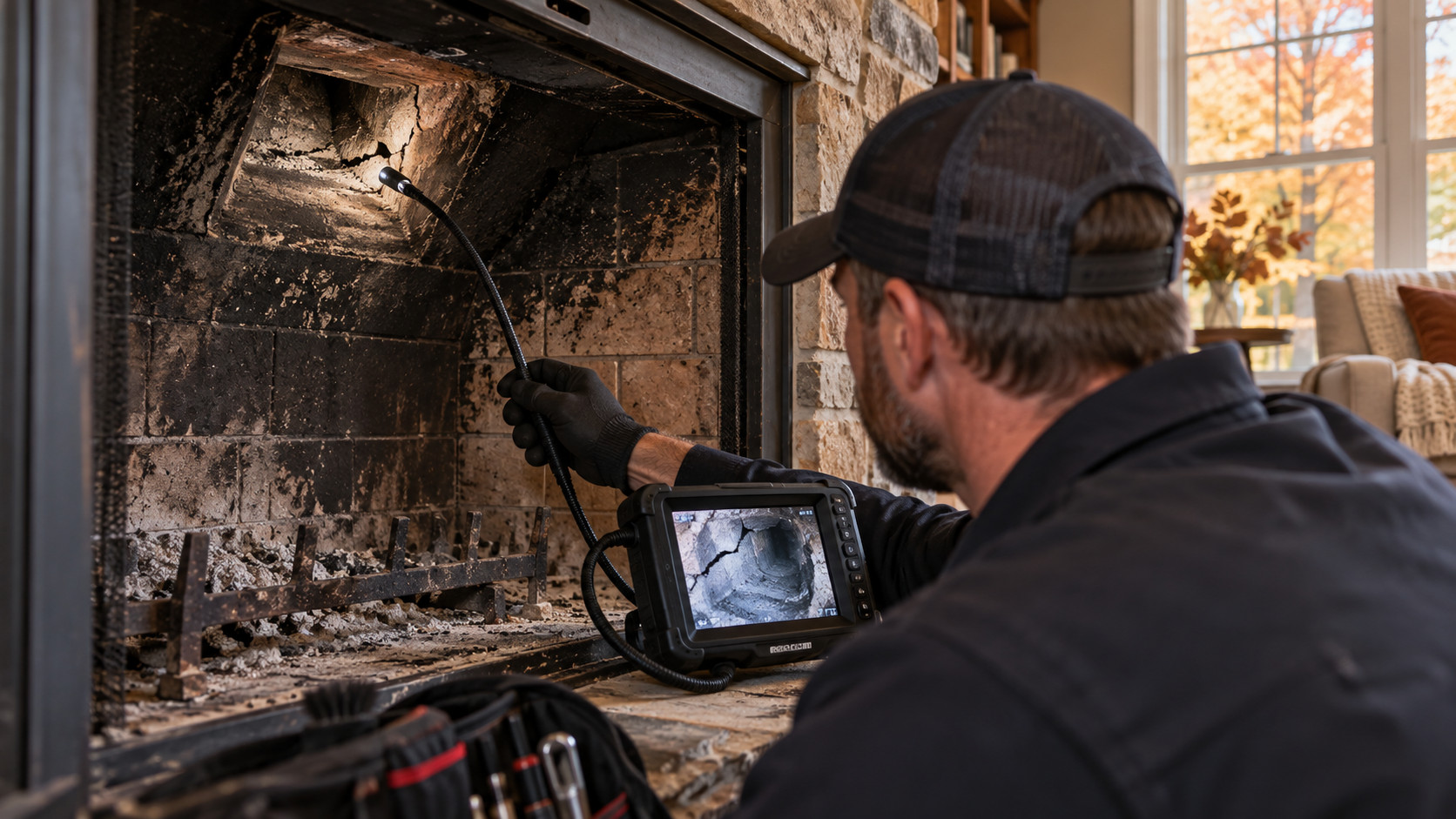
Chimney cleaning usually includes brush cleaning, HEPA-filtered vacuum control, fireplace area protection, soot removal, creosote residue removal, damper review, smoke chamber cleaning, and a basic safety inspection. The chimney technician may also check the chimney cap, flue liner, chimney crown, glass doors, firebox, masonry chimney, and signs of water damage. If video cameras are needed, the technician can look deeper inside the chimney flue liner to find cracks, gaps, blockages, or liner deterioration that cannot be seen from the fireplace opening.
Check for Creosote Buildup and Fire Risks
Creosote buildup is one of the most important items on a pre-fall chimney cleaning checklist. Creosote is a combustible residue that forms when wood burns and smoke cools inside the flue. Too much buildup can become a fire hazard and increase the risk of a chimney fire. CSIA follows NFPA 211 guidance that chimneys, fireplaces, and vents should be inspected at least once a year for soundness, deposits, and correct clearances. That annual inspection helps identify creosote, chimney fires, and hidden safety concerns before seasonal use.
Use Seasoned Wood and Fire Safety Basics
Burning seasoned wood helps reduce smoke, soot, and creosote buildup. EPA’s Burn Wise guidance says wood with moisture content under 20% is best and notes that smoke can mean wood is too wet, the fire needs more air, or the stove and chimney need maintenance. Before burning, keep a fire extinguisher nearby, use a fire screen, keep seasonal decor away from the fireplace, and confirm smoke and carbon monoxide detectors are working. These fireplace safety tips support safer fall and winter use.
Inspect the Chimney Cap, Crown, and Flue Liner
The chimney cap helps keep rain, leaves, animals, and debris out of the chimney. The chimney crown sheds water away from the top of the masonry. The flue liner protects the chimney system and helps smoke and gases vent safely. Before fall, look for a missing cap, rust, loose mesh, cracked crown, white staining, damaged mortar, water stains, or pieces of tile in the firebox. These signs can point to water damage, moisture intrusion, freeze-thaw cycles, chimney liner problems, or masonry repair needs.
Watch for Animal Sounds, Odors, and Water Stains
Animal sounds, smoky odors, sour smells, damp odors, or water stains can mean the chimney needs service before fall. Birds, squirrels, and other pests can enter through a missing cap and create blockages. Moisture can damage mortar joints, cause deteriorating mortar, and weaken masonry systems. Water inside the chimney can also combine with soot to create a corrosive slurry that damages metal components. A chimney inspection can identify whether the home needs pest exclusion, mortar replacement, chimney cap repair, chimney crown repair, or liner repair.
Test Detectors and Review Home Heating Safety
Smoke and carbon monoxide detectors should be tested before the heating system is used heavily. Carbon monoxide is especially dangerous because it is colorless and odorless. Chimney blockages, damaged liners, poor draft, and gas leaks can all create safety risks. Check detector batteries, replace expired units, and keep the fireplace in a ventilated area when in use. Homeowners should also schedule heating system inspection, roof inspection, gutter and downspout cleaning, window and storm door inspection, and other fall home maintenance checklist items before winter weather arrives.
Hire a Registered Connecticut Chimney Professional
Chimney and fireplace maintenance should be handled by qualified professionals, not random door-to-door offers. Connecticut DCP says all Home Improvement Contractors, New Home Construction Contractors, and Home Improvement Salespeople must be registered with the Department of Consumer Protection, and homeowners can verify registration through eLicense. This matters for chimney repair, mortar replacement, chimney liner work, chimney crown repair, and other home improvement services. Certified Chimney CT provides chimney services throughout Connecticut with professional cleaning, inspection, repair recommendations, and maintenance support.
Schedule Pre-Fall Chimney Cleaning in Connecticut
Certified Chimney CT helps Connecticut homeowners prepare for fall with chimney cleaning, chimney sweeping, chimney inspection, chimney repair, chimney liner service, chimney cap repair, chimney crown repair, caps and dampers, and protection and maintenance services. A pre-fall appointment can help catch creosote buildup, animal nests, water damage, smoke problems, carbon monoxide concerns, and fire hazards before regular fireplace use begins. Request a free consultation from Certified Chimney Connecticut to schedule chimney cleaning before the heating season.