
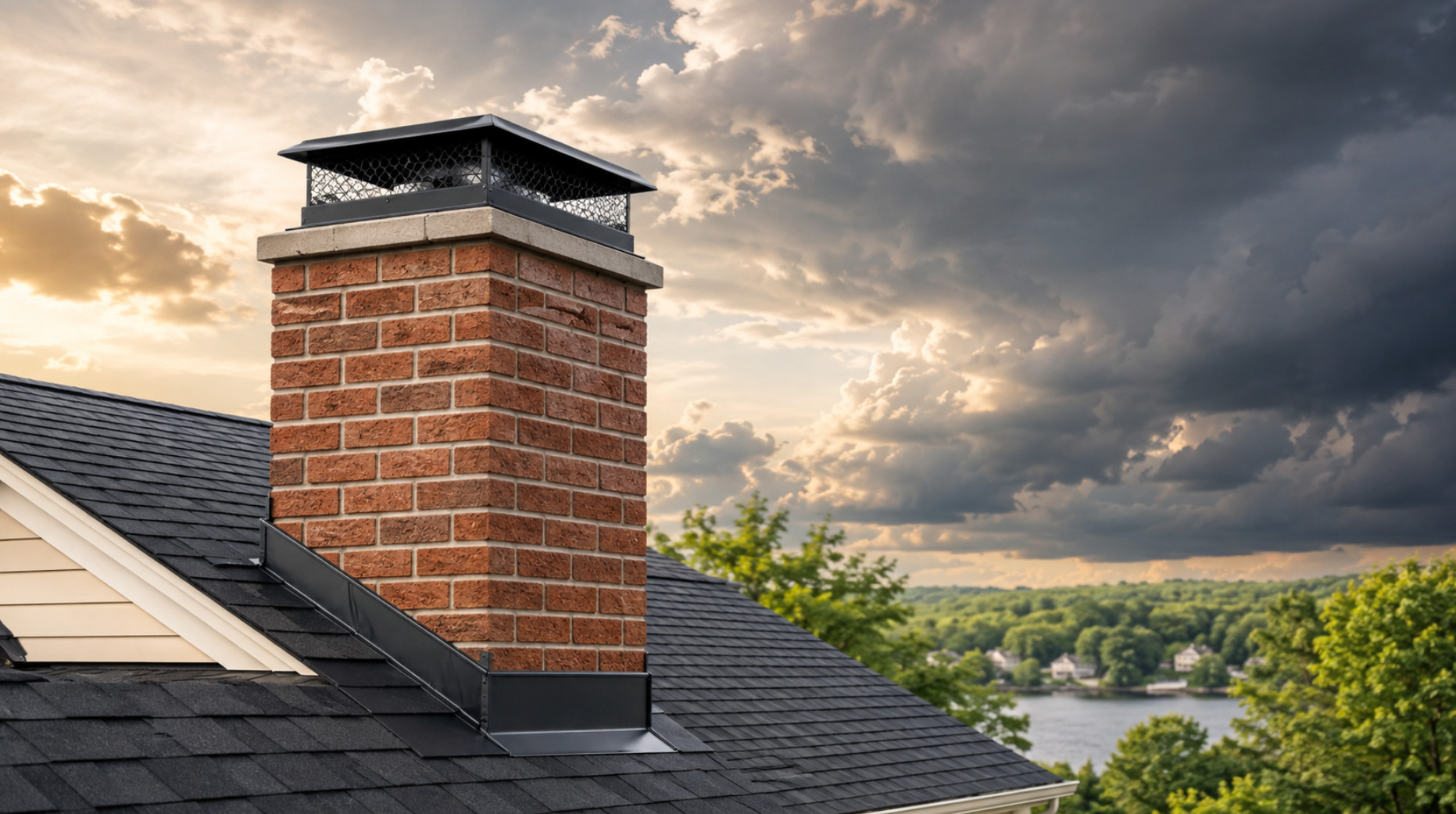
White, chalky stains on chimney brick are efflorescence, which is salt left behind when water moves through masonry and evaporates. It is a moisture warning more than a cosmetic problem.
Causes
- Cracked crown or missing cap
- Failed mortar joints
- Damaged flashing
- Porous brick absorbing rain
How to Fix It
- Find and repair the moisture source first
- Dry brush and clean the stains with a masonry cleaner
- Repoint damaged joints
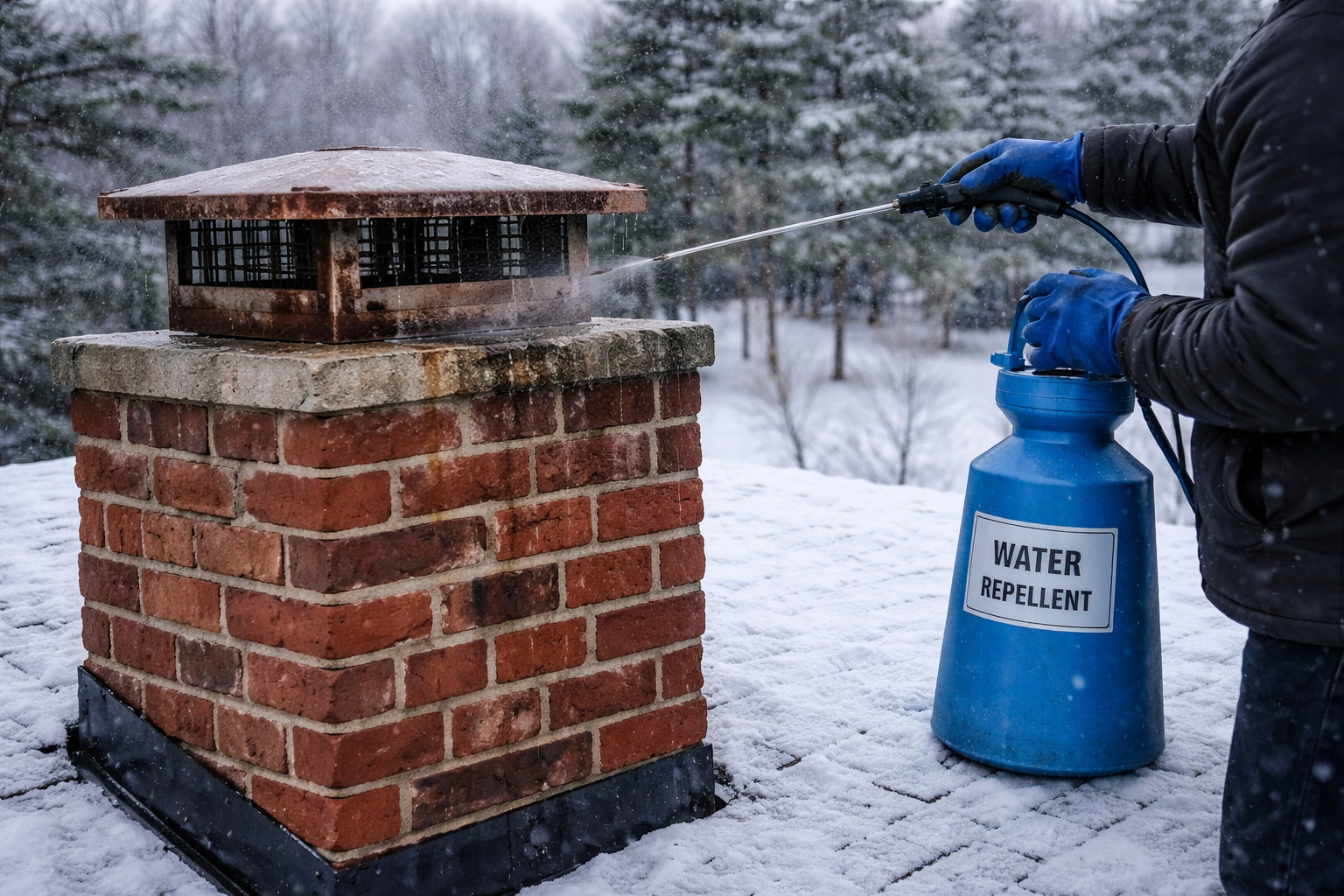
- Apply a vapor permeable water repellent
Why It Matters
Efflorescence signals that water is traveling through the wall. Repairing the entry points protects the structure from freeze damage.
Cleaning White Stains Safely
- Dry brush loose salts first
- Use a masonry cleaner suited to the brick
- Rinse with low pressure water
- Let the wall dry before sealing
Frequently Asked Questions
Does efflorescence hurt the brick
It signals moisture that can harm brick over time.
Will it come back
Yes, if the moisture source is not repaired.
Is it the same as mold
No, efflorescence is a mineral deposit, while mold is organic.
Why Efflorescence Shows Up on Chimneys
Brick and mortar contain natural salts. When water enters the masonry, it dissolves the salts and carries them to the surface. When the water evaporates, white powder is left behind. Chimneys are especially prone because they are exposed to rain on all sides and often have weak spots in the crown, cap or flashing.
Common Water Entry Points
- Cracks in the crown
- Missing or damaged cap
- Failed mortar joints
- Lifted flashing
- Cracks in brick faces
Cleaning Step by Step
- Dry brush the powder from the brick
- Wet the surface and apply a masonry cleaner suited to the brick
- Scrub gently and rinse
- Allow the wall to dry for several days
- Apply a vapor permeable sealer after repairs
Efflorescence vs Staining from Other Causes
White powder that wipes away is efflorescence. Chalky, flaking mortar that crumbles is deterioration. Dark streaks usually come from soot or rust. A technician can tell them apart and recommend the right treatment.
Frequently Asked Questions
Is efflorescence harmful
It is a sign of moisture, which can damage masonry over time.
Should I pressure wash it
Avoid high pressure. It can damage brick and drive water deeper.
How long before it stops
After the water entry is fixed and the wall dries, it should stop.
Local Help and Related Reading
Our crews handle chimney sweeps in Norwalk, chimney repair in Danbury, chimney caps in Shelton and chimney cleaning in New Canaan. Browse every town on our service areas page or our services.
More to read: Chimney Inspection Cost in Connecticut: What to Expect, Spalling Chimney Brick in Connecticut: Causes and Repair, Animals in Your Chimney in Connecticut: Removal and Prevention.
For wider guidance, see the EPA Burn Wise program, the U.S. Department of Energy and CT DEEP.