Stack Effect Reversal Explained
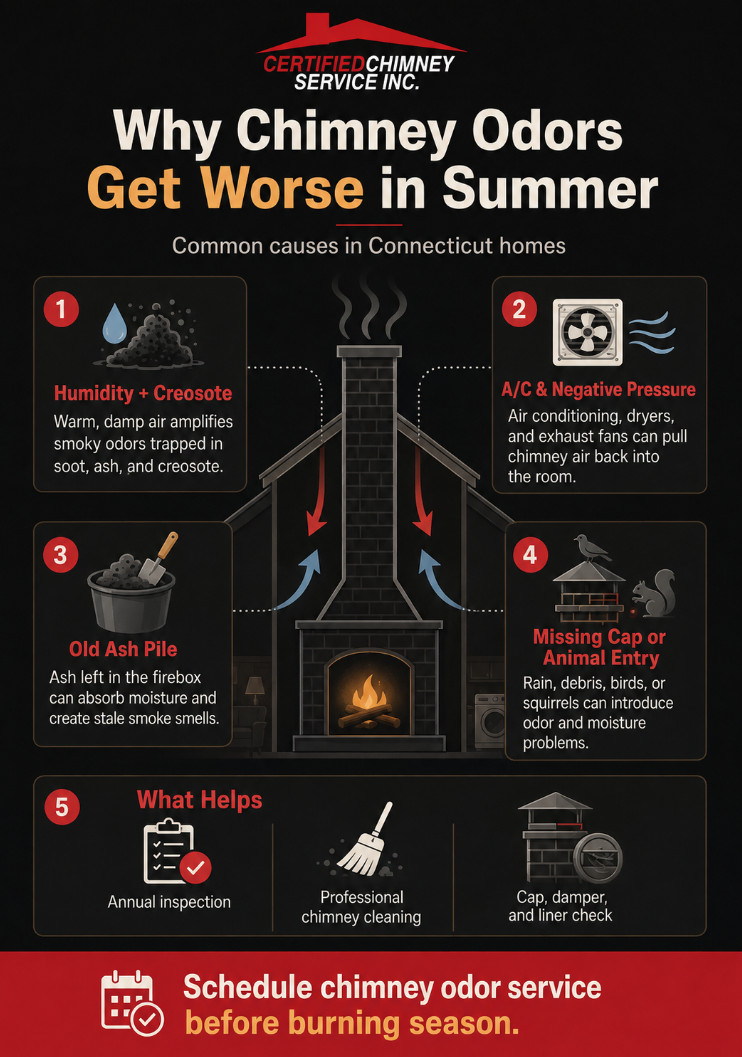
A chimney is designed to move warm air and flue gases upward. In summer, the fireplace is not producing heat, so the draft can weaken. At the same time, air conditioning may cool the house and change indoor pressure. This can reverse the normal stack effect and pull chimney air into the room. If the chimney contains old soot, creosote, ash, moisture, or animal debris, the odor follows the airflow. A chimney professional can check whether the issue is cleaning, draft, ventilation system pressure, or a damaged component.
Creosote, Ash, and Smoke Odors
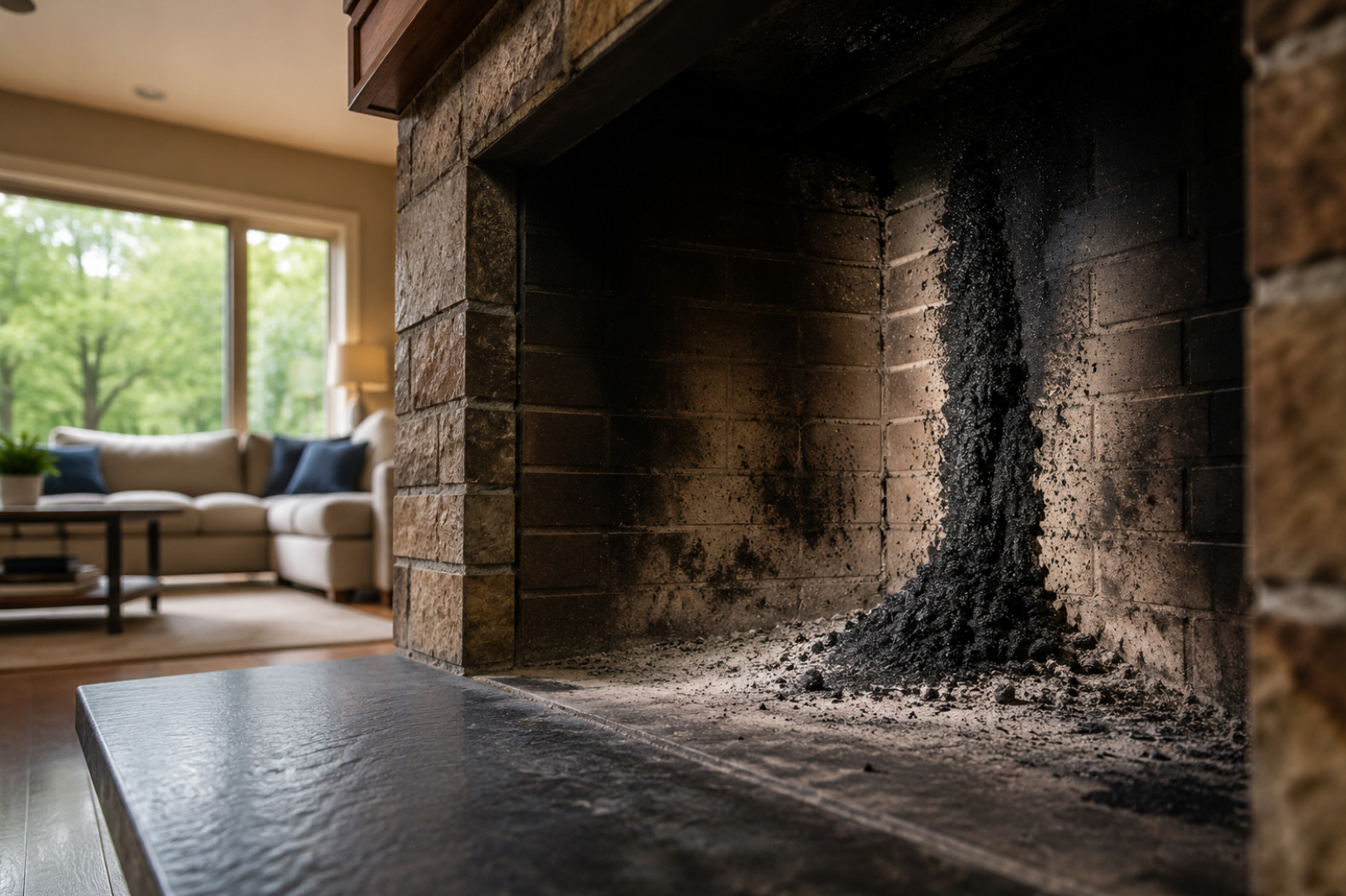
Creosote is a flammable residue that forms when wood burns. It can collect on the flue liner, smoke chamber, damper area, and fireplace components. CSIA explains that restricted air supply, unseasoned wood, and cooler chimney temperatures can accelerate creosote buildup, and annual inspections by qualified professionals can help prevent chimney fires and carbon monoxide intrusion. Old ash can also smell when it absorbs humidity. Homeowners should avoid leaving a large ash pile in the firebox during summer and should store removed ash safely in a proper noncombustible container.
How Fast Can the Odor Go Away After Cleaning?
Odor improvement depends on the cause. If the smell comes mostly from soot, ash, or normal creosote deposits, professional chimney sweepings and fireplace cleaning may reduce the odor quickly. If the odor comes from moisture intrusion, animal entry, a missing chimney cap, damaged mortar joints, or a cracked chimney crown, cleaning alone may not solve it. In those cases, the chimney system may also need chimney cap repair, masonry repair, top-sealing dampers, liner repair, or professional installation of a better closure system.
Chimney Caps, Dampers, and Animal Entry
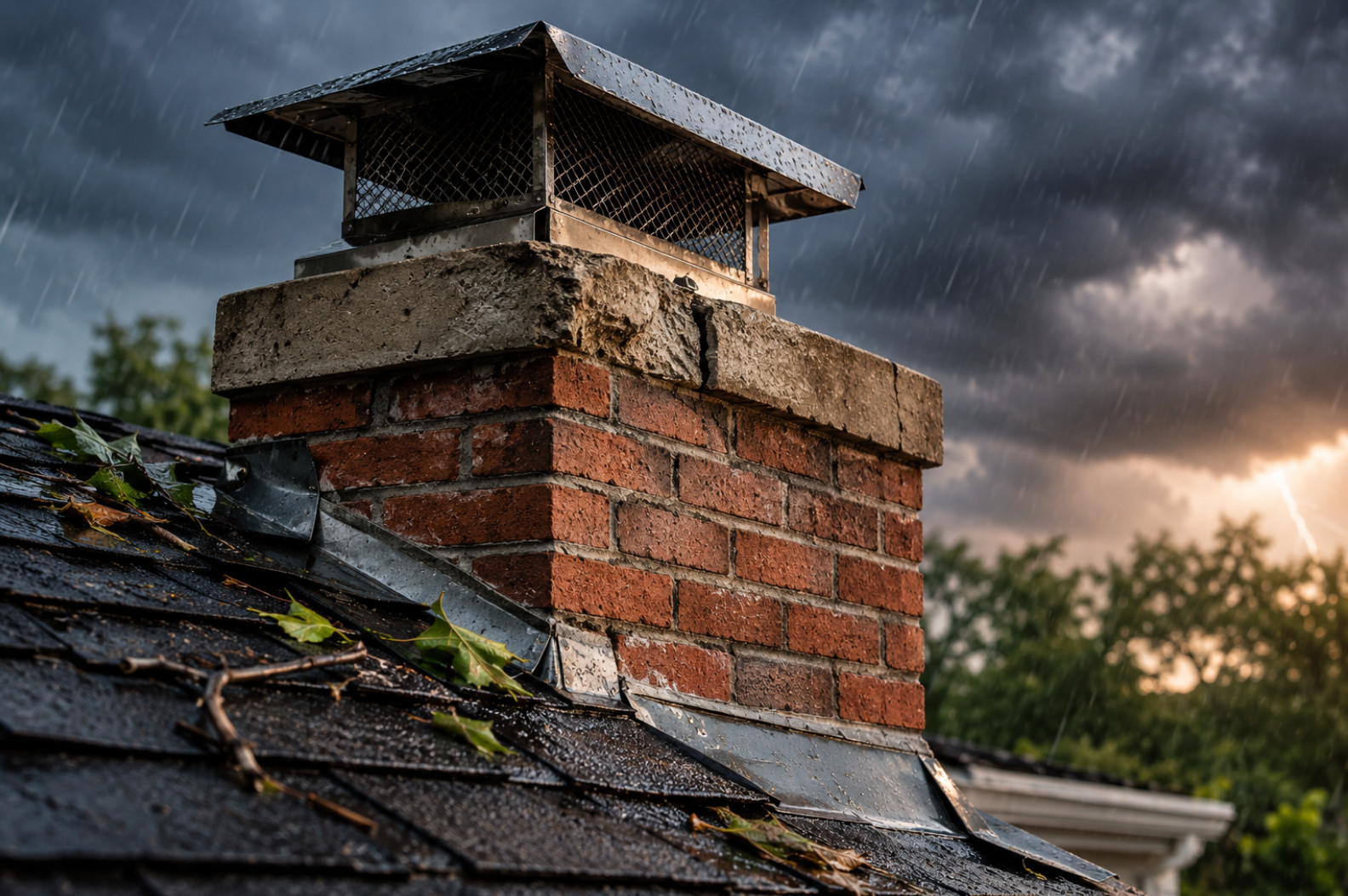
A chimney cap helps keep rain, leaves, birds, squirrels, and nesting material out of the chimney. Without a cap, moisture and debris can collect inside the flue. Top-sealing dampers can also help seal the chimney at the top when the fireplace is not in use, reducing outside air, rain, and odor movement. A damaged fireplace damper, cracked chimney crown, open mortar joints, or deteriorated flue liner can all contribute to summertime chimney odors. These parts should be checked during a chimney inspection.
Do Deodorizers or Glass Doors Help?
Gel deodorizers, sprays, fireplace decor, and glass fireplace doors may reduce surface odor for a short time, but they do not fix the source of chimney odors. A glass door may limit odor movement from the firebox, but negative pressure can still pull air through gaps or around the chimney system. Sprays can also mask a problem that needs cleaning or repair. The better solution is to identify whether the smell is caused by creosote deposits, moisture, animal debris, poor draft, or damaged chimney components.
How Often Should the Chimney Be Cleaned?
Chimney cleaning frequency depends on fireplace use, wood quality, appliance type, and creosote buildup. A certified chimney sweep can inspect the system and recommend cleaning when deposits are present. CSIA says annual inspection by a qualified professional can help prevent chimney fires and carbon monoxide intrusion. This is important even if the fireplace is used seasonally, because animal entry, moisture damage, liner issues, and airflow problems can develop during the off-season. A yearly inspection before the next burning season helps homeowners avoid surprise odor and safety issues.
Schedule Chimney Odor Service in Connecticut
Certified Chimney provides chimney inspection, chimney cleaning, chimney sweeping, chimney liners, chimney cap repair, damper service, masonry repair, and odor troubleshooting across Connecticut. If summer heat, humidity, air conditioning, or negative pressure is pulling smoke odors into your home, their team can inspect the chimney system and recommend the right solution. Request a free consultation from Certified Chimney Connecticut to schedule service before the next burning season.