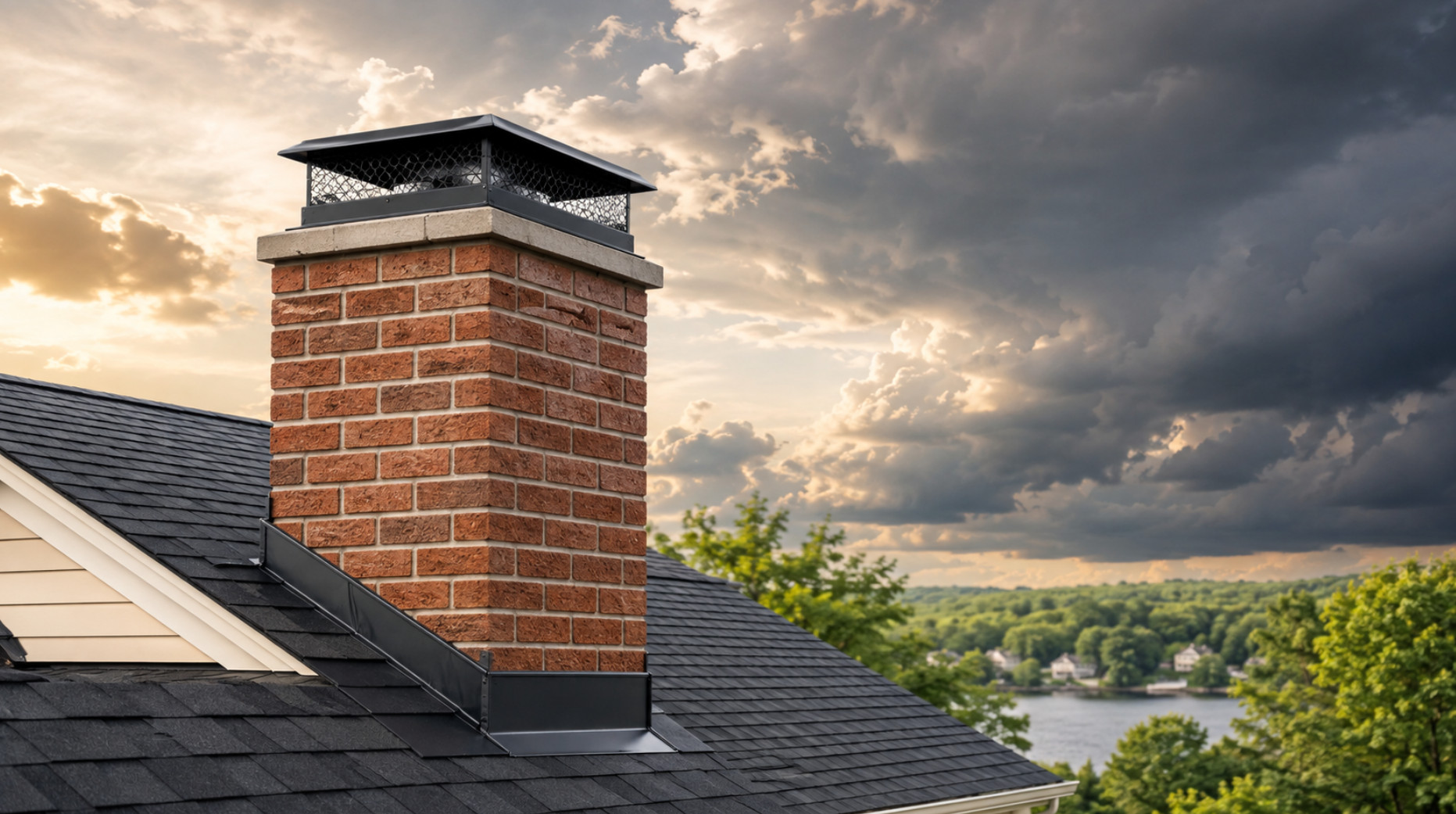
Chimney Cap Issues and Direct Water Entry
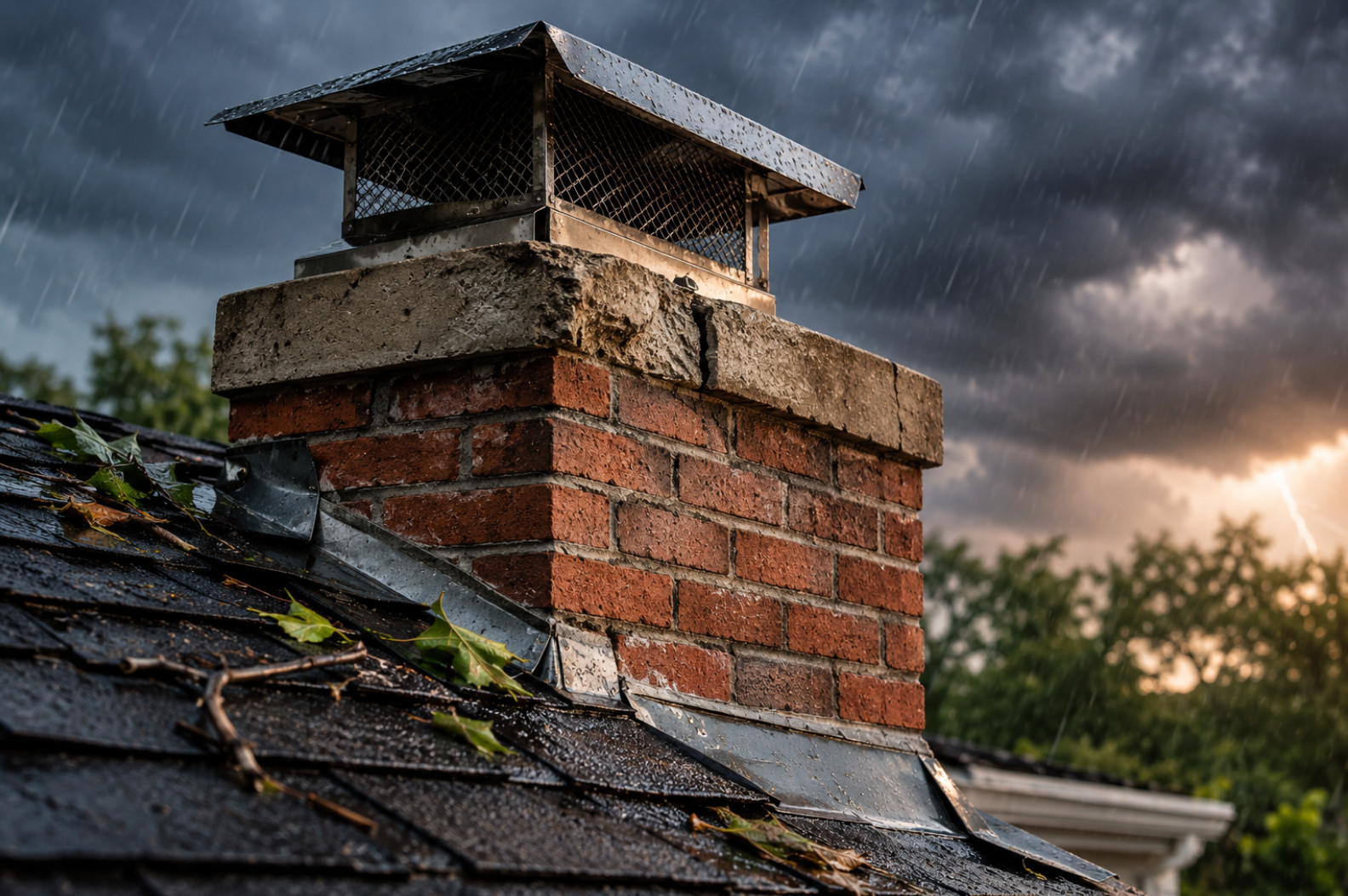
A missing or damaged chimney cap can allow rain and melting snow to fall directly into the flue area. Even if you do not see dripping inside the fireplace, the internal masonry can stay damp for weeks.
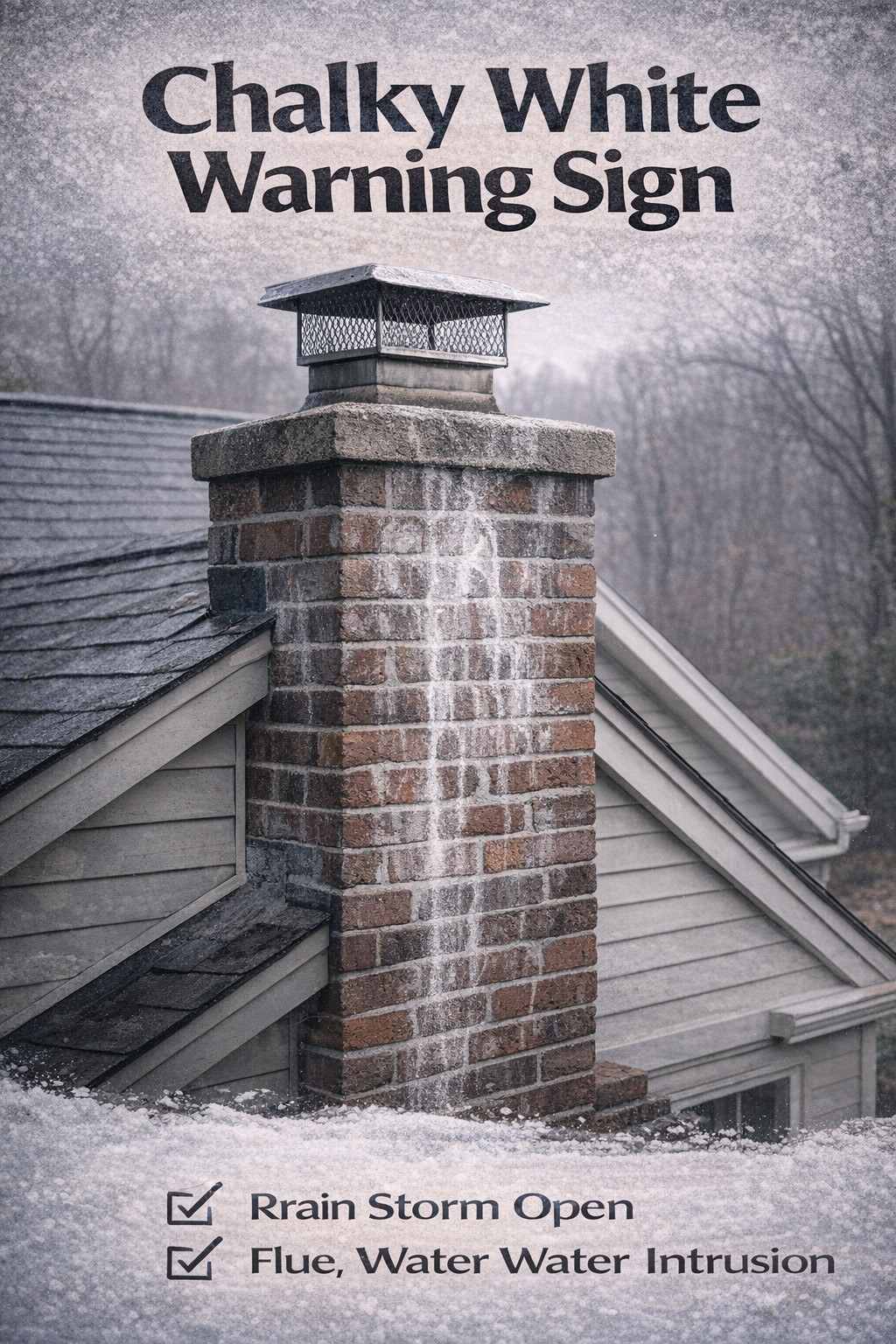
That moisture can spread to the outside and show up as white staining or water stains.
Leaking Chimney Flashing
Your chimney flashing is the metal seal where the chimney meets the roof. If flashing fails, water can slip into that seam and soak the chimney structure from the outside in.
This is why some homeowners see efflorescence only on one side of the chimney. It is often the side exposed to storm direction or roof runoff.
Cracked Mortar Joints and Water Absorption
Over time, mortar joints break down. Once the mortar becomes porous, the chimney absorbs water like a sponge. That constant water absorption is what creates repeating cycles of stains, damp sections, and cracking mortar.
Why Efflorescence Usually Gets Worse in Winter Months
Connecticut weather is basically designed to punish masonry. We get rain, then freezing temperatures, then sunny drying days, then another storm.
That freeze-thaw cycle is rough on chimneys because:
- moisture enters tiny cracks
- it freezes and expands
- the brick surface weakens
- spalling bricks start to break apart
- more water enters even faster
That is how a small cosmetic stain turns into cracking and crumbling masonry.
Does Efflorescence Always Mean a Leak?
This is one of the top questions homeowners ask, and it is a good one.
Efflorescence almost always means moisture is present, but it does not always mean you have an obvious active leak into the living space.
In many homes, efflorescence shows up first because the water intrusion is happening inside the chimney masonry system, not dripping into the fireplace or down a wall.
That is why chimney inspections matter. A chimney can have water damage and still “look okay” from the ground.
If you are in the New Haven area, even a short walk around places like East Rock Park after winter storms shows you how quickly masonry can change when moisture and cold weather combine. Chimneys are no different.
How to Remove Efflorescence From a Chimney (And What NOT to Do)
Homeowners usually want to scrub it off, which makes sense. It looks messy. But removing efflorescence without fixing the moisture source is like cleaning up water on the floor while the pipe is still leaking.
Safe Removal Options
A qualified expert can recommend a safe efflorescence remover based on the brick type and stain severity. In some cases, professional cleanings can improve appearance without damaging the brick surface.
Avoid Harsh DIY Chemicals Like Muriatic Acid
You will see people online recommend muriatic acid, but that is risky. It can discolor brick, weaken mortar joints, and create worse long-term damage if used incorrectly.
If you want your chimney to last, the goal is not just making it look better. The goal is stopping water intrusion and protecting the masonry.
The Real Fix: Stop the Water Intrusion and Protect the Chimney
Once you confirm the cause of the staining, the solution is usually a combination of repair and prevention.
Depending on what Certified Chimney Connecticut finds during an inspection, the fix may include:
Chimney Repair and Repointing Mortar
Repointing services restore the mortar joints so the chimney stops absorbing moisture through weak seams. Done correctly, repointing mortar helps stabilize the chimney structure and prevents further cracking mortar issues.
Crown Repair and Cap Replacement
If the crown is cracked, crown repair stops water from entering at the top. A new chimney cap can prevent direct rain entry and reduce recurring moisture problems.
Chimney Waterproofing With the Right Sealant
A chimney waterproofing repellant or chimney brick sealer can help reduce water absorption, but only when the chimney is repaired first. Waterproofing sealants do not work properly if cracks or gaps are still active.
Some homeowners ask about products like LastiSeal Brick & Concrete Sealer, but the most important thing is choosing a waterproofing agent that is breathable and appropriate for masonry chimneys. Trapping moisture inside can create new damage.
When to Call Certified Chimney Connecticut for an Inspection
If you see white stains, do not wait until spring. Efflorescence is easiest to address early, before it turns into spalling bricks, interior water stains, or costly masonry restoration.
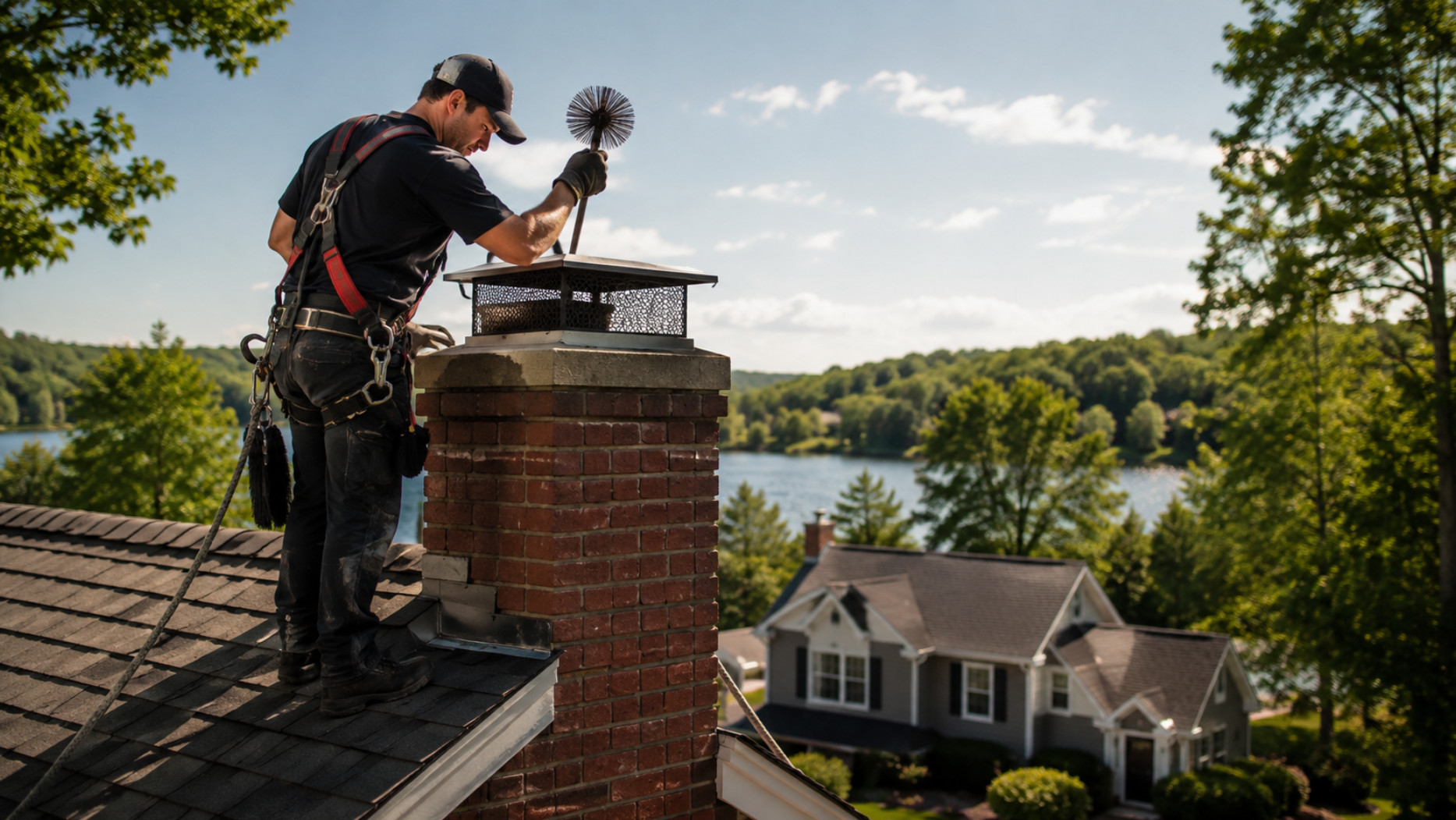
A chimney inspection from Certified Chimney Connecticut can help identify:
- chimney leak sources
- crown & cap damage
- chimney flashing issues
- water intrusion patterns
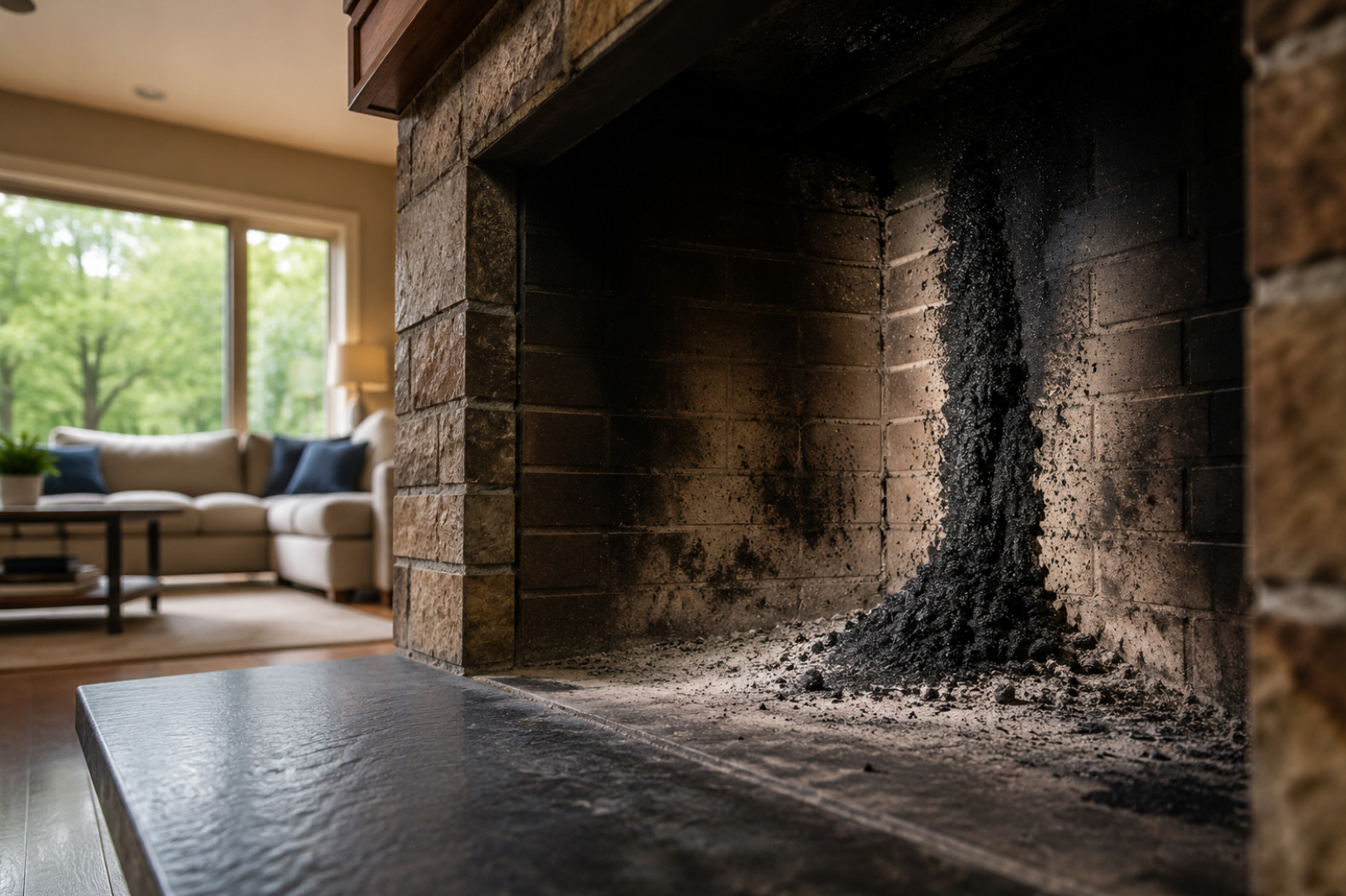
- flue liner concerns
- early signs of freeze-thaw deterioration
Even if the fireplace is not in use, the chimney system still needs protection. Water damage does not care whether you light fires or not.
Final Thoughts: White Chimney Stains Are a Warning Sign You Can Catch Early
Efflorescence looks like a surface problem, but it usually points to something deeper: moisture moving through your chimney bricks and mortar joints.
In Connecticut, moisture plus freezing temperatures is a rough combination. If you catch it early, the fix is often straightforward. If you ignore it, it can turn into structural damage that costs far more than a basic repair.
If your chimney has white stains, salt deposits, or signs of water leaking, Certified Chimney Connecticut can inspect the system, find the real water entry point, and recommend repairs that protect your home long-term.