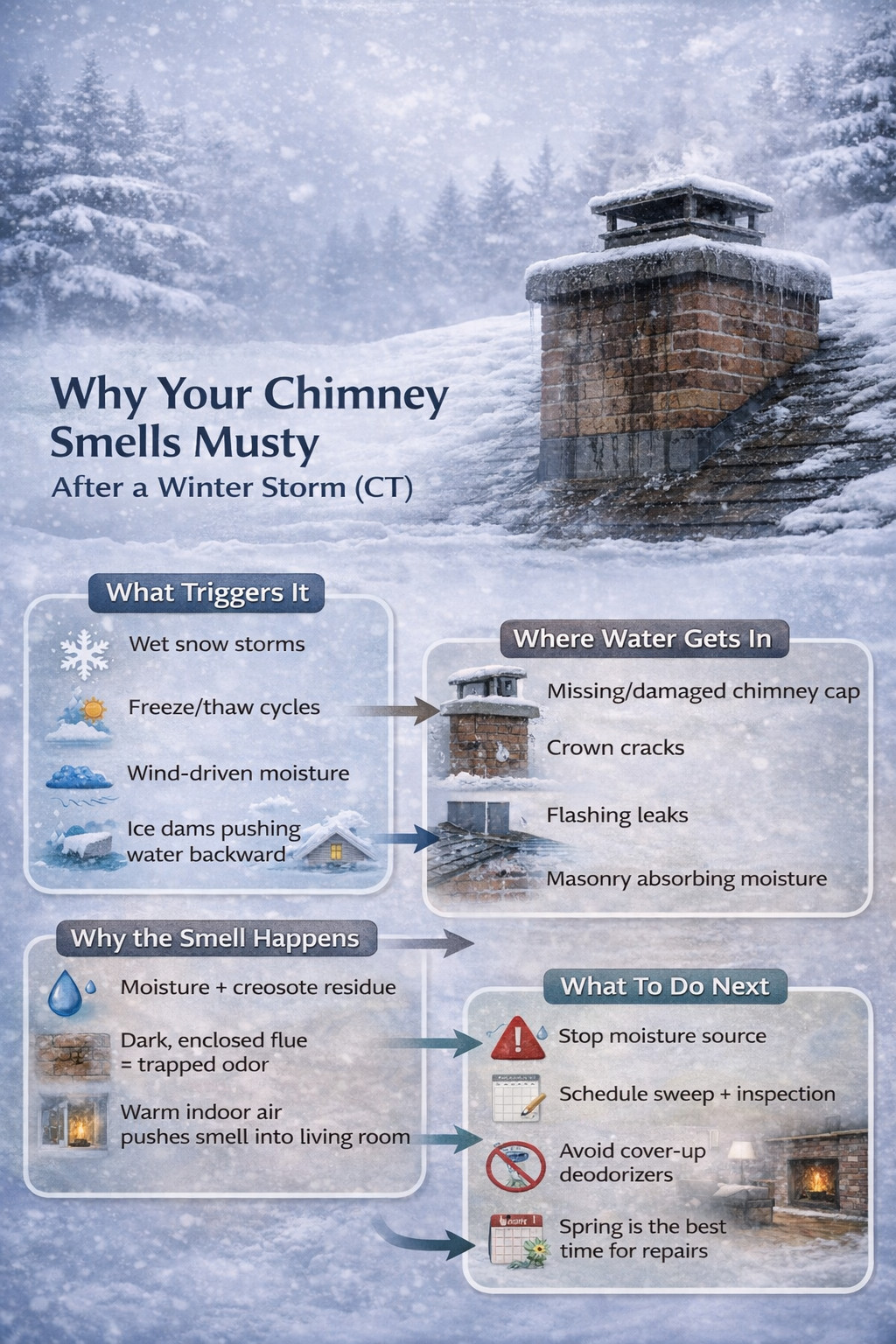
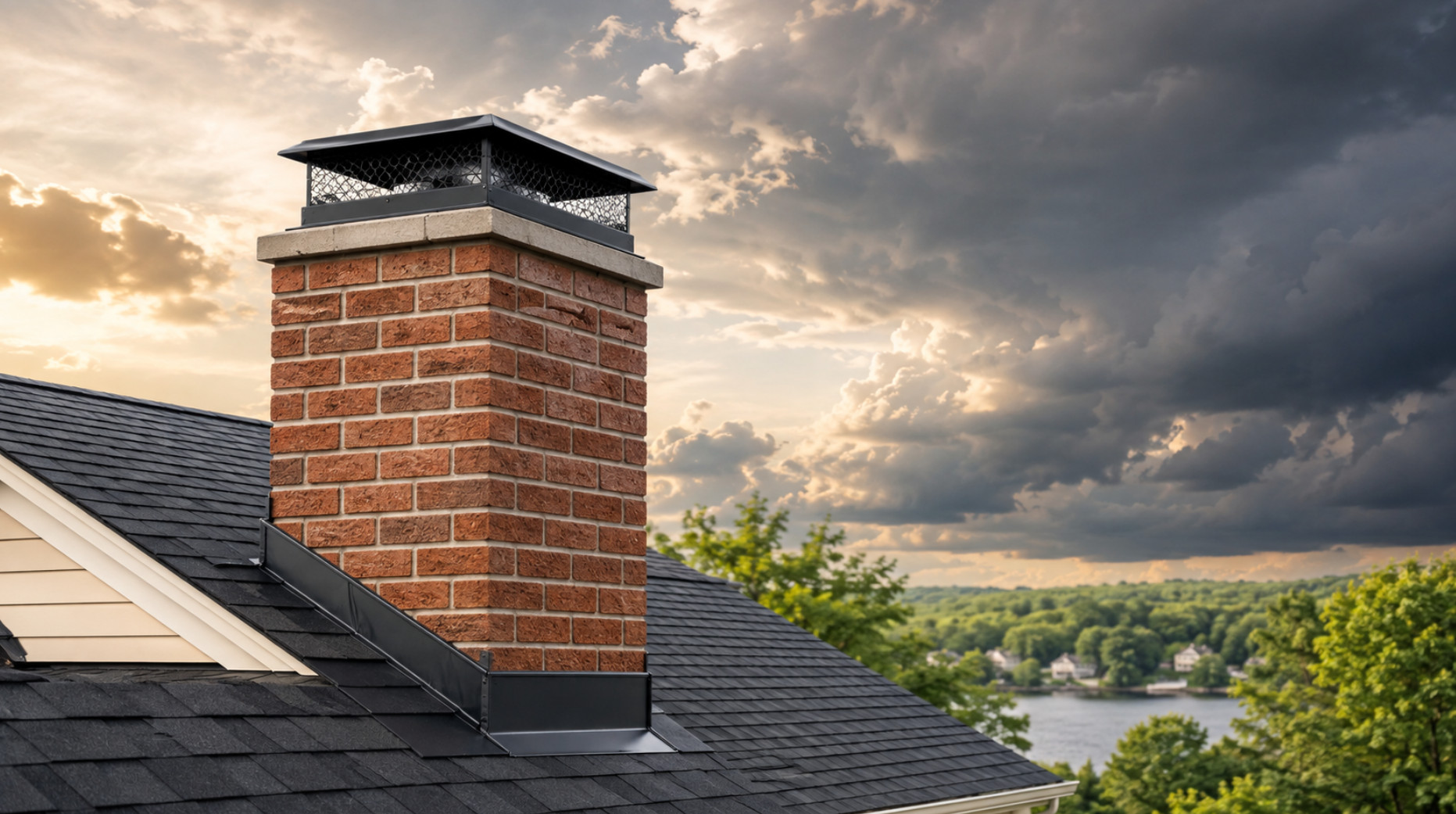
Common Winter Storm Entry Points: Where Water Intrusion Happens
A musty chimney smell is often your first warning sign, before visible damage shows up.
Chimney Cap Problems (Or No Cap at All)
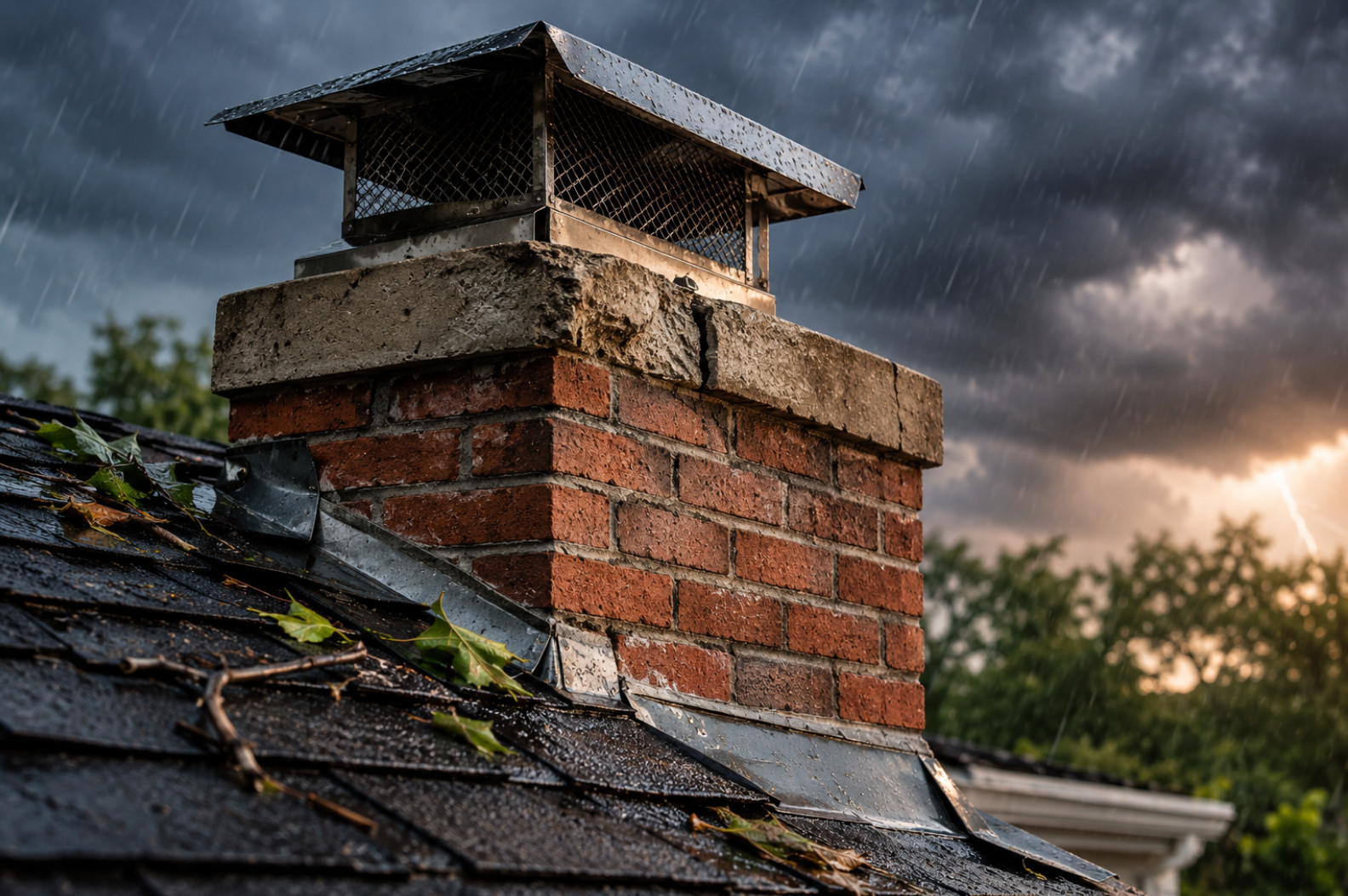
Your chimney cap helps block rain, snow, and animal intrusions. If it is missing, damaged, or not sized correctly, storm moisture can drop straight into the flue.
Chimney Crown Cracks and Cracked Crown Leaks
The chimney crown is the concrete top that protects the masonry. Even a hairline crack can let water seep in. Over time, that leads to structural deterioration and interior dampness.
Chimney Flashing and Roof Leaks
If your chimney flashing is failing, stormwater can leak right where the chimney meets the roof. Sometimes homeowners think the smell is “chimney mold” but it’s actually a roof leak feeding moisture into the chimney chase.
How Ice Dams in Connecticut Trigger Musty Chimney Smells
Ice dams are one of the most common hidden causes of storm damage in CT homes.
Ice Dam Basics: What’s Happening on Your Roof Edge
An ice dam forms when attic heat loss melts snow higher on the roof, then water refreezes near the cold roof edge. That trapped ice forces water under shingles and into weak areas, including around chimneys.
CT Ice Dam Prevention Tips That Actually Help
A lot of people want a quick fix, but prevention is the real solution.
Some effective strategies include:
- air sealing your attic hatch
- improving soffit vents
- adding insulation to reduce attic heat loss
- installing heat cables where needed
- using temporary solutions like calcium chloride socks in the right conditions
The U.S. Department of Energy explains how air sealing and insulation reduce heat loss, which is one of the biggest contributors to ice dam formation.
Signs Your Chimney Has Water Damage After a Storm
Some chimney water damage is obvious, but some of it is subtle.
Visual Signs Outside the Chimney
After a winter storm, look for:
- water stains on the chimney exterior
- white staining or mineral deposits
- cracked mortar joints
- spalling bricks (flaking or crumbling brick faces)
- a chimney that looks darker in patches
Spalling is especially common with repeated freezing and thawing. Moisture enters the brick, freezes, expands, and slowly breaks the surface apart.
Hidden Damage Inside the System
Inside the chimney, water damage can impact:
- flue lining or damaged flue liners
- fireplace damper rusting or sticking
- smoke shelf dampness
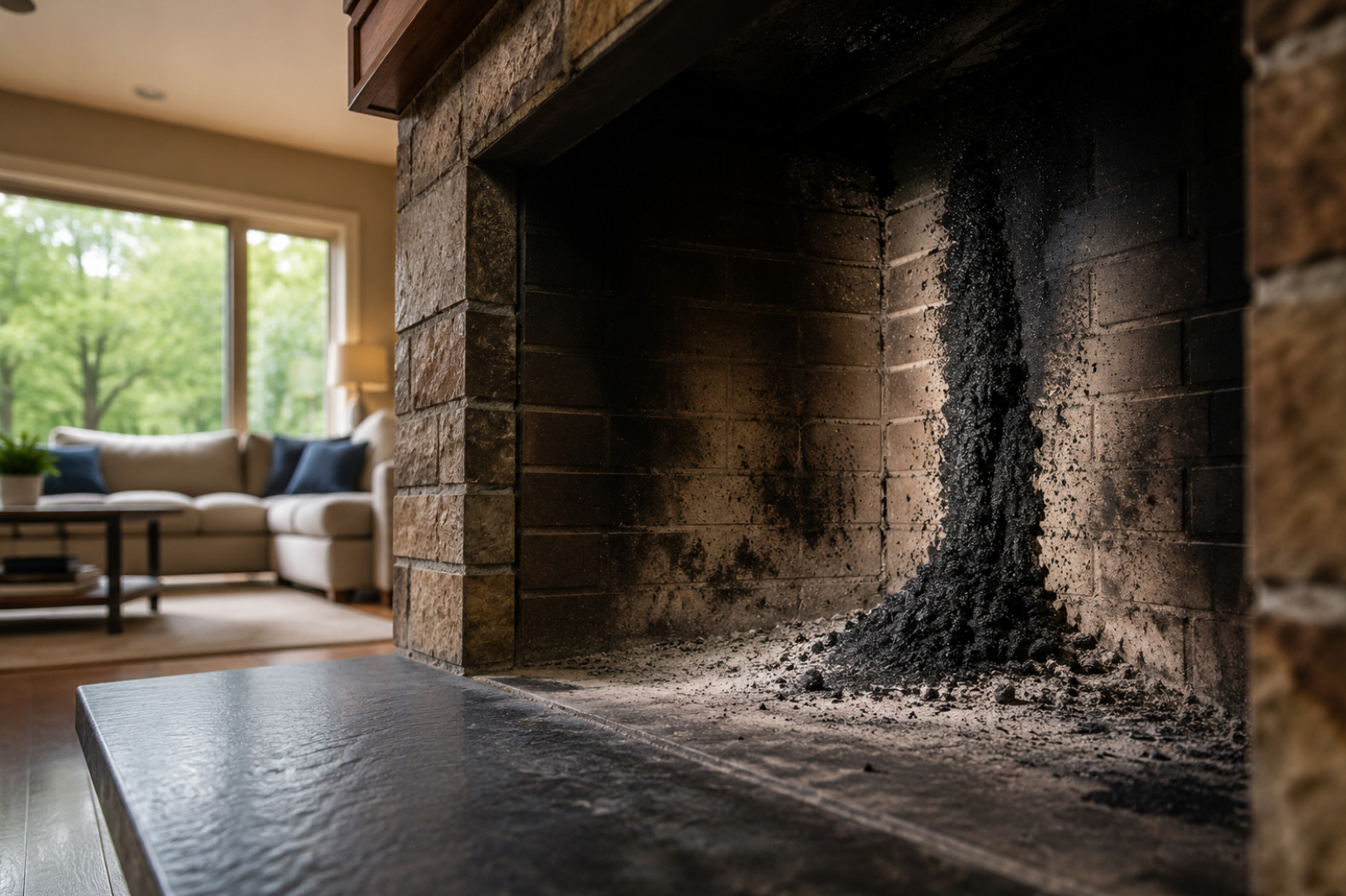
- refractory panels cracking in the firebox assemblies
This is why a proper chimney inspection matters. A chimney can look “fine” from the driveway but still have moisture issues inside.
Musty Smell or Smoke Backflow? Know the Difference
A musty smell is usually moisture-related, but sometimes homeowners describe it as “stale smoke.”
Drafting Obstruction and Negative Pressure
After storms, chimneys can develop drafting issues from:
- wet flue lining
- debris in the flue
- animal intrusions
- cold air drops that push air downward
That can create smoke backflow, especially if your home has strong exhaust fans, tight insulation, or negative pressure inside.
If you smell smoke or notice poor drafting, it’s not just an annoyance. It can become a safety issue.
How to Get a Musty Smell Out of Your Chimney (Safely)
This is one of the biggest questions people ask:
How to get musty smell out of chimney?
The safest approach is to remove the cause, not cover the smell.
Step 1: Stop the Moisture Source
Before anything else, water intrusion has to be addressed. That might mean:
- replacing the chimney cap
- sealing crown cracks
- fixing flashing
- repairing mortar joints
- waterproofing the exterior masonry
Step 2: Schedule a Chimney Sweeping
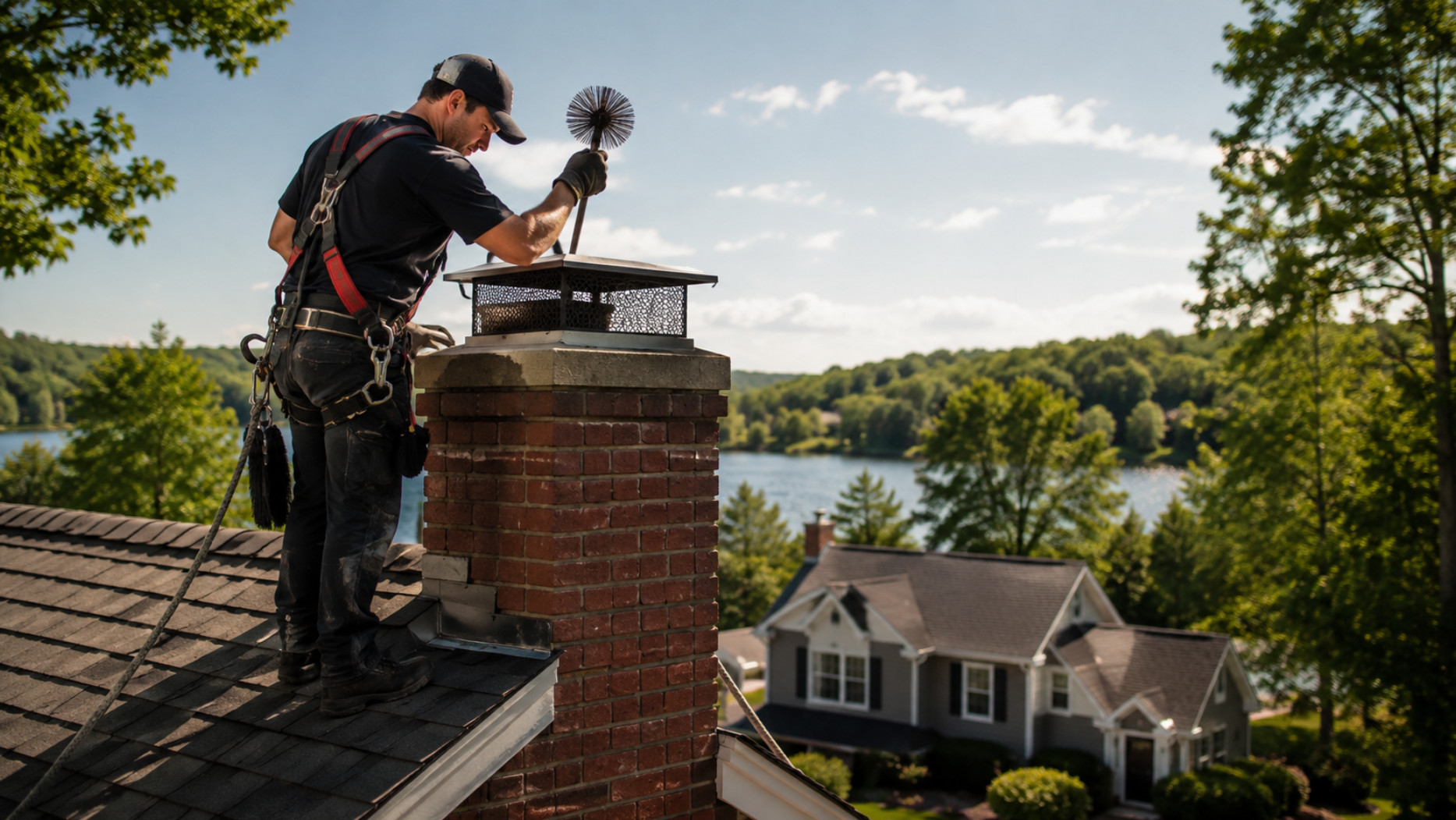
A professional chimney sweeping removes the soot and creosote that hold odor. This is one of the fastest ways to reduce the musty smell after heavy storms.
At Certified Chimney CT, this is often paired with an inspection so we can confirm the flue lining is safe and there are no drafting obstructions.
Step 3: Avoid “Cover-Up” Odor Products
Some odor-neutralizing products can help temporarily, but they should never replace professional cleaning or repairs. If moisture stays trapped, the smell will come back.
The Best Time to Schedule Chimney Repair in CT (Hint: Spring Cleaning)
A lot of homeowners wait until fall to think about fireplaces again, but spring is the smartest time for chimney work.
Why Spring Is Ideal
Spring cleaning season is perfect for:
- chimney inspection scheduling
- chimney sweeping before humidity rises
- catching storm damage early
- preventing mold-like odors from lingering all summer
It’s also easier to book repairs before the busy fall rush.
When to Call Certified Chimney CT for a Chimney Inspection
If the musty smell lasts more than a couple days after the storm, or if you see staining, leaks, or drafting changes, it’s time to bring in a chimney professional.
A proper inspection helps identify:
- cracked crown issues
- chimney flashing leaks
- mortar joint damage and chimney repointing needs
- flue liners problems
- early structural deterioration
At Certified Chimney CT, our goal is simple: protect your home, keep your fireplace safe, and fix the real cause so the smell does not keep coming back every time Connecticut gets hit with another winter snowstorm.
Final Thoughts: That Musty Chimney Smell Is a Warning Sign, Not Just an Odor
After a storm, a musty smell is usually your chimney telling you something changed. Most of the time, it’s moisture. Sometimes it’s damage. Either way, ignoring it can lead to bigger chimney repair costs later, and in some cases, an increased fire risk.
If your chimney smells musty after a winter storm in Connecticut, the best move is to get it inspected, cleaned, and sealed properly, before the next storm hits.