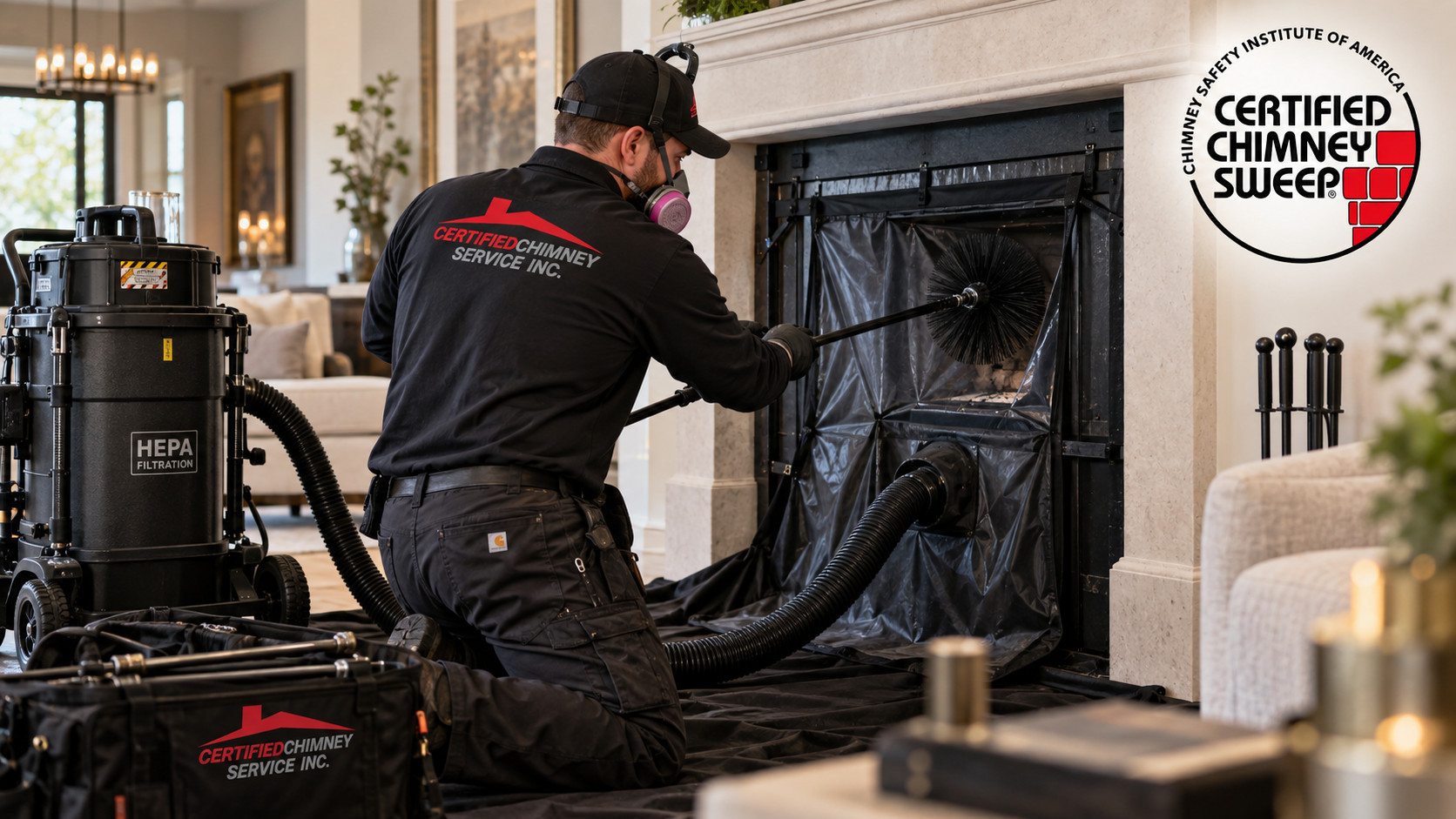
Fireplaces, gas logs, pellet stoves, and commercial metal chimneys all need proper maintenance — creosote buildup, moisture intrusion, and damaged masonry create fire hazards businesses can't afford. Licensed, insured chimney care built for property managers and business owners.
Licensed & insured commercial team — serving facility managers, property owners, and multi-unit buildings across Connecticut.
Commercial chimneys often support customer areas, rental units, or shared spaces — a failure affects more than one household.
Creosote buildup and liner damage raise fire risk and can force a system offline during peak heating season.
Moisture and structural damage left unaddressed lead to larger repair costs and bigger restoration projects down the line.
A commercial chimney inspection identifies problems that aren't visible from the fireplace or roofline. A video inspection may be used when the inside of the flue needs a closer look. Commercial properties must follow safety standards and building requirements — an inspection report is where planning starts.
From there, we help you plan chimney repair, relining, waterproofing, or cap installation before problems become urgent — and before they affect your building's schedule.
Commercial chimneys should be inspected at least once a year, with cleaning done whenever soot, debris, or creosote buildup is present. Heavy use, wood-burning equipment, fireplace inserts, and pellet stove systems often need more frequent cleaning — especially heading into peak heating season.
Creosote is a dark, sticky, flammable material that forms when wood smoke cools inside the chimney liner or flue. It builds up on chimney walls and the smoke chamber over time.
Heavy buildup increases the risk of chimney fires and poor airflow. Sweeping and flue cleanings remove it before it becomes a larger safety concern — and often reveal cracked tiles, damaged dampers, or other issues that need repair.
A damaged commercial chimney can let water, heat, or exhaust move into unsafe areas. Repairs are scoped from the inspection report — here's what's typically covered.
Connecticut's moisture intrusion and freeze-thaw cycles cause masonry deterioration, cracking, and structural issues over time. Masonry repair restores damaged bricks, mortar joints, crowns, and chimney walls before small cracks become larger problems.
Chimney waterproofing systems slow water entry and protect the chimney from rain, snow, and ice — ignoring water damage often means the building needs more extensive work, or even new chimney construction, down the line.
Regular inspections and masonry services help commercial property owners avoid larger restoration projects and protect the building's exterior long-term.
Waterproofing is most effective when applied to masonry that's already sound — which is why it's typically paired with a masonry repair scope, not done in isolation.
Each part plays a role in safe venting — and each one wears down differently over time.
Blocks rain, debris, and animals from entering the flue.
Controls airflow and draft for the connected appliance.
Solves draft problems in certain fireplace or venting setups.
Prefabricated and metal systems need inspection as joints, seals, and supports wear down.
Chimney sweeping removes soot and creosote from the flue. We also handle the services most commercial properties need alongside it.
Flue cleanings and soot removal to reduce fire risk and support better draft.
Cleaning & SweepingLint buildup restricts airflow and raises fire risk near commercial laundry areas.
Dryer Vent ServicesBrick and mortar restoration for chimneys affected by moisture and freeze-thaw damage.
Masonry RepairStainless steel liner systems for chimneys with cracked, missing, or unsafe liners.
Relining & LinersRepairs gaps and cracks in an otherwise sound liner without a full relining.
HeatShield RepairWaterproofing and flashing repair to stop moisture intrusion at the source.
Leak SpecialistsThe National Chimney Sweep Guild supports education, safety, and skill across the industry — our technicians train to that same standard on every commercial job.
At least once a year. The CSIA recommends annual inspections by qualified professionals to check for cracks, creosote, and obstructions. Heavy-use systems may need more frequent cleaning.
Fireplaces, fireplace inserts, gas logs, pellet stoves, free-standing stoves, commercial metal chimneys, and commercial prefabricated chimneys.
Yes. Lint buildup in commercial dryer vents restricts airflow and increases fire risk near laundry areas — we clean these alongside chimney service.
Moisture intrusion and freeze-thaw cycles worsen over time, leading to more extensive chimney work or even new chimney construction if the damage isn't caught early.
Yes. We work with property managers, facility managers, and business owners across Fairfield County, New Haven County, and surrounding Connecticut communities, with scheduling built around your building's needs.
Licensed and insured commercial chimney care — scheduled around your property's needs.
Prefer to text? Message us anytime at 516-523-7255 · Open 24 hours